Most Amazing Challah
Rate this recipeBe the first to rate
 By AprilPublished
 Who doesn't love the warm, soft, and delicious bread that is challah?
 By AprilPublished
 Who doesn't love the warm, soft, and delicious bread that is challah?
In a large bowl, sprinkle yeast over water and gently stir to moisten yeast.
Stir in salt, sugar, margarine, and 4 eggs; beat well.
Gradually add flour, 1 cup at a time, up to 12 cups, mixing well after each addition. The dough should be slightly tacky but not wet.
Turn the dough out onto a floured surface and knead it until smooth and elastic, for about 8 to 10 minutes.
Grease baking sheets or line them with parchment paper and set them aside.
Divide the dough into four equal-sized pieces (or 2 pieces for 2 large loaves).
Take each piece and cut it into thirds to make 3-strand braided loaves.
On a floured surface, roll the small dough pieces into ropes about the thickness of your thumb and approximately 12 inches long.
The ropes should be thicker in the middle and thinner at the ends.
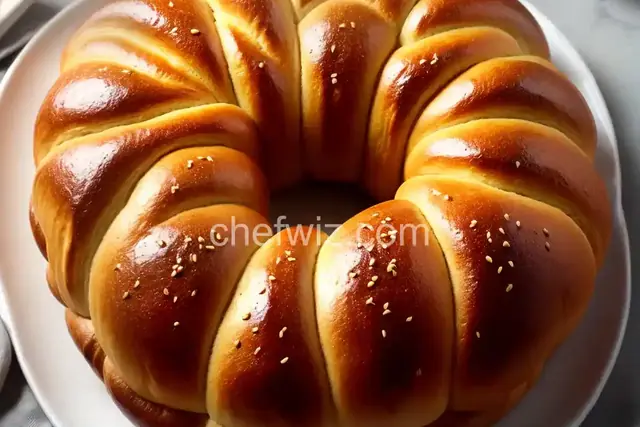
Pinch three ropes together at the top and begin braiding them. Start with the strand on the right and move it over the middle strand (this becomes the new middle strand). Take the strand farthest to the left and move it over the new middle strand. Continue braiding, alternating sides each time, until the loaf is fully braided.
Pinch the ends together and fold them underneath for a neat appearance. Repeat this step for
Who doesn't love the warm, soft, and delicious bread that is challah? Whether you're enjoying it at a holiday meal or just as a special treat, challah has a way of bringing comfort and joy to any occasion. In this article, we'll explore the art of making the most amazing challah, from its rich history to tips for achieving the perfect texture and flavor.
Challah is a traditional Jewish bread that has been enjoyed for centuries. Its origins can be traced back to ancient times, where it was often used in religious ceremonies and celebrations. The word "challah" itself actually refers to a portion of dough that was set aside and given to the priests in the times of the Holy Temple in Jerusalem.
Over time, challah has become a staple in Jewish cuisine and is now commonly enjoyed on Shabbat and holidays. Its braided shape symbolizes unity and togetherness, making it a perfect addition to any festive table.
Making challah can be a truly rewarding experience, but it does require some skill and attention to detail. Here are a few tips to help you achieve the most amazing challah:
Like any great recipe, using high-quality ingredients is key. Opt for fresh yeast, high-protein flour, and good quality honey or sugar. These simple choices can make a world of difference in the final result.
One of the secrets to achieving the perfect texture in challah is to give the dough plenty of time to rise. Allow it to rest and rise in a warm, draft-free area until it has doubled in size. This will result in a light and fluffy bread that is irresistible.
The braiding technique used for challah is not only beautiful but also contributes to its unique texture. Take your time to learn and perfect the braiding technique, and soon you'll be able to create stunning loaves that are as pleasing to the eye as they are to the palate.
Challah is more than just bread; it's a symbol of tradition and celebration. By using quality ingredients, allowing the dough to rise, and mastering the art of braiding, you can create the most amazing challah that will impress your family and friends. So why not give it a try? Your taste buds will thank you.
Yes, challah freezes well. Simply wrap it tightly in plastic wrap and place it in the freezer. When you're ready to enjoy it, thaw it at room temperature and warm it up in the oven for a few minutes.
Yes, you can substitute some or all of the white flour with whole wheat flour. Just keep in mind that the texture and taste may be slightly different.
Absolutely! Adding raisins or other dried fruits can give your challah a delicious twist. Simply knead them into the dough during the mixing process.
Challah is best enjoyed fresh, but it can stay soft and delicious for up to a week when stored properly in an airtight container or bag.
Yes, you can shape the challah dough into smaller rolls instead of a large loaf. Just adjust the baking time accordingly, as smaller rolls will bake faster.
While it is possible to use a bread machine to make challah, it is not the traditional method. Challah is best made by hand, allowing you to fully experience the process and connect with the rich history of this special bread.
Yes, you can make a vegan version of challah by substituting eggs with ingredients like applesauce, mashed bananas, or flaxseed meal mixed with water.
Definitely! Challah dough can be incredibly versatile. You can use it to make delicious cinnamon rolls, bread pudding, or even savory stuffed breads.
AprilCook, recipe developer and the heart of Chefwiz. More about April