Mondongo (tripe soup, menudo)
Rate this recipeBe the first to rate
 By AprilPublished
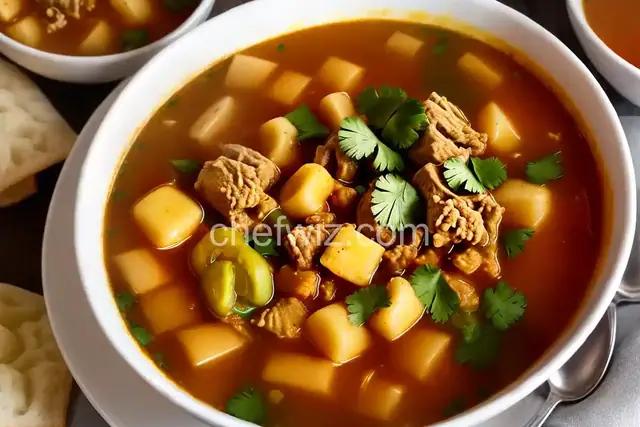
 Have you ever tasted a dish that warms your heart and soul? One such culinary delight is mondongo, also known as tripe soup or menudo.
 By AprilPublished
 Have you ever tasted a dish that warms your heart and soul? One such culinary delight is mondongo, also known as tripe soup or menudo.
Rinse the tripe and pig feet thoroughly.
In a large pot, bring the tripe and pig feet to a boil. Cook until desired tenderness is achieved, keeping in mind that al dente is preferred.
Once almost done, remove the tripe and pig feet from the pot and cut them into bite-sized pieces.
Return the cut tripe and pig feet back to the pot.
Add adobo and garlic to taste, along with 2 tablespoons of sofrito.
Include 5 bay leaves, 4 cilantro leaves, and 6 mashed garlic cloves.
Cut 8-10 small green olives and add them to the pot.
Also, add 2 potatoes, casava, and corn on the cob (cut into slices).
Optionally, include malanga coco in the pot.
Continue cooking until all the ingredients are fully cooked and flavors are well combined.
Have you ever tasted a dish that warms your heart and soul? One such culinary delight is mondongo, also known as tripe soup or menudo. This traditional dish is loved across many cultures for its rich flavors and comforting qualities. In this article, we will explore the wonders of mondongo and why it has become a beloved staple in many households.
Mondongo has roots in various cultures, including Latin America, the Caribbean, and the Philippines. It is a dish that has stood the test of time, with each region adding its own unique twist to the recipe. Whether you're savoring a bowl of Colombian mondongo, Puerto Rican menudo, or Filipino ginataang baka, the essence of this dish remains the same - a warm and satisfying experience.
Picture this: tender chunks of tripe simmered in a savory broth, infused with a medley of aromatic herbs and spices. The result is a harmonious blend of flavors that dance on your taste buds. The tripe, often referred to as the star of the dish, absorbs the rich flavors of the broth, creating a marriage of textures and tastes that is truly delightful.
Not only is mondongo a treat for your taste buds, but it is also a nourishing meal packed with essential nutrients. Tripe, the main ingredient, is a good source of protein, vitamins, and minerals. It is known to support healthy digestion and provide a boost of energy. With each spoonful, you are not only indulging in a delicious dish but also fueling your body with wholesome goodness.
Preparing mondongo is no easy feat. It requires time, patience, and a dash of love. The tripe needs to be cleaned meticulously, removing any impurities and ensuring its tenderness. The broth needs to be simmered slowly, allowing the flavors to meld together. The aromas that fill the kitchen are a testament to the dedication put into creating this culinary masterpiece.
Now that you have a steaming bowl of mondongo ready, how can you elevate the experience? Some enjoy it with a squeeze of lime or a sprinkle of cilantro to add a refreshing twist. Others pair it with a side of rice or warm, crusty bread. The possibilities are endless, allowing you to tailor the dish to your personal preferences.
While mondongo is commonly referred to as a soup, it is so much more than that. It is a dish that brings people together, creating a sense of warmth and community. It is a reminder of home, traditions, and the love shared around the dining table. Each spoonful is a journey that nourishes both the body and the soul.
Whether you call it mondongo, tripe soup, or menudo, this dish is a true culinary delight that warms the soul. Its rich flavors, nourishing qualities, and cultural significance make it a beloved favorite across different regions. So, why not gather your loved ones, prepare a pot of mondongo, and embark on a heartwarming culinary journey together?
No, mondongo is not inherently spicy. However, some recipes may include spicy ingredients like chili peppers to add a kick of heat. You can adjust the spiciness according to your preference.
Yes, you can freeze mondongo. It is a great dish for batch cooking and freezing for later consumption. Just make sure to cool it down completely before transferring it to a freezer-safe container.
While tripe is the star ingredient, mondongo often includes other ingredients such as vegetables (carrots, potatoes, bell peppers), herbs (bay leaves, oregano), and spices (garlic, cumin, paprika).
Traditionally, mondongo is made with tripe. However, if you're not a fan of tripe or unable to find it, you can substitute it with other proteins like beef, chicken, or even tofu for a vegetarian twist.
The cooking time for mondongo can vary depending on the recipe and the tenderness of the tripe. On average, it takes around 2 to 3 hours to cook mondongo until the tripe is tender and the flavors have melded together.
Mondongo is a hearty and filling dish that can be enjoyed as a complete meal on its own. However, some people prefer to serve it with rice, bread, or a side salad to round out the meal.
Yes, there are various regional variations of mondongo. For example, Colombian mondongo often includes ingredients like chorizo, plantains, and corn. Puerto Rican menudo may have additional spices like annatto and achiote oil. Filipino ginataang baka includes coconut milk for a creamy twist.
Yes, you can make mondongo in a slow cooker. Simply follow your favorite mondongo recipe and adjust the cooking time accordingly. The slow cooker will allow the flavors to develop slowly and the tripe to become tender.
AprilCook, recipe developer and the heart of Chefwiz. More about April