Meringues
Rate this recipeBe the first to rate
 By AprilPublished
 Do you have a sweet tooth that craves a light and airy confection?
 By AprilPublished
 Do you have a sweet tooth that craves a light and airy confection?
Preheat the oven to 250 degrees.
Prepare 2 baking sheets by lining them with parchment paper or foil. Draw 10 circles, each measuring 4 inches, on each sheet.
Combine the sugars and set aside.
In a bowl or electric mixer, beat the egg whites until they become foamy. Add the cream of tartar and salt. Continue to beat, gradually adding 1 tablespoon of sugar at a time and beating well after each addition. This process should take approximately 10 minutes.
Incorporate the vanilla into the mixture and beat at a high speed until the mixture becomes stiff and glossy.
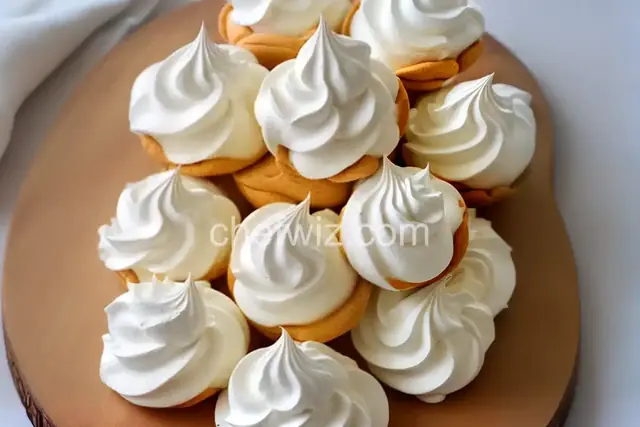
Using a pastry tube fitted with a large plain tip, pipe the meringue in coils, starting from the center and spiraling towards the outer edge of each circle.
Bake for approximately 1 hour, or until the meringues turn cream-colored and become firm. After baking, leave the meringues in the turned-off oven for several hours or overnight without opening the oven door.
When ready to serve, carefully remove the paper or foil from the meringues.
Do you have a sweet tooth that craves a light and airy confection? Look no further than meringues! These delightful treats are the perfect combination of crispy and chewy, making them a favorite dessert for many. Whether you enjoy them on their own, use them as a topping for pies and cakes, or incorporate them into other desserts, meringues are versatile and delicious. In this article, we will explore the world of meringues, their history, and how to make them. So, let's dive in and discover the magic of meringues!
Have you ever wondered where meringues originated? These heavenly treats can be traced back to the 17th century, where they were first created in France. The word "meringue" is believed to have derived from the Swiss village of Meiringen, where it is said that a local pastry chef invented them. From there, meringues quickly gained popularity across Europe and eventually spread to other parts of the world.
Have you ever wondered how meringues achieve their signature texture? The key lies in the egg whites. When egg whites are whisked, they trap air bubbles, creating a foam-like structure. As the meringue bakes, the heat solidifies the proteins in the egg whites, resulting in a crispy exterior. The inside remains soft and chewy, giving meringues their unique texture. It's like biting into a cloud!
One of the reasons meringues are so beloved is their versatility. They serve as a blank canvas for creativity, allowing you to experiment with flavors, colors, and shapes. You can add different extracts like vanilla or almond to give your meringues a distinct taste. For an extra pop of color, add a few drops of food coloring to the mixture. And if you're feeling artistic, pipe the meringue mixture into various shapes and sizes. The possibilities are endless!
Now that you're familiar with the origins and science behind meringues, let's dive into the process of making these delectable treats. Making meringues is relatively simple, but it requires attention to detail to achieve the perfect result.
To make meringues, you only need a few basic ingredients: egg whites, sugar, and cream of tartar. The cream of tartar helps stabilize the egg whites and gives the meringues their structure. It's important to use fresh eggs at room temperature for the best results.
When making meringues, it's crucial to start with clean utensils and bowls. Any trace of grease or fat can prevent the egg whites from reaching their full volume. Begin by beating the egg whites until they form soft peaks, then gradually add the sugar and cream of tartar. Continue beating until the mixture is thick and glossy, with stiff peaks that hold their shape.
While cream of tartar helps stabilize the egg whites, it is possible to make meringues without it. However, the resulting meringues may be slightly less stable and may not hold their shape as well.
Properly stored in an airtight container, meringues can last for up to two weeks. However, their texture may change over time, becoming softer and less crisp.
Yes, meringues can be frozen. Place them in an airtight container or freezer bag and freeze for up to three months. Thaw them at room temperature before serving.
Yes, pasteurized egg whites can be used to make meringues. However, they may require longer beating time to achieve the desired volume.
Yes, you can substitute some or all of the granulated sugar with brown sugar. Keep in mind that the meringues may have a slightly different flavor and color.
Yes, you can make vegan meringues using aquafaba, which is the liquid from a can of chickpeas. Whip the aquafaba with sugar and cream of tartar, following the same technique as traditional meringues.
Absolutely! You can add various flavorings such as vanilla extract, almond extract, or citrus zest to give your meringues a delicious twist.
Common mistakes when making meringues include overbeating the egg whites, using cracked or dirty eggs, adding too much sugar too quickly, and baking at too high a temperature. Attention to detail is key!
In conclusion, meringues are a delightful treat that can be enjoyed in many different ways. Whether you're a seasoned baker or a novice in the kitchen, making meringues is a fun and rewarding experience. So why not whip up a batch of these light and airy confections and indulge in their heavenly goodness? Your taste buds will thank you!
AprilCook, recipe developer and the heart of Chefwiz. More about April