Meringue
Rate this recipeBe the first to rate
 By AprilPublished
 Have you ever tasted a dessert that melts in your mouth, leaving behind a delicate and airy sensation?
 By AprilPublished
 Have you ever tasted a dessert that melts in your mouth, leaving behind a delicate and airy sensation?
Begin by melting the chocolate in a double boiler until completely melted.
In a medium bowl, combine the cream and melted chocolate, stirring slowly to create a shiny and elastic emulsion.
Heat the egg white and sugar in a double boiler, ensuring that all the sugar grains have dissolved.
Whip the mixture until it cools and thickens into a glossy meringue, which should take approximately 4 to 7 minutes.
Preheat the oven to a temperature of 200 to 220 degrees F.
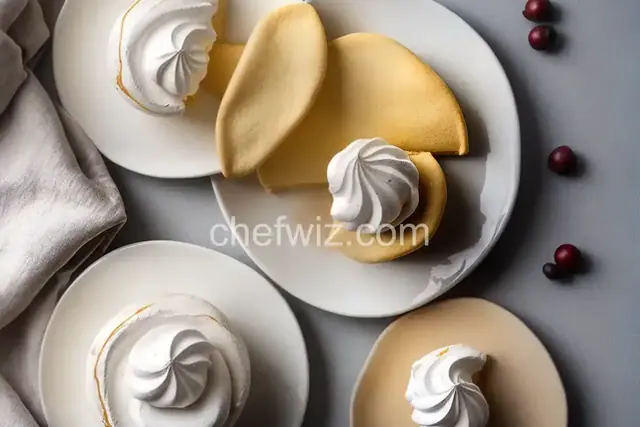
Fill a pastry bag or resealable plastic bag with the meringue mixture and pipe small stars or "kisses" onto a baking sheet lined with parchment paper.
Bake the kisses in the oven until they become very dry, which usually takes between 40 minutes to 1 1/2 hours. It's important to avoid any browning or coloring on the kisses, so keep the oven temperature low.
Dip the baked kisses into the ganache and sandwich them together. Set aside to dry for a few minutes before serving immediately.
Alternatively, you can pipe the meringue into long lines and bake at 200 to 220 degrees F until completely dry, typically around 40 minutes to 1 1/2 hours. Break the dried meringue into small sticks and use them as decorations for your favorite tartlets or cake.
Have you ever tasted a dessert that melts in your mouth, leaving behind a delicate and airy sensation? Look no further than meringue! This delightful treat, made primarily from egg whites and sugar, is a versatile and beloved component in many desserts. In this article, we'll explore the wonders of meringue, its various types, and its role in creating delectable culinary masterpieces. So, let's dive in and discover the magic of meringue!
Before we get into the different types of meringue, let's understand the science behind its creation. Meringue is formed by whipping egg whites and sugar together, resulting in a foam-like structure. The proteins in the egg whites unfold and bond, trapping air bubbles in the mixture. As the meringue bakes, these air bubbles expand, giving it that characteristic light and fluffy texture.
There are three main types of meringue, each with its own unique characteristics and uses:
The simplest and most common type is the French meringue. It's made by gradually adding fine sugar to beaten egg whites until stiff peaks form. French meringue is often used as a topping for pies and tarts or as a base for desserts like pavlova.
Italian meringue is a cooked meringue made by pouring a hot sugar syrup into whipped egg whites. The hot syrup cooks the egg whites, resulting in a stable and glossy meringue. Italian meringue is commonly used to frost cakes, as it holds its shape well and can be piped into intricate designs.
Swiss meringue is made by whisking egg whites and sugar over a double boiler until the sugar dissolves. This mixture is then whipped until stiff peaks form. Swiss meringue is known for its silky texture and is often used as a base for buttercream frosting or as a filling for pastries.
Meringue is a versatile ingredient that can be used in a wide range of desserts. Its light and airy texture adds a delightful contrast to rich and creamy flavors. Here are some popular applications of meringue:
One of the most iconic meringue desserts is the classic lemon meringue pie. The tangy lemon filling pairs perfectly with the sweet and fluffy meringue topping, creating a harmonious balance of flavors.
Baked Alaska is a show-stopping dessert that combines meringue, ice cream, and cake. The meringue is piped over a frozen ice cream and cake base and then quickly baked, resulting in a golden and toasted exterior that encases the cold and creamy center.
Macarons, those colorful and delicate French confections, are made from almond flour, sugar, and egg whites. The meringue is crucial in creating the macaron's signature crisp shell and soft, chewy interior.
Creating the perfect meringue requires some finesse and attention to detail. Here are a few tips to ensure success:
Start with eggs that are at room temperature. Cold eggs can make it more challenging to achieve the desired volume and texture.
Make sure all your equipment is clean and free from any trace of fat. Even a tiny bit of grease can prevent the egg whites from whipping up properly.
When adding sugar to the egg whites, do it gradually. This allows the sugar to dissolve and incorporate fully, resulting in a smoother and more stable meringue.
Meringue is a delightful and versatile component in the world of desserts. Whether it's the classic French meringue, the stable Italian meringue, or the silky Swiss meringue, each type adds its unique touch to sweet creations. From lemon meringue pies to macarons, meringue elevates desserts with its light and airy texture. So, the next time you're craving a sweet treat, consider indulging in the
While sugar is essential for creating the structure and sweetness of meringue, alternative sweeteners like honey or maple syrup can be used. However, keep in mind that the texture and stability may differ.
If your meringue has deflated, you can try rewhipping it for a short period to regain some volume. Alternatively, you can use it as a filling or incorporate it into other desserts.
Yes, you can freeze meringue. Place it in an airtight container or wrap it tightly in plastic wrap. Thaw it in the refrigerator before using.
Weeping or shrinking meringue can be caused by undercooking, overbeating, or humidity. Make sure to bake the meringue until it's firm and dry and avoid overbeating the egg whites.
Yes, you can add food coloring to the meringue. Gel or powder-based food coloring works best as it won't affect the consistency of the meringue.
Yes, you can make meringue in advance. Store it in an airtight container at room temperature for a day or two, or in the refrigerator for up to a week.
Absolutely! Meringue can be piped into various shapes and designs using a piping bag and different tips. Let your creativity run wild!
Yes, you can use meringue as a filling for cakes. It adds a light and fluffy element to the cake layers, creating a delightful contrast in textures.
AprilCook, recipe developer and the heart of Chefwiz. More about April