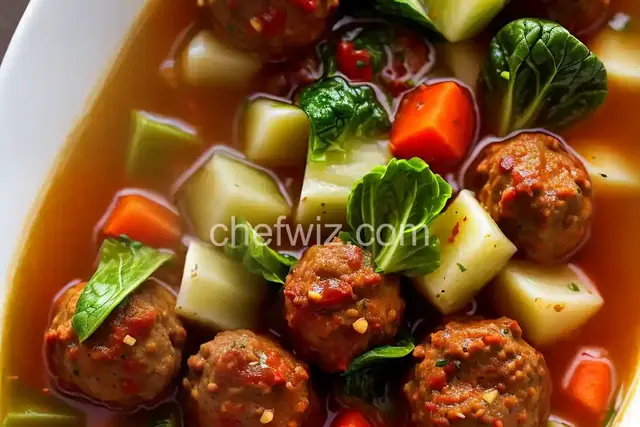
Meatball, Bean and Escarole Soup
Rate this recipeBe the first to rate
 By AprilPublished
 Are you craving a warm and comforting soup that will satisfy your taste buds?
 By AprilPublished
 Are you craving a warm and comforting soup that will satisfy your taste buds?
Start by heating the olive oil in a large pot or Dutch oven on medium-high heat.
Add the garlic, carrots, red onion, and rosemary to the pot and cook while stirring until they become soft, which should take approximately 5 minutes.
Stir in the escarole, beans, their liquid, chicken broth, 2 cups of water, 1/2 teaspoon of salt, and a few grinds of pepper.
Increase the heat to high and bring the mixture to a boil.
Reduce the heat to medium-low and let it simmer for about 10 minutes until the vegetables become tender.
Gently mix in the meatballs and cook until they are heated through, which should take around 5 minutes.
Season with salt and pepper to taste.
Serve the soup in bowls and top it with parmesan cheese and a few grinds of pepper.
Finally, drizzle some olive oil over the soup before serving.
Are you craving a warm and comforting soup that will satisfy your taste buds? Look no further than Meatball, Bean, and Escarole Soup. This hearty and flavorful dish is perfect for cold winter nights or whenever you need a comforting meal. In this article, we will explore the rich history of this soup, its key ingredients, and how to make it from scratch.
Like many traditional dishes, the origins of Meatball, Bean, and Escarole Soup are deeply rooted in Italian cuisine. This soup, also known as "Italian Wedding Soup," has been enjoyed by generations of families. It is believed to have originated in Southern Italy and made its way to the United States with Italian immigrants.
Legend has it that the name "Italian Wedding Soup" comes from the translation of "minestra maritata," which means "married soup" in Italian. The term "married" refers to the perfect union of flavors found in this soup, with the meatballs, beans, and escarole complementing each other harmoniously.
To create the perfect Meatball, Bean, and Escarole Soup, you will need a few key ingredients that add depth and flavor to the dish:
No Italian soup would be complete without delicious meatballs. These savory balls of ground meat, typically a mixture of beef and pork, are seasoned with herbs, garlic, and breadcrumbs. They are then simmered in the soup, infusing it with their rich and meaty flavor.
Beans are another essential ingredient in this soup. Cannellini beans, also known as white kidney beans, are commonly used. These creamy and tender beans add a velvety texture to the soup and provide a good source of protein.
Escarole, a leafy green vegetable, adds a delightful bitterness to the soup. Its slightly bitter taste balances the richness of the meatballs and beans, creating a well-rounded flavor profile. Escarole is also packed with vitamins and minerals, making this soup a nutritious choice.
Now that you know the history and key ingredients of this comforting soup, let's dive into the process of making it:
Mix ground beef, ground pork, breadcrumbs, garlic, herbs, and seasonings in a bowl. Shape the mixture into small meatballs and set aside.
In a large pot, sauté onions, carrots, and celery until they become fragrant and tender. This step adds depth of flavor to the soup.
Pour in the chicken or vegetable broth and add the cannellini beans. Bring the mixture to a boil and let it simmer for a few minutes to allow the flavors to meld together.
Gently drop the meatballs into the simmering soup and let them cook through. This will infuse the soup with their savory flavors.
Finally, add the chopped escarole to the soup and let it wilt. The escarole will soften and release its bitter notes, balancing the flavors of the soup.
And just like that, your Meatball, Bean, and Escarole Soup is ready to be enjoyed! Serve it piping hot with a sprinkle of grated Parmesan cheese on top for an extra touch of flavor.
Absolutely! While cannellini beans are traditional, you can experiment with other types such as kidney beans or chickpeas.
Yes, you can prepare the meatballs ahead of time and store them in the refrigerator. Just add them to the soup when you're ready to cook.
If you can't find escarole, spinach or kale can be used as alternatives. They will add their unique flavors to the soup.
Yes, this soup freezes well. Allow it to cool completely before transferring it to an airtight container and freezing. Thaw and reheat when ready to enjoy.
Absolutely! Simply omit the meatballs and use vegetable broth instead of chicken broth.
The soup will keep for 3-4 days in the refrigerator when stored in an airtight container.
Yes, feel free to add diced tomatoes, zucchini, or any other vegetables you enjoy. They will add extra flavor and nutrients to the soup.
Absolutely! Simply follow the steps until adding the meatballs and escarole. Transfer everything to a slow cooker and cook on low for 6-8 hours or on high for 3-4 hours.
In conclusion, Meatball, Bean, and Escarole Soup is a timeless classic that brings warmth and comfort to any table. Its rich history, flavorful ingredients, and simple preparation make it a favorite among soup lovers. So why not try your hand at making this delightful soup and savor its delicious flavors?
AprilCook, recipe developer and the heart of Chefwiz. More about April