Maria's Paella
Rate this recipeBe the first to rate
 By AprilPublished
 When it comes to Spanish cuisine, one dish that instantly comes to mind is paella.
 By AprilPublished
 When it comes to Spanish cuisine, one dish that instantly comes to mind is paella.
Heat the olive oil in a large skillet or paella pan on medium-high heat until it starts to smoke.
Place the chicken thighs, skin-side down, in the hot oil and cook until they turn golden brown on both sides, approximately 5 minutes. Transfer the chicken thighs to a plate and set them aside.
Add the onion and garlic to the skillet with the drippings. Cook and stir until the onion becomes soft and translucent, which usually takes about 1 minute.
Add the calamari, small shrimp, and bell peppers to the skillet. Cook and stir for 2 minutes.
Combine the water, rice, tomatoes, peas, saffron, and salt in the skillet. Mix everything well. Return the chicken thighs to the skillet and let the mixture simmer on medium-high heat for 15 minutes, stirring frequently to prevent the rice from sticking.
Arrange the clams and jumbo shrimp in a decorative manner on top of the rice and chicken mixture. Reduce the heat to medium-low, cover the skillet, and let it simmer for 10 minutes.
Place the scallops into the paella. Continue simmering, covered, until the rice becomes tender and the scallops are firm and opaque, approximately 5 minutes.
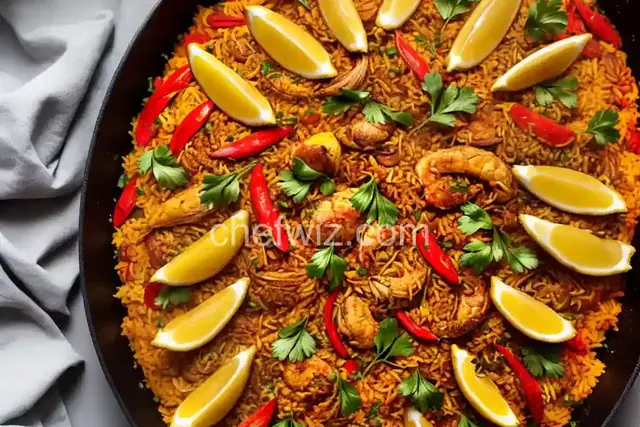
Serve the dish garnished with lemon wedges.
When it comes to Spanish cuisine, one dish that instantly comes to mind is paella. With its vibrant colors, rich flavors, and delightful aroma, paella has captured the hearts and palates of people all over the world. But what makes Maria's paella so special? Join us as we delve into the world of this iconic Spanish dish and uncover the secrets behind Maria's culinary masterpiece.
Like many traditional dishes, the origins of paella are deeply rooted in history. Hailing from the region of Valencia, paella was initially a humble peasant dish that combined rice with whatever ingredients were readily available. As time passed, the dish evolved and became a symbol of Spanish gastronomy.
What sets Maria's paella apart is her impeccable balance of flavors. From the succulent chicken and juicy seafood to the aromatic saffron and earthy paprika, each ingredient plays a crucial role in creating a harmonious taste experience. It's like a symphony of flavors dancing on your taste buds.
Rice is the heart and soul of any paella, and Maria knows this all too well. She meticulously selects the perfect variety of rice, ensuring that it absorbs the flavors of the broth while maintaining its delicate texture. It's the foundation upon which Maria builds her culinary masterpiece.
Before the magic happens, Maria pays special attention to her choice of pan. Traditionally, paella is cooked in a wide and shallow pan called a "paellera." This allows the rice to cook evenly and creates a delicious caramelized layer of rice at the bottom, known as the "socarrat."
As Maria adds the ingredients one by one, the paella comes alive with a vibrant array of colors. The bright red of the tomatoes, the vibrant green of the peas, and the golden hues of the saffron-infused rice create a visual feast that is as enticing as it is delicious.
Paella is more than just a dish; it's a celebration of togetherness. Maria believes that the true essence of paella lies in sharing it with loved ones. Whether it's a cozy family dinner or a grand fiesta, paella brings people together and creates memories that last a lifetime.
When you take a bite of Maria's paella, you embark on a culinary journey through the flavors of Spain. The smoky paprika transports you to the bustling streets of Barcelona, while the briny seafood takes you to the picturesque coastal towns. Each mouthful is a passport to the vibrant and diverse culinary landscape of Spain.
Maria's paella is not just a dish; it's a labor of love and a testament to the rich culinary heritage of Spain. From its humble beginnings to its status as an international sensation, paella continues to captivate food enthusiasts around the world. So why not embark on your own gastronomic adventure and savor the flavors of Maria's paella?
Short-grain rice, such as Bomba or Calasparra, is ideal for paella as it absorbs flavors well and maintains its texture.
While a paellera is traditionally used, a wide and shallow frying pan can be a suitable alternative.
No, paella can be made with various ingredients, including chicken, rabbit, vegetables, and even snails.
Saffron is an integral part of paella and adds a unique flavor and aroma. While substitutes can be used, they won't replicate the true essence of saffron.
The cooking time can vary depending on the size of the pan and the ingredients used. On average, it takes about 30 to 40 minutes.
Paella is best enjoyed fresh, but you can prepare some of the ingredients in advance to save time.
The "socarrat" refers to the crispy layer of rice that forms at the bottom of the pan, adding a delightful texture and flavor.
Absolutely! You can create a delicious vegetarian paella by using vegetables, mushrooms, and flavorful spices.
AprilCook, recipe developer and the heart of Chefwiz. More about April