Mango Sticky Rice
Rate this recipeBe the first to rate
 By AprilPublished
 Are you a fan of the tropical flavors of mango and the sweet, sticky goodness of rice?
 By AprilPublished
 Are you a fan of the tropical flavors of mango and the sweet, sticky goodness of rice?
In a large measuring cup or medium bowl, pour coconut milk.
Fill the empty can with cold water and add it to the coconut milk, whisking to combine.
Add rice to the mixture, cover, and let it sit at room temperature for 8-12 hours. Make sure to whisk the mixture before straining, as the coconut cream will rise to the top as the rice soaks.
Strain the rice through a fine-mesh sieve set over a bowl, reserving ¾ cup of the soaking liquid.
If cooking on a stovetop: Get a large saucepan with a lid and place a clean kitchen towel on a work surface. Put the lid in the center of the towel with the handle up. Tie the corners of the towel together on top of the lid to create an airtight steam absorber.
In the saucepan, bring the rice, sugar, salt, and reserved soaking liquid to a simmer over medium-high heat, stirring to dissolve the sugar.
Reduce the heat to low, cover the saucepan, and cook until the liquid is absorbed. This usually takes about 15-25 minutes. Avoid lifting the lid for the first 15 minutes.
After 15 minutes, uncover the saucepan and scrape a spoon against the bottom to check if the rice is sticking and if all the liquid is gone. If there's still liquid, cover the saucepan again
Are you a fan of the tropical flavors of mango and the sweet, sticky goodness of rice? If so, you're in for a treat with this delightful dessert known as Mango Sticky Rice! It's a popular dish in Southeast Asia, especially in Thailand, where it's often enjoyed during the mango season. In this article, we'll explore the origins of Mango Sticky Rice, its key ingredients, and why it has become a beloved dessert around the world.
The origins of Mango Sticky Rice can be traced back to Thailand, where it is known as "Khao Niao Mamuang." This delightful dessert has been a part of Thai culture for centuries, with its roots in traditional Thai cuisine. It was originally consumed as a special treat during the mango season, which typically falls between April and May.
Over time, Mango Sticky Rice gained popularity not only in Thailand but also in other parts of Southeast Asia and beyond. Its unique combination of flavors and textures, along with the visual appeal of the vibrant yellow mangoes, made it a hit among locals and tourists alike.
To make Mango Sticky Rice, you'll need a few key ingredients:
The star of the dish, sticky rice, also known as glutinous rice or sweet rice, is the main component that gives Mango Sticky Rice its signature texture. This type of rice has a sticky, chewy consistency when cooked, making it perfect for absorbing the sweet coconut milk sauce.
Of course, you can't have Mango Sticky Rice without the mangoes! Ripe, juicy mangoes are the perfect accompaniment to the sticky rice. Their natural sweetness and tropical flavor complement the creamy coconut milk and add a burst of freshness to each bite.
Coconut milk is used to cook the sticky rice and create a creamy, fragrant sauce that binds the dish together. It adds richness and a subtle coconut flavor that pairs beautifully with the mangoes.
While the above three ingredients are the essentials, some variations of Mango Sticky Rice may include additional ingredients such as palm sugar, toasted sesame seeds, or crispy mung beans for added texture and flavor.
What makes Mango Sticky Rice so appealing? It's a combination of factors that create a truly delightful dessert experience.
Firstly, the contrast of textures is a key element. The sticky, chewy rice pairs beautifully with the soft, juicy mangoes, creating a satisfying mouthfeel. The creaminess of the coconut milk sauce adds another layer of richness and ties everything together.
Secondly, the flavors are a perfect balance between sweet and tropical. The natural sweetness of the mangoes shines through, while the coconut milk adds a creamy and slightly savory note. It's a harmonious blend of flavors that transports your taste buds to a tropical paradise.
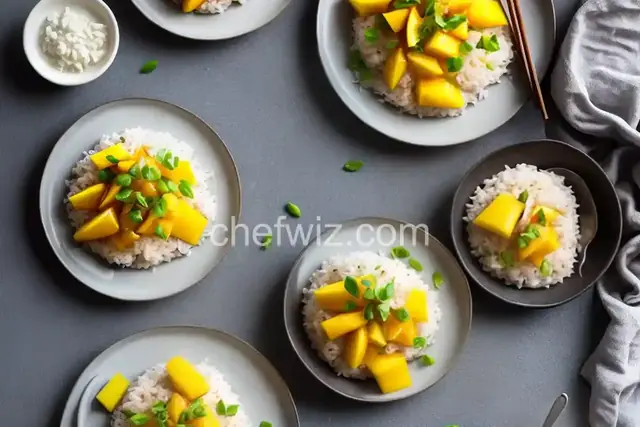
Lastly, the visual appeal of Mango Sticky Rice cannot be overlooked. The vibrant yellow mangoes against the white sticky rice and the creamy coconut sauce create a feast for the eyes. It's a dessert that looks as good as it tastes.
Mango Sticky Rice is truly a dessert that transports you to a tropical paradise. Its origins in Thailand and its popularity around the world speak to its irresistible appeal. The combination of sticky rice, ripe mangoes, and coconut milk creates a delightful dessert experience that is both visually stunning and incredibly delicious. Whether you enjoy it at a Thai restaurant or make it at home, Mango Sticky Rice is sure to satisfy your sweet tooth and leave you craving for more!
No, you'll need to use sticky rice, also known as glutinous rice or sweet rice, to achieve the desired texture. Regular rice won't give you the same sticky consistency.
It's best to use ripe, sweet mangoes with a vibrant yellow color. Thai mangoes, such as the "Nam Dok Mai" variety, are popular choices for Mango Sticky Rice.
To cook sticky rice, soak it in water for a few hours or overnight, then steam it until tender. The exact cooking time will depend on the type of rice and your steaming method.
While it's best to enjoy Mango Sticky Rice fresh, you can make the sticky rice and coconut sauce in advance. Store them separately in the refrigerator and assemble the dessert just before serving.
While mangoes are the traditional choice, you can experiment with other fruits like strawberries, bananas, or even durian for a unique twist on the classic dessert.
Yes, Mango Sticky Rice is naturally gluten-free as long as you use gluten-free sticky rice and ensure that other ingredients are free from gluten contamination.
Yes, you can easily make a vegan version by using coconut milk and a sweetener of your choice instead of traditional dairy milk and sugar.
Mango Sticky Rice is commonly found in Thai restaurants and dessert shops, especially during the mango season. You can also try making it at home using the recipe and tips mentioned in this article.
AprilCook, recipe developer and the heart of Chefwiz. More about April