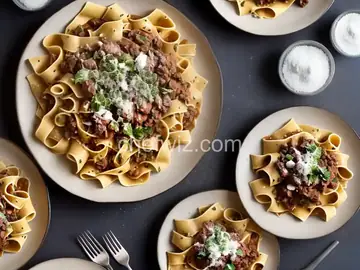
Maccheroni alla Chitarra with Ragù Abruzzese and Palottine Recipe | Cook the Book
Rate this recipeBe the first to rate
 By AprilPublished
 Have you ever wanted to try a traditional Italian pasta dish that is packed with flavor and has a rich history?
 By AprilPublished
 Have you ever wanted to try a traditional Italian pasta dish that is packed with flavor and has a rich history?
Heat the vegetable oil in a large Dutch oven or heavy-bottomed pot over medium heat. Season the meat with salt and pepper, then add to the pot. Brown the meat on all sides until nicely seared. Remove the meat and set aside.
Pass the tomatoes through a food mill to discard solids. Set aside.
Return the pot to medium heat and add extra-virgin olive oil. Sauté the onion until shiny and beginning to soften. Pour in the tomatoes and bring to a simmer. Return the meat to the pot and cover partially. Let the sauce simmer for about 3 hours, stirring occasionally, until the meat is tender and the sauce is thickened. Adjust seasoning with salt and pepper if desired. Remove the meat from the pot before using the sauce.
In a food processor, combine 2 cups 00 flour, semolina flour, salt, and nutmeg. Add eggs and olive oil, and process until mixture forms small curds. If too dry, add remaining olive oil. If too wet, add additional flour. Transfer dough to a clean work surface and knead until smooth. Wrap tightly in plastic wrap and let rest for 30 minutes.
Alternatively, mix dough by hand by combining flour, semolina flour, salt, and nutmeg on a work surface. Make a well in the center and add eggs and olive oil. Gradually draw flour into the egg mixture, being careful not to break the wall
Have you ever wanted to try a traditional Italian pasta dish that is packed with flavor and has a rich history? Look no further than Maccheroni alla Chitarra with Ragù Abruzzese and Palottine. In this article, we will explore the origins of this dish, its unique cooking method, and the delicious flavors that make it a favorite among pasta enthusiasts.
Maccheroni alla Chitarra with Ragù Abruzzese and Palottine is a dish that hails from the Abruzzo region in Italy. The name "chitarra" refers to the traditional pasta-making tool used to create the square-shaped pasta noodles. The pasta dough is pressed through the strings of the chitarra, resulting in noodles that have a unique texture and hold the sauce beautifully.
To create this mouthwatering dish, the pasta is first made by mixing flour and eggs to form a dough. The dough is then rolled out and pressed through the chitarra, creating the signature square-shaped noodles. These noodles are then cooked until al dente, which means they are firm to the bite.
The ragù Abruzzese is a slow-cooked meat sauce that is the perfect accompaniment to the maccheroni. It is made by simmering a mixture of ground beef and pork, along with onions, carrots, celery, tomatoes, and a variety of herbs and spices. The sauce is cooked low and slow, allowing the flavors to meld together and create a rich and savory sauce.
The combination of the homemade pasta, the slow-cooked ragù, and the palottine (meatballs) creates a dish that is bursting with flavor. The pasta has a slightly chewy texture that pairs perfectly with the tender meat sauce. The ragù is rich and hearty, with the meat adding depth and the vegetables adding a touch of sweetness. And the palottine, with their juicy and flavorful meat, add an extra layer of deliciousness to the dish.
Maccheroni alla Chitarra with Ragù Abruzzese and Palottine is a dish that has stood the test of time. Its unique cooking method and combination of flavors make it a true culinary delight. Whether you are a pasta lover or simply someone who appreciates good food, this dish is sure to satisfy your taste buds and leave you craving more.
Maccheroni alla Chitarra is made using a special pasta-making tool called a chitarra, which creates square-shaped noodles. Regular pasta is typically made using a pasta roller or by hand, resulting in different shapes and textures.
Yes, you can customize the ragù by using different types of meat such as lamb, veal, or a combination of meats. This allows you to experiment with flavors and create a ragù that suits your preferences.
While the chitarra creates the signature square-shaped noodles, you can still make the pasta without it. Simply roll out the dough and cut it into your desired shape, such as fettuccine or spaghetti.
The ragù Abruzzese is a slow-cooked sauce that requires several hours of simmering to develop its rich flavors. It is recommended to cook the sauce for at least 3-4 hours on low heat to allow the flavors to fully develop.
Yes, you can freeze the leftover ragù in an airtight container for up to 3 months. This allows you to enjoy the delicious flavors of the ragù at a later time, making it a convenient option for meal planning.
Maccheroni alla Chitarra can be enjoyed on its own or paired with a simple salad or crusty bread. The rich flavors of the dish make it a satisfying meal on its own, but it can also be served as part of a larger Italian feast.
Yes, you can make the pasta dough ahead of time and store it in the refrigerator for up to 24 hours. This allows you to prepare the dough in advance and save time when you are ready to cook the pasta.
Yes, you can substitute the meat in the palottine with different types of ground meat such as chicken, turkey, or even a vegetarian meat substitute. This allows you to customize the dish to your dietary preferences or taste preferences.
AprilCook, recipe developer and the heart of Chefwiz. More about April