Linguine with Asparagus, Bacon, and Arugula
Rate this recipeBe the first to rate
 By AprilPublished
 Imagine a dish that combines the delicate flavors of asparagus, the smoky richness of bacon, and the peppery bite of arugula.
 By AprilPublished
 Imagine a dish that combines the delicate flavors of asparagus, the smoky richness of bacon, and the peppery bite of arugula.
Heat a large pot of water over high heat and add salt.
Once the water is boiling, add the pasta and cook it until it is firm to the bite, approximately 8 to 10 minutes.
Drain the pasta and set it aside.
In a large skillet, cook the bacon over medium heat until it becomes brown and crispy.
Remove the bacon from the skillet and place it on paper towels to drain excess grease.
Pour olive oil into the skillet and add the garlic and asparagus.
Cook and stir the garlic and asparagus until they become fragrant, which should take about 1 minute.
Add the cooked pasta to the skillet and turn off the flame.
Toss the pasta with arugula, lemon juice, and the cooked bacon.
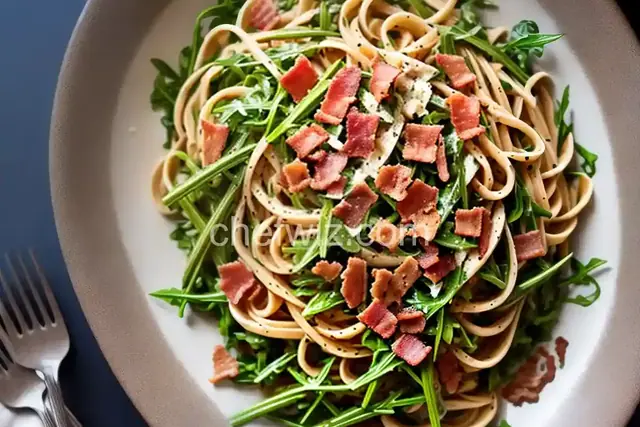
Imagine a dish that combines the delicate flavors of asparagus, the smoky richness of bacon, and the peppery bite of arugula. Linguine with Asparagus Bacon and Arugula is a culinary masterpiece that will tantalize your taste buds and leave you craving for more.
Let's take a closer look at the stars of this dish. Asparagus, with its vibrant green color and tender spears, adds a refreshing crunch and a subtle earthy taste. Bacon, with its savory and slightly sweet profile, brings depth and richness to every bite. And arugula, with its peppery and slightly bitter notes, provides a delightful contrast to the other ingredients.
Pasta is the canvas on which these flavors come together harmoniously. Linguine, with its long and slender shape, is the perfect choice for this dish. Its texture complements the asparagus and arugula, while its ability to hold onto the sauce ensures that every bite is packed with flavor.
Preparing Linguine with Asparagus Bacon and Arugula is like conducting an orchestra. First, cook the bacon until it's crispy and golden brown. This step infuses the dish with a smoky aroma and adds a satisfying crunch. Next, blanch the asparagus to bring out its vibrant color and crispness. Finally, sauté the arugula until it wilts slightly, accentuating its unique flavor profile.
To tie everything together, a simple yet flavorful sauce is created. The combination of garlic, olive oil, and a splash of lemon juice enhances the natural flavors of the ingredients without overpowering them. This sauce coats each strand of linguine, ensuring that every bite is bursting with the perfect balance of flavors.
Linguine with Asparagus Bacon and Arugula is a versatile dish that can be enjoyed on its own or paired with a variety of accompaniments. For a heartier meal, add grilled chicken or shrimp. For a touch of freshness, sprinkle some grated Parmesan cheese or lemon zest on top. The possibilities are endless, allowing you to customize this dish to suit your taste.
Whether you're a seasoned chef or a novice in the kitchen, Linguine with Asparagus Bacon and Arugula is a culinary adventure worth embarking on. The combination of flavors, textures, and aromas will delight your senses and leave you craving for more. So gather your ingredients, put on your apron, and let your taste buds be transported to a world of gastronomic bliss.
Absolutely! Linguine is the recommended choice, but feel free to experiment with other pasta shapes to suit your preference.
Yes, simply omit the bacon and replace it with a vegetarian alternative or add extra vegetables for added flavor.
The asparagus should be blanched for approximately 2-3 minutes until it is bright green and crisp-tender.
While arugula adds a unique peppery flavor, you can substitute it with spinach or kale if desired.
It is best to serve Linguine with Asparagus Bacon and Arugula immediately after cooking to enjoy its fresh flavors and textures.
Fresh asparagus is recommended for this dish, as it provides a vibrant color and a crisp texture that enhances the overall experience.
Absolutely! Feel free to add your favorite vegetables such as cherry tomatoes, mushrooms, or bell peppers to make it even more nutritious and flavorful.
Yes, you can experiment with different types of meat such as pancetta or prosciutto to add your own personal touch to the dish.
While Parmesan cheese is traditionally used, you can substitute it with other hard cheeses like Pecorino Romano or Grana Padano for a different flavor profile.
AprilCook, recipe developer and the heart of Chefwiz. More about April