Lime Bars
Rate this recipeBe the first to rate
 By AprilPublished
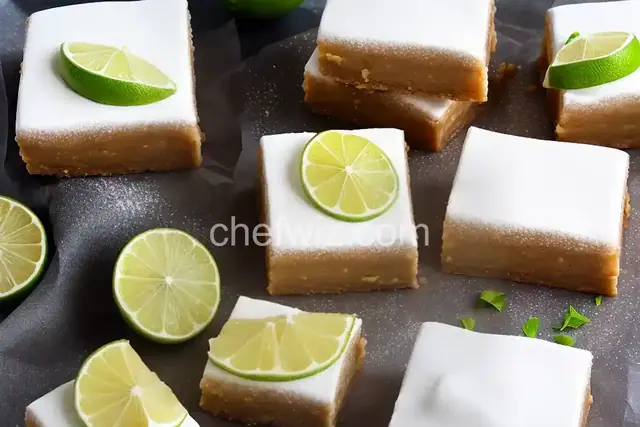
 Are you a fan of tangy and refreshing desserts? Look no further than lime bars!
 By AprilPublished
 Are you a fan of tangy and refreshing desserts? Look no further than lime bars!
Preheat the oven to 350 degrees F.
Generously butter a 13x9 inch baking pan.
In a food processor, combine 2 cups of flour, butter, 1/2 cup of powdered sugar, ground almonds, lime peel, and salt. Process until moist clumps form.
Press the mixture onto the bottom of the prepared pan.
Bake for approximately 20 minutes or until the edges are golden.
In a large bowl, whisk together sugar, eggs, lime juice, baking powder, and the remaining 1/4 cup of flour until well blended.
Pour the mixture over the hot crust.
Bake for about 25 minutes or until the topping is set and lightly golden.
Allow the pan to cool on a rack.
Sift additional powdered sugar over the top.
Cut into squares and serve.
Are you a fan of tangy and refreshing desserts? Look no further than lime bars! These zesty treats are the perfect balance of sweet and tart, making them a delightful dessert option for any occasion. In this article, we will delve into the world of lime bars, exploring their origins, variations, and tips for making the best batch. So, grab a slice and let's dive in!
Just like the bright and vibrant citrus fruit itself, lime bars have a fascinating history. These delectable treats can be traced back to their cousin, the lemon bar. Lemon bars have been enjoyed for centuries, and it was only a matter of time before lime took the spotlight.
It is believed that lime bars gained popularity in the United States during the mid-20th century. The tangy flavor and creamy texture quickly won over dessert enthusiasts, and lime bars became a staple in many households. Today, they are a beloved dessert option that can be found in bakeries and kitchens all around the world.
Now that we know a bit about the history of lime bars, let's dive into the process of creating the perfect batch. While the exact recipe may vary, there are a few key elements to keep in mind:
The crust is the foundation of any good lime bar. It should be buttery, crumbly, and provide a nice contrast to the tangy lime filling. Some bakers opt for a traditional shortbread crust, while others experiment with graham cracker or even coconut crusts. The choice is yours!
The star of the show, the filling, should be bursting with lime flavor. Freshly squeezed lime juice is key here, as it provides that authentic and tangy taste. To balance out the tartness, a touch of sweetness is usually added in the form of sugar or condensed milk.
For an extra burst of lime flavor, don't forget about the zest! Lime zest adds a fragrant and citrusy kick to the bars, elevating the overall taste experience. Be sure to finely grate the zest to avoid any bitter notes.
Patience is key when it comes to baking lime bars. They need enough time in the oven to set properly without overcooking. Keep a close eye on the bars and remove them from the oven when the edges are golden and the center is set, yet still slightly jiggly.
While lime bars are delicious on their own, they can also be paired with various accompaniments to enhance the overall experience. Here are a few ideas:
The light and airy texture of whipped cream provides a lovely contrast to the tangy lime filling. Dollop a generous amount on top of each slice for a creamy and dreamy combination.
For a pop of color and added freshness, serve lime bars with a side of fresh berries. Strawberries, blueberries, and raspberries all complement the tartness of the bars beautifully.
Garnish each slice with a sprig of fresh mint leaves to add a touch of herbal freshness. The minty aroma pairs wonderfully with the zesty lime flavor.
Lime bars are a delightful dessert option for those seeking a tangy and refreshing treat. With their origins dating back decades, they have stood the test of time and continue to be a beloved dessert in many homes. Whether you enjoy them on their own or pair them with whipped cream and fresh berries, lime bars are sure to satisfy any citrus lover's craving. So, why not give them a try and indulge in a burst of limey goodness?
While bottled lime juice can be used in a pinch, fresh lime juice will always yield the best results. The natural acidity and flavor of fresh limes cannot be replicated.
Absolutely! Lime bars can be made in advance and stored in the refrigerator for up to three days. This makes them a convenient dessert option for parties and gatherings.
Yes, you can freeze lime bars for future enjoyment. Simply wrap them tightly in plastic wrap or place them in an airtight container before freezing. Thaw them in the refrigerator before serving.
Definitely! If you prefer a more traditional lemon bar, you can easily swap out the limes for lemons in the recipe. The result will be a tangy and delicious lemon bar.
Traditional lime bar recipes contain gluten due to the wheat flour used in the crust. However, there are gluten-free alternatives available, such as using almond flour or gluten-free graham crackers for the crust.
Absolutely! Adding a fluffy meringue topping is a wonderful way to elevate your lime bars. Simply beat egg whites with sugar until stiff peaks form, then spread it over the baked bars and toast it in the oven until golden.
Yes, you can experiment with other citrus fruits such as lemons, oranges, or even grapefruits to create unique variations of citrus bars. Each fruit will bring its own distinct flavor profile to the dessert.
Yes, there are eggless lime bar recipes available that use alternative ingredients such as silken tofu or cornstarch as a binding agent. These recipes are perfect for those with dietary restrictions or allergies.
AprilCook, recipe developer and the heart of Chefwiz. More about April