Lebanese Stuffed Grape Leaves
Rate this recipeBe the first to rate
 By AprilPublished
 Have you ever tasted the exquisite flavors of Lebanese cuisine?
 By AprilPublished
 Have you ever tasted the exquisite flavors of Lebanese cuisine?
In a large mixing bowl, combine the ground beef, rice, garlic powder, allspice, salt, pepper, and cinnamon. Set aside.
Rinse the grape leaves thoroughly. If the leaves are small, leave them whole but remove the large vein. If the leaves are large, cut them in half vertically and remove the large vein.
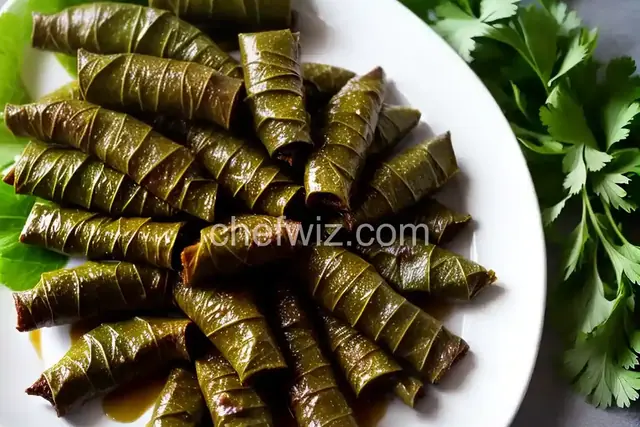
Place a small amount of the ground meat mixture at one end of each leaf and roll them up, similar to egg rolls.
Pour the oil into the bottom of a large Dutch oven. Arrange the chops on top of the oil, followed by the tomato slices.
Place the stuffed grape leaves seam-side down on top of the chops, packing them tightly. If needed, start a second layer. Randomly place whole garlic cloves between the rolled leaves, ensuring there is enough garlic on each layer.
After stacking, pour the lemon juice over the leaves and add enough water to the pot so that it is about 2 inches above the rolled leaves. To prevent the leaves from unrolling while cooking, place a plate on top of the stack and weigh it down with a heavy object.
Simmer the leaves over low heat for approximately 2 hours.
Invert the entire Dutch oven onto a large platter with high sides, or use tongs to carefully remove the leaves from the pot. Serve in a rustic style, accompanied by plenty of Arabic bread to enjoy with the garlic.
Have you ever tasted the exquisite flavors of Lebanese cuisine? If not, then you're in for a treat! One of the most beloved dishes in Lebanese cuisine is stuffed grape leaves, also known as "warak enab." These little parcels of deliciousness are packed with savory fillings and wrapped in tender grape leaves, creating a delightful burst of flavors in every bite.
Imagine the tender embrace of grape leaves holding a treasure trove of flavors. The process of making stuffed grape leaves is like creating a masterpiece. Each leaf is carefully selected, blanched to perfection, and filled with a mixture of aromatic rice, herbs, and spices.
Just like a painter carefully selects their colors, Lebanese cooks meticulously choose their ingredients to create the perfect balance of flavors. The combination of fresh herbs like mint and parsley, tangy lemon juice, and fragrant spices like allspice and cinnamon creates a symphony of tastes that dance on your palate.
Rolling grape leaves is an art in itself. The delicate leaves are carefully folded around the filling, creating little bundles of joy. It requires patience and skill to achieve the perfect shape and size, ensuring the flavors are evenly distributed.
Just like a skilled weaver, the Lebanese cook intertwines the grape leaves, creating a tapestry of flavors. The tightly wrapped parcels not only trap all the delicious fillings but also retain the moisture, resulting in tender bites that melt in your mouth.
As you take your first bite of Lebanese stuffed grape leaves, your taste buds are instantly awakened. The tangy and citrusy notes of lemon juice tickle your tongue, while the earthy flavors of the rice and herbs bring a sense of grounding.
Close your eyes and let the aromas transport you to the bustling streets of Beirut. The fragrant spices waft through the air, mingling with the scent of fresh herbs. It's a sensory experience like no other.
No, stuffed grape leaves are a popular dish in many Middle Eastern and Mediterranean cuisines. However, each region has its unique twist on the recipe.
While traditional Lebanese recipes call for grape leaves, you can experiment with other types of leaves like cabbage or collard greens for a different twist on the dish.
Stuffed grape leaves can be enjoyed both hot and cold. Many people prefer to serve them at room temperature, allowing the flavors to meld together.
Absolutely! Stuffed grape leaves can be made in advance and refrigerated. In fact, they often taste even better the next day as the flavors have had time to mingle.
Traditional Lebanese stuffed grape leaves are often vegetarian, with the filling consisting of rice, herbs, and spices. However, some recipes may include ground meat for added richness.
To blanch grape leaves, bring a pot of water to a boil and submerge the leaves for a few seconds until they become pliable. Then, transfer them to an ice bath to cool down.
Absolutely! Stuffed grape leaves freeze well, making them a convenient option for meal prep. Just make sure to wrap them tightly in plastic wrap or place them in an airtight container before freezing.
Stuffed grape leaves are often served with a side of tzatziki sauce, a refreshing yogurt and cucumber dip. You can also enjoy them with a squeeze of lemon juice or alongside a fresh salad.
In conclusion, Lebanese stuffed grape leaves are a culinary delight that takes you on a flavorful journey. The careful selection of ingredients, the artful rolling of the parcels, and the explosion of flavors in every bite make this dish truly special. Whether you're a seasoned foodie or a curious beginner, give these little parcels of joy a try and embark on a delicious adventure!
AprilCook, recipe developer and the heart of Chefwiz. More about April