Lava Flow
Rate this recipeBe the first to rate
 By AprilPublished
Have you ever been captivated by the mesmerizing sight of molten lava flowing down the side of a volcano?
 By AprilPublished
Have you ever been captivated by the mesmerizing sight of molten lava flowing down the side of a volcano?
Add strawberries, light rum, and dark rum to a blender.
Blend the ingredients until they form a smooth puree.
Pour the strawberry mixture into a tall glass.
Rinse out the blender.
Add banana, pineapple juice, and cream of coconut to the blender.
Blend the ingredients until they form a smooth mixture.
Slowly pour the banana mixture into the glass with the strawberry mixture.
Observe as the lava-like mixture rises.
Have you ever been captivated by the mesmerizing sight of molten lava flowing down the side of a volcano? The sheer power and beauty of this natural phenomenon can leave you in awe. In this article, we will take a closer look at the fascinating process of lava flow and delve into the science behind it. So, let's embark on this journey to understand the fiery rivers that shape our planet.
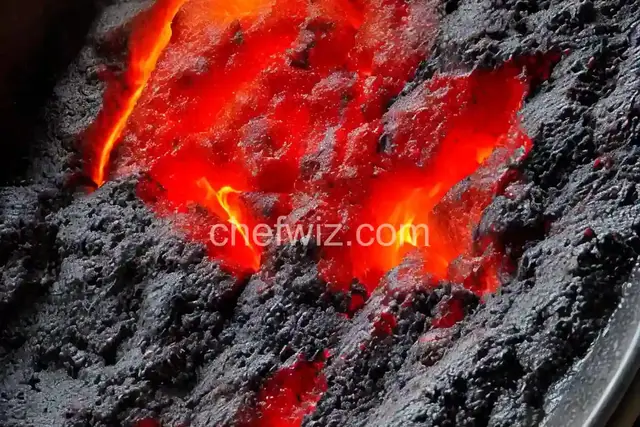
Imagine a river of molten rock, glowing red-hot and slowly making its way down a mountain. That's lava flow in a nutshell. Lava flow occurs when magma, which is molten rock beneath the Earth's surface, erupts from a volcano and cascades down its slopes. As it cools and solidifies, it forms new land, creating unique geological features.
Lava flow is a complex process that involves various factors. Let's break it down step by step:
Before lava flow can occur, there needs to be an eruption. Volcanic eruptions happen when pressure builds up beneath the Earth's surface, causing magma to rise to the top. Once the magma reaches the surface, it is known as lava.
The viscosity of lava plays a crucial role in determining how it flows. Viscosity refers to the lava's resistance to flow. Lava with high viscosity is sticky and thick, making it flow slowly. On the other hand, lava with low viscosity flows more freely.
As lava flows down the volcano, it often forms channels and tubes. These pathways act as conduits, guiding the lava towards lower elevations. The formation of channels and tubes depends on various factors, including the slope of the volcano and the viscosity of the lava.
As lava comes into contact with the cooler air or water, it begins to cool down and solidify. The outer layer of the lava flow solidifies first, creating a crust that insulates the molten lava beneath. This crust can sometimes crack, allowing the lava to continue flowing.
Lava flow can take on different forms based on its characteristics and the environment in which it occurs. Here are a few common types:
'A'a (pronounced "ah-ah") is a type of lava flow characterized by its rough and jagged surface. It is formed by highly viscous lava that moves slowly, causing the surface to crumble and break apart. Walking on 'a'a can be challenging due to its sharp edges.
Pahoehoe (pronounced "pah-hoy-hoy") is a type of lava flow that has a smooth and ropey texture. It is formed by low-viscosity lava that flows more easily. Pahoehoe often creates intricate patterns and can be described as looking like twisted ropes.
Pillow lava forms when lava erupts underwater or flows into the ocean. The rapid cooling and solidification of the lava create pillow-like structures. These rounded formations resemble pillows stacked on top of each other and are commonly found in submarine volcanic regions.
Lava flow has both positive and negative effects on the surrounding environment:
One of the positive impacts of lava flow is the creation of new land. Over time, repeated lava flows can build up and form vast volcanic landscapes. These areas often become fertile ground for plant and animal life.
Lava flow can also be destructive, especially when it engulfs human settlements or infrastructure. The molten rock has the power to melt and burn everything in its path, leaving behind a trail of devastation.
Interestingly, lava flow can also have a positive impact on energy production. Geothermal energy, which harnesses the heat from underground sources, can be generated in areas where volcanic activity and lava flow are prevalent.
Lava flow is a fascinating natural process that shapes our planet's landscapes. From the fiery rivers that flow down volcanoes to the unique geological formations they create, there is much to learn and appreciate. So, the next time you witness the raw power of lava flow, take a moment to marvel at the wonders of our dynamic Earth.
The speed of lava flow can vary greatly, ranging from a few meters per hour to several kilometers per hour.
While scientists can monitor volcanic activity and make predictions, accurately forecasting the path and behavior of lava flow remains challenging.
It is extremely dangerous to be near an active lava flow. The intense heat and toxic gases can cause severe harm or even death.
The duration of a lava flow can vary, ranging from days to years, depending on the size and activity of the volcano.
Lava flow can indeed move uphill, especially if the slope is not too steep and the lava has high fluidity.
No, the speed of lava flow can vary within the same flow due to differences in slope and lava viscosity.
Yes, lava can flow through pre-existing tunnels or create new tunnels as it moves.
AprilCook, recipe developer and the heart of Chefwiz. More about April