Kuy Teav
Rate this recipeBe the first to rate
 By AprilPublished
 Are you tired of the same old noodle dishes and want to try something new and exciting?
 By AprilPublished
 Are you tired of the same old noodle dishes and want to try something new and exciting?
Place 1 cup of dried shrimp in a small bowl. Add warm water to cover and let it sit for 30 minutes, then drain.
Position an oven rack under the broiler. Line baking sheet(s) with aluminum foil and preheat the broiler to high.
Toss the white and light green parts of the scallions, halved garlic heads, onion, sweet potato, carrot, bok choy, and daikon with vegetable oil. Spread them out in a single layer on the prepared baking sheet(s). Broil, turning every 3 to 4 minutes, until blackened (about 15 to 20 minutes). Transfer the charred vegetables to a large stockpot.
Add the soaked shrimp, squid, whole pickled radish, pork neck bones, pork rib bones, chicken drumsticks, rehydrated shiitake mushrooms, fish sauce, soy sauce, chicken bouillon, and sugar to the stockpot. Pour in 6 to 8 quarts of water (or more, if needed, to cover) and bring to a boil over high heat. Reduce the heat to medium-low and simmer for about 30 minutes. Remove the pork rib bones and set them aside to cool.
Continue simmering the broth for another 2 1/2 to 3 hours until well flavored.
Place a fine-mesh strainer over a small heatproof bowl. Heat 1/
Are you tired of the same old noodle dishes and want to try something new and exciting? Look no further than Kuy Teav, a delightful Cambodian noodle soup that will tantalize your taste buds and leave you craving for more. In this article, we will explore the rich flavors and cultural significance of Kuy Teav, and why it has become a favorite among locals and tourists alike.
Like a culinary time capsule, Kuy Teav captures the essence of Cambodian cuisine, blending influences from China, Vietnam, and Thailand. This hearty soup has a history that dates back centuries, with each region in Cambodia adding its own unique twist to the recipe. Made with love and care, Kuy Teav is a testament to the country's rich cultural heritage.
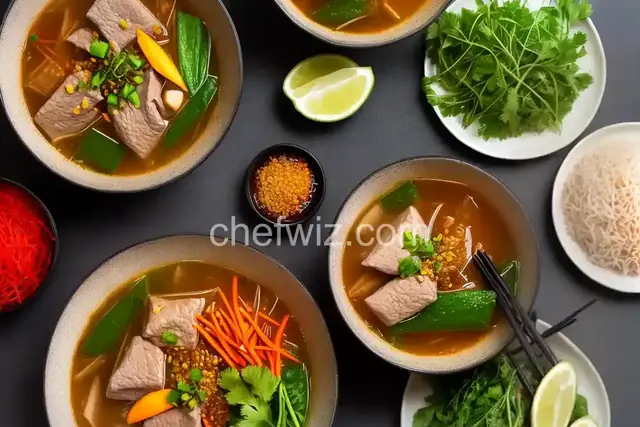
Imagine a steaming bowl of silky rice noodles swimming in a fragrant broth, topped with succulent slices of pork, tender beef, or fresh seafood. The flavors are further enhanced with aromatic herbs and spices, such as lemongrass, garlic, and ginger. The result is a harmonious symphony of sweet, sour, and savory notes that dance on your palate with every spoonful.
Kuy Teav is not just a dish; it's an experience. The moment you take your first bite, you are transported to the bustling streets of Cambodia, where the aroma of street food fills the air. The soft noodles caress your tongue, while the rich broth warms your soul. It's a sensory delight that will leave you craving for more.
Food is more than just sustenance; it is an integral part of a nation's identity. Kuy Teav holds a special place in Cambodian culture, often served as a comfort food during family gatherings and celebrations. It is a dish that brings people together, fostering a sense of community and connection.
Not only is Kuy Teav delicious, but it also packs a nutritional punch. The use of fresh ingredients and aromatic herbs not only enhances the flavor but also provides a host of health benefits. From boosting the immune system to aiding digestion, Kuy Teav is a nourishing bowl of goodness that will leave you feeling satisfied and revitalized.
Kuy Teav is more than just a bowl of soup; it's a journey into the heart of Cambodian cuisine. Its rich flavors, cultural significance, and health benefits make it a truly remarkable dish. So, why not step out of your culinary comfort zone and savor the delights of Kuy Teav? Your taste buds will thank you!
While the traditional recipe uses wheat-based noodles, there are gluten-free alternatives available, such as rice noodles or zucchini noodles, which can be used to make Kuy Teav suitable for those with gluten sensitivities.
Absolutely! You can easily customize Kuy Teav to suit your dietary preferences by substituting meat with tofu, mushrooms, or a medley of colorful vegetables. The flavors will still be just as delightful!
While the classic version of Kuy Teav features pork or beef, there are numerous variations to explore. Some popular variations include seafood Kuy Teav, chicken Kuy Teav, and even vegetarian Kuy Teav.
It is not advisable to freeze Kuy Teav, as the texture of the noodles may become mushy when thawed. It is best enjoyed fresh, straight from the stove.
As the popularity of Cambodian cuisine grows, you may find Kuy Teav being served in select Cambodian restaurants around the world. It's always a good idea to explore local cuisine and support small businesses.
To complete your Kuy Teav experience, consider adding some traditional Cambodian side dishes, such as fried spring rolls, prahok (fermented fish dip), or a refreshing green mango salad. These flavorful accompaniments will take your meal to the next level.
Absolutely! If you prefer a milder version, you can reduce or omit the amount of chili used in the recipe. Likewise, if you enjoy a fiery kick, feel free to add more chili to suit your taste buds.
Not at all! While Kuy Teav may seem like a complex dish, it can be easily prepared in the comfort of your own kitchen. With a little bit of patience and a handful of fresh ingredients, you can recreate the flavors of Cambodia in your own home.
AprilCook, recipe developer and the heart of Chefwiz. More about April