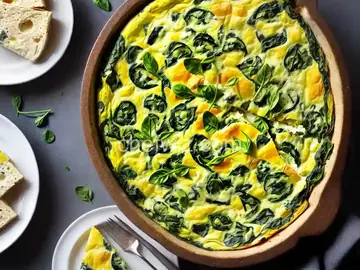
Kuku Sabzi
Rate this recipeBe the first to rate
 By AprilPublished
 Are you searching for a delicious and nutritious breakfast option that will tantalize your taste buds?
 By AprilPublished
 Are you searching for a delicious and nutritious breakfast option that will tantalize your taste buds?
Cut the leek in half lengthwise, then thinly slice it crosswise.
In a 10-inch, nonstick, broiler-safe skillet, heat 1 tablespoon of oil over medium heat. Add the sliced leek and cook until softened and cooked through, stirring occasionally, for about 8 to 10 minutes. Remove from heat.
Preheat the oven's broiler with the rack in the upper third position.
In a large bowl, whisk the eggs. Add baking powder, fenugreek, salt, and turmeric, and whisk until thoroughly combined.
Fold in the parsley, cilantro, dill, and cooked leeks into the eggs. Gently stir to combine, ensuring the mixture is mostly herbs with enough egg to moisten it.
In the same skillet, heat the remaining 2 tablespoons of oil over medium heat. Add the herb mixture and spread it evenly in the pan, smoothing the top. Cover and cook undisturbed until the bottom and edges are just set, approximately 8 minutes.
Remove the cover and transfer the skillet to the preheated oven. Cook until the top and middle of the mixture are cooked through, which should take about 1 to 2 minutes.
To easily chop large amounts of herbs, tightly roll them into a bundle or ball, holding them together with one hand. With the other hand, run a knife through the bundle, chopping as you move
Are you searching for a delicious and nutritious breakfast option that will tantalize your taste buds? Look no further than Kuku Sabzi, a delightful Persian herb frittata. Bursting with flavors and packed with fresh herbs, this dish is a perfect way to start your day on a scrumptious note.
Like many traditional dishes, Kuku Sabzi has a rich history that dates back centuries. In Persian cuisine, "Kuku" refers to a type of frittata, and "Sabzi" means herbs in Farsi. This flavorful dish is believed to have originated in ancient Persia, where it quickly gained popularity due to its simplicity and versatility.
What sets Kuku Sabzi apart from other frittatas is the generous amount of fresh herbs used in its preparation. The dish typically includes a medley of herbs such as parsley, cilantro, dill, and fenugreek. These aromatic herbs not only add a burst of flavor but also provide a plethora of health benefits.
Imagine starting your day with a dish that is not only delicious but also packed with essential nutrients. Kuku Sabzi fits the bill perfectly. The combination of fresh herbs, eggs, and spices creates a nutrient-rich meal that is high in vitamins, minerals, and antioxidants.
Preparing Kuku Sabzi requires a little bit of time and effort, but the end result is well worth it. The process involves finely chopping the herbs, whisking the eggs, and then combining them with the herbs and spices. The mixture is then cooked in a skillet until it becomes golden brown and slightly crispy on the outside.
One of the best things about Kuku Sabzi is its versatility. You can enjoy it for breakfast, brunch, or even as a light lunch or dinner option. You can also customize the dish according to your taste preferences by adding ingredients like feta cheese, walnuts, or even sautéed vegetables.
Exploring different cuisines allows us to experience and appreciate diverse cultures. Kuku Sabzi offers a glimpse into the vibrant Persian culinary heritage. By savoring this dish, you are not only treating your taste buds but also embarking on a cultural journey.
Inspired by Persian culinary traditions, Kuku Sabzi is not just a frittata - it's a flavorful journey through time and culture. With its vibrant colors, aromatic herbs, and endless customization options, this dish is sure to become a favorite in your kitchen. So, why not give Kuku Sabzi a try and embark on a culinary adventure like no other?
Yes, you can freeze Kuku Sabzi for future use. Simply wrap individual portions in plastic wrap or foil, and store them in a freezer-safe container for up to three months.
While fresh herbs are preferred for their vibrant flavors, you can use dried herbs if fresh ones are not available. However, keep in mind that the taste may differ slightly.
Absolutely! You can easily make a vegan version of Kuku Sabzi by substituting eggs with tofu or chickpea flour. The result will be equally delicious and nutritious.
Kuku Sabzi pairs well with a variety of side dishes. You can serve it with flatbread, yogurt, pickles, or a fresh salad for a complete meal.
Yes, you can experiment with different herbs according to your preference. Some variations include adding mint, chives, or even spinach to the mix.
Yes, Kuku Sabzi is naturally gluten-free, making it a great option for individuals with gluten sensitivities or dietary restrictions.
Absolutely! Kuku Sabzi is a great make-ahead dish. You can prepare it the night before and refrigerate it. Simply reheat it in the oven or microwave before serving.
If you have any leftovers, store them in an airtight container in the refrigerator for up to three days. You can enjoy them cold or reheat them before serving.
AprilCook, recipe developer and the heart of Chefwiz. More about April