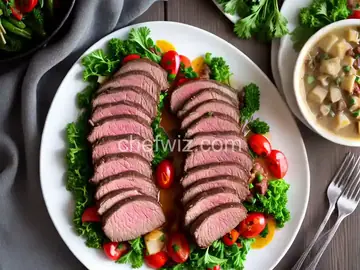
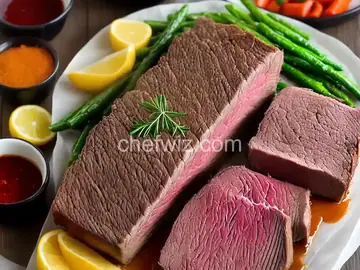
Kosher Salt Encrusted Prime Rib Roast
Rate this recipeBe the first to rate
 By AprilPublished
 Are you a fan of juicy, tender, and flavorful prime rib roast?
 By AprilPublished
 Are you a fan of juicy, tender, and flavorful prime rib roast?
Preheat the oven to 210 degrees F (100 degrees C).
Line the bottom of a roasting pan with kosher salt.
Place the roast, bone side down, on top of the salt.
Season the meat with ground black pepper and seasoning salt.
Completely cover the roast with kosher salt.
Roast in the preheated oven for 4 to 5 hours, or until the internal temperature of the meat reaches 145 degrees F (63 degrees C).
Remove the roast from the oven and let it rest for 30 minutes. This will allow the juices to settle and make carving easier.
Before serving, make sure to remove all the salt from the roast.
Are you a fan of juicy, tender, and flavorful prime rib roast? If so, then you're in for a treat with this recipe for a kosher salt encrusted prime rib roast. It's a mouthwatering dish that will make any occasion extra special.
When it comes to seasoning a prime rib roast, there are many options to choose from. However, kosher salt stands out for a few reasons. First, its coarse texture helps to create a crust on the outside of the meat, which locks in the juices and enhances the flavor. Second, kosher salt has a cleaner taste compared to other types of salt, allowing the natural flavors of the meat to shine through. Lastly, kosher salt is less likely to contain additives, making it a healthier choice.
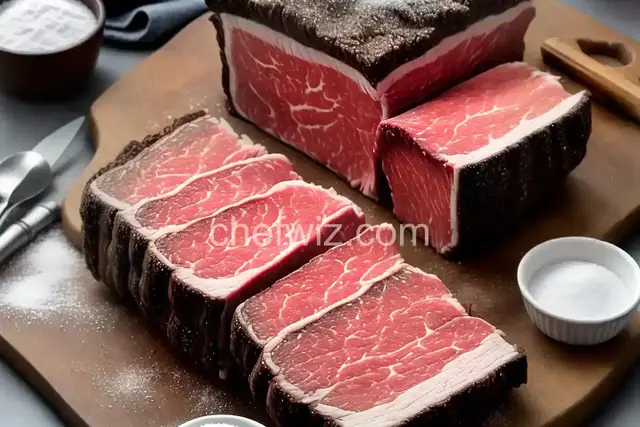
Imagine a thick layer of salt forming a protective shield around the prime rib roast, sealing in all the succulent flavors. This is what the encrusting process achieves. The kosher salt acts as a barrier, keeping the juices inside the meat and infusing it with a savory taste. As the roast cooks, the salt crust slowly dissolves, leaving behind a perfectly seasoned and tender prime rib.
Before encrusting the prime rib roast with salt, it's essential to prepare it properly. Start by ensuring that the roast is at room temperature, as this allows for even cooking. Next, trim any excess fat, but leave a thin layer to add flavor and moisture to the meat. Finally, season the roast with your favorite herbs and spices to enhance its taste.
Now comes the fun part - encrusting the prime rib roast with kosher salt. Generously coat the entire surface of the roast with salt, ensuring that it forms a thick layer. The salt will adhere to the meat, creating a crust that locks in the juices and adds a delightful crunch. Don't worry about the roast becoming too salty; most of the salt will be discarded after cooking.
Place the salt-encrusted prime rib roast on a rack in a roasting pan, bone-side down. This allows heat to circulate evenly around the meat, ensuring uniform cooking. Cook the roast at a high temperature initially to sear the outside and seal in the juices. Then, reduce the heat and continue cooking until the desired level of doneness is achieved.
A kosher salt encrusted prime rib roast is a showstopping centerpiece for any special occasion. The salt crust locks in the juices, creating a succulent and flavorful piece of meat. With the right preparation and cooking techniques, you can enjoy a tender and mouthwatering prime rib that will impress your guests. So go ahead, give this recipe a try, and elevate your dining experience to new heights!
A1: While you can use regular table salt, kosher salt is recommended for its texture and taste. It helps create a better crust and enhances the flavor of the meat.
A2: The cooking time depends on the size of the roast and the desired level of doneness. As a general guideline, allow around 15 minutes of cooking time per pound of meat for medium-rare.
A3: It is not necessary to cover the roast while cooking. The salt crust helps to seal in the moisture, resulting in a juicy and flavorful prime rib.
A4: Absolutely! Feel free to experiment with different herbs and spices to suit your taste preferences. Just remember to season the roast before encrusting it with salt.
A5: The best way to determine the doneness of the roast is by using a meat thermometer. For medium-rare, the internal temperature should reach around 135°F (57°C).
A6: It is not recommended to reuse the salt as it has absorbed moisture and flavors from the roast. It is best to discard it and use fresh salt for future cooking.
A7: Yes, it is essential to let the roast rest for about 15-20 minutes before slicing. This allows the juices to redistribute, resulting in a more tender and flavorful prime rib.
A8: Prime rib roast pairs well with various side dishes such as roasted vegetables, mashed potatoes, or a fresh salad. Don't forget to serve some horseradish sauce or au jus for extra flavor!
AprilCook, recipe developer and the heart of Chefwiz. More about April