Korean Seafood Tofu Soup (Soondubu Jjigae)
Rate this recipeBe the first to rate
 By AprilPublished
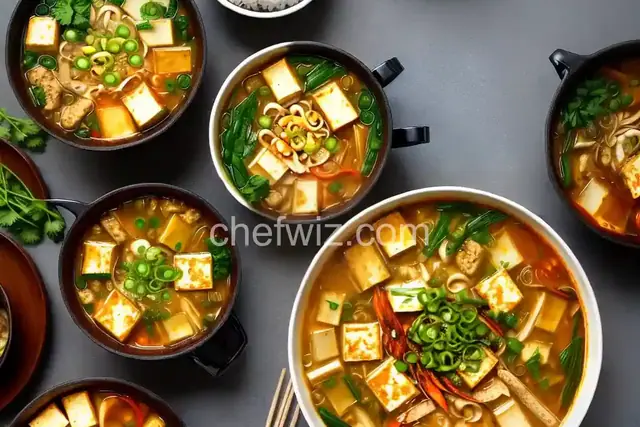
 When it comes to comforting and delicious Korean dishes, Soondubu Jjigae, a spicy Korean seafood tofu soup, is a true winner.
 By AprilPublished
 When it comes to comforting and delicious Korean dishes, Soondubu Jjigae, a spicy Korean seafood tofu soup, is a true winner.
In a large pot, bring the chicken stock, kelp, and dried anchovies to a boil.
Cover the pot and let it cook over medium heat for approximately 10 minutes.
Strain the broth, discarding the kelp and anchovies.
In the same pot, cook the pork belly over medium heat until it is browned, which should take about 3 to 5 minutes.
Transfer the pork belly to a small bowl and keep the drippings in the pot.
Add the red pepper flakes to the pot and cook and stir them until they start sizzling, which should take around 30 seconds.
Return the pork belly to the pot.
Add the strained broth, zucchini, onion, kimchi, serrano chile peppers, ginger, fish sauce, and sugar to the pot.
Cover the pot and let the soup simmer until the flavors combine, which should take approximately 15 minutes.
Stir the tofu, shrimp, mussels, clams, mushrooms, and garlic into the soup.
Simmer the soup until the mussels and clams have opened, which should take about 5 minutes.
Gently break the tofu into chunks.
Ladle the boiling soup into serving bowls.
Crack an egg into each serving bowl.
Garnish the soup with green onions.
If desired, you can substitute water for the
When it comes to comforting and delicious Korean dishes, Soondubu Jjigae, a spicy Korean seafood tofu soup, is a true winner. This hearty soup is a perfect balance of spiciness, umami flavors, and the delicate texture of soft tofu. Whether you're a fan of seafood or tofu, this dish is sure to satisfy your taste buds.
Soondubu Jjigae has its roots in Korean cuisine and is a staple in many households. The dish is believed to have originated from the city of Busan, known for its fresh seafood. The combination of seafood and tofu creates a harmonious blend of flavors that is loved by many.
What makes Soondubu Jjigae so special is the unique combination of flavors. The broth is made with a spicy and savory base, infused with gochujang, a Korean chili paste that adds a kick of heat and depth of flavor. The addition of seafood such as clams, shrimp, and squid adds a touch of brininess, while the soft tofu brings a delicate and silky texture to the soup. The flavors come together to create a symphony of taste that is hard to resist.
Not only is Soondubu Jjigae a flavorful and satisfying dish, but it also comes with a host of nutritional benefits. Tofu, the main ingredient of the soup, is a great source of plant-based protein and is low in calories. Seafood, on the other hand, is rich in omega-3 fatty acids, vitamins, and minerals. This combination makes Soondubu Jjigae not only a delicious meal but also a nutritious one.
While Soondubu Jjigae is often enjoyed during cold winter months, it can be enjoyed all year round. The spicy broth warms you up during chilly days, while the flavors are refreshing in the summer. The versatility of this soup makes it a favorite choice for many.
Making Soondubu Jjigae at home is easier than you might think. With a few simple ingredients and some basic cooking techniques, you can recreate this delicious Korean dish in your own kitchen. Start by preparing the broth, which involves sautéing aromatics and adding the spicy gochujang paste. Then, add your choice of seafood and tofu, allowing them to cook gently in the flavorful broth. Serve the soup hot with a side of rice and enjoy the explosion of flavors.
Soondubu Jjigae is a delightful Korean seafood tofu soup that brings together the comforting flavors of spicy broth, seafood, and soft tofu. This dish is not only delicious but also packed with nutritional benefits. Whether you're a fan of Korean cuisine or looking to try something new, Soondubu Jjigae is a must-try dish that will leave you wanting more. So grab a bowl, dive in, and let the flavors transport you to the vibrant streets of Korea.
Yes, you can definitely make Soondubu Jjigae without seafood. You can substitute the seafood with mushrooms or other vegetables of your choice to create a vegetarian version of the soup.
Yes, Soondubu Jjigae can be made gluten-free by using gluten-free soy sauce and ensuring that the gochujang paste you use is also gluten-free.
Yes, Soondubu Jjigae is known for its spicy flavor. However, you can adjust the level of spiciness according to your preference by adding more or less gochujang paste.
While it's best to enjoy Soondubu Jjigae fresh, you can freeze any leftovers for future meals. Just make sure to cool the soup completely before transferring it to an airtight container and freezing it. When ready to eat, thaw and reheat gently on the stovetop.
Aside from seafood and tofu, you can add various vegetables such as zucchini, mushrooms, or spinach to enhance the flavors and textures of the soup.
If you prefer a milder version of Soondubu Jjigae, you can reduce the amount of gochujang paste or use a mild variety of gochujang.
While Soondubu Jjigae is best enjoyed fresh, you can prepare the broth in advance and refrigerate it. When ready to serve, simply reheat the broth and add the seafood and tofu.
Soondubu Jjigae pairs well with various Korean side dishes such as kimchi, pickled vegetables, or a simple cucumber salad. These side dishes complement the flavors of the soup and add extra freshness to the meal.
AprilCook, recipe developer and the heart of Chefwiz. More about April