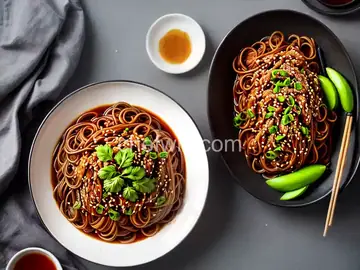
Konnyaku Recipe
Rate this recipeBe the first to rate
 By AprilPublished
 When it comes to trying out new and exciting recipes, konnyaku should definitely be on your list.
 By AprilPublished
 When it comes to trying out new and exciting recipes, konnyaku should definitely be on your list.
Bring a medium-sized pot of water to a boil.
Add the whole block of konnyaku or the package of shirataki to the boiling water and parboil for 10 minutes.
Drain and discard the water.
Cut the konnyaku lengthwise into two rectangular blocks.
Cut each block into pieces that are 1/2-inch thick.
Score each piece in a cross-hatch pattern to allow the flavors to penetrate.
Set aside the konnyaku or shirataki.
Place a heavy pan, such as a cast iron skillet, over high heat.
Add cooking oil or fat to the pan.
Add the cubed beef to the pan and lightly brown on two sides.
Remove the beef with a slotted spoon.
Using the remaining fat in the pan, lightly saute the parboiled and drained konnyaku or shirataki until the surface is blistered and slightly browned.
Remove and set aside the konnyaku or shirataki.
Place the beef, konnyaku or shirataki, and all the marinade ingredients into a medium saucepan.
Bring the pot to a boil.
Lower the heat to a simmer and cook for 1 to 1 1/2 hours, until the beef and konnyaku are tender.
If making a vegetarian option
When it comes to trying out new and exciting recipes, konnyaku should definitely be on your list. This traditional Japanese dish is not only packed with flavor, but it also offers a unique texture that will leave you wanting more. In this article, we will explore everything you need to know about konnyaku, including its origin, health benefits, and how to prepare it at home.
Konnyaku, also known as konjac or devil's tongue, has been a staple in Japanese cuisine for centuries. This gelatinous substance is derived from the konjac plant, which is native to East Asia. It is made by grinding the plant's corm into a fine powder and then mixing it with water to form a jelly-like substance. The konjac plant has long been valued in Japan for its medicinal properties and has been used in traditional Chinese medicine for over 2,000 years.
Not only is konnyaku delicious, but it also offers a range of health benefits. One of the key advantages of konnyaku is its low-calorie content. It is an ideal choice for those looking to maintain a healthy weight or lose a few pounds. Additionally, konnyaku is rich in dietary fiber, which can help improve digestion and prevent constipation. It is also a good source of vitamins and minerals, including calcium, iron, and potassium.
Preparing konnyaku at home is a relatively simple process. Start by purchasing konnyaku blocks from your local Asian grocery store or online. Then, follow these steps:
1. Rinse the konnyaku blocks under cold water to remove any excess starch.
2. Cut the konnyaku into small cubes or your preferred shape.
3. Bring a pot of water to a boil and add the konnyaku cubes.
4. Boil the konnyaku for 5 minutes to remove any unwanted smell or taste.
5. Drain the konnyaku cubes and rinse them under cold water.
6. Konnyaku is now ready to be added to your favorite recipes!
Konnyaku is a unique and delicious dish that offers a range of health benefits. Whether you're a vegetarian, vegan, or simply looking to try something new, konnyaku is definitely worth a try. Its gelatinous texture and ability to absorb flavors make it a versatile ingredient that can be used in a variety of dishes. So, why not give konnyaku a go and discover a new culinary delight?
Yes, konnyaku is a plant-based food and is suitable for both vegetarians and vegans.
Yes, konnyaku has a unique texture that can mimic the chewiness of meat, making it a great substitute in vegetarian or vegan dishes.
Konnyaku should be stored in a cool, dry place. Once opened, it is best to store it in the refrigerator in a sealed container.
Yes, konnyaku can be frozen for up to three months. Make sure to wrap it tightly in plastic wrap or place it in an airtight container before freezing.
Absolutely! Konnyaku can be used in various dessert recipes, such as konnyaku jelly or konnyaku fruit salad.
Konnyaku itself doesn't have much taste, but it absorbs flavors well, making it a versatile ingredient in savory dishes.
Yes, konnyaku is low in calories and high in fiber, making it a great addition to a weight loss diet.
Konnyaku is gluten-free and doesn't contain any common allergens, making it safe for most people with food allergies.
AprilCook, recipe developer and the heart of Chefwiz. More about April