Kaldereta Recipe
Rate this recipeBe the first to rate
 By AprilPublished
 Have you ever tasted a dish that made your taste buds dance with joy?
 By AprilPublished
 Have you ever tasted a dish that made your taste buds dance with joy?
In a large bowl, mix together oil, salt, and pepper.
Add the meat to the bowl and stir well to coat it with the mixture. Allow it to marinate at room temperature for 2 hours, making sure to turn the meat occasionally.
In a large pot or Dutch oven, melt the butter over medium heat.
Once the butter has melted, add the jalapeño, onion, and garlic. Sauté them until they turn light brown.
Add the meat to the pot and cook over medium heat until it is seared on all sides.
Stir in the tomato paste, ensuring that it blends well with the meat and onion mixture.
Add the crushed tomatoes, red and green peppers, chicken stock, and peanut butter to the pot.
Cover the pot and let the mixture simmer on low heat for 45 minutes, stirring occasionally.
Incorporate the cheese and peas into the pot.
Simmer the mixture on low heat, stirring regularly.
Once the sauce has thickened (approximately 5 minutes), remove the pot from the heat.
Serve the dish over white rice.
Have you ever tasted a dish that made your taste buds dance with joy? A dish that combines tender meat, rich sauce, and a burst of flavors that leave you craving for more? Look no further, because kaldereta is here to tantalize your senses and take you on a culinary journey like no other.
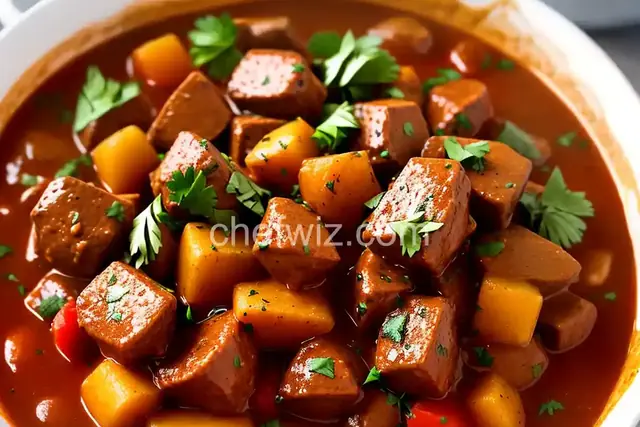
Kaldereta is a traditional Filipino dish that showcases the country's vibrant and diverse culinary heritage. It is a hearty stew typically made with tender chunks of meat, usually beef or goat, cooked in a flavorful tomato-based sauce. The dish is then elevated with the addition of vegetables such as potatoes, carrots, and bell peppers, giving it a delightful medley of textures and colors.
Like many Filipino dishes, kaldereta has its roots in Spanish cuisine. The name "kaldereta" is derived from the Spanish word "caldereta," which means "stewpot." The dish was introduced to the Philippines during the Spanish colonization and has since evolved into a beloved Filipino classic.
Over the years, Filipinos have infused their own unique flavors and ingredients into the dish, making it a true representation of their culture and culinary creativity. Kaldereta has become a staple on special occasions, family gatherings, and even everyday meals, showcasing its versatility and popularity across the country.
What sets kaldereta apart from other stews is its harmonious blend of flavors. The tomato-based sauce provides a tangy and slightly sweet base, complemented by the richness of the meat. The addition of spices and aromatics such as garlic, onions, and bay leaves adds depth and complexity to the dish.
But the real star of the show is the use of liver spread or liver pâté. This secret ingredient gives kaldereta its distinct taste and velvety texture, taking it to a whole new level of deliciousness. The liver spread not only enhances the flavor but also adds a touch of luxury to the dish, making it feel indulgent and special.
Cooking kaldereta is a labor of love, as it requires patience and attention to detail. The meat is first marinated to infuse it with flavors and tenderize it. Then, it is slowly simmered in the tomato-based sauce until it becomes fork-tender and the flavors meld together.
While the traditional recipe calls for beef or goat, kaldereta can also be made with other meats such as chicken or pork. The choice of meat depends on personal preference and availability. Each variation brings its own unique twist to the dish, making it adaptable to different tastes and preferences.
Kaldereta is a dish best enjoyed with loved ones. It is often served with steamed rice, which helps soak up the flavors of the rich sauce. The vibrant colors of the vegetables and the tender meat create a feast for the eyes, making it a visually appealing dish that is sure to impress.
Whether you are celebrating a special occasion or simply craving a comforting meal, kaldereta is the perfect choice. Its flavorful and robust profile will transport you to the heart of the Philippines, where food is not just sustenance but a celebration of life and culture.
Absolutely! While beef and goat are the traditional choices, you can experiment with chicken, pork, or even seafood to create your own twist on kaldereta.
Kaldereta can be as spicy as you want it to be. Adjust the amount of chili peppers or hot sauce according to your preference for heat.
Yes, you can! Substitute the meat with plant-based alternatives like tofu or seitan, and use vegetable broth instead of meat broth to create a delicious vegetarian kaldereta.
The cooking time for kaldereta can vary depending on the type of meat used. Beef and goat may take longer to become tender compared to chicken or pork. On average, it takes around 2-3 hours to cook kaldereta.
Yes, you can freeze leftover kaldereta for future consumption. Make sure to store it in airtight containers or freezer bags to maintain its quality.
Kaldereta pairs well with steamed rice, garlic fried rice, or even crusty bread. You can also serve it with a side of pickled vegetables or a fresh salad to balance the richness of the dish.
Absolutely! In fact, kaldereta tastes even better when made in advance as the flavors have time to develop and meld together. Simply reheat it before serving.
Of course! Cooking is all about personal preference. Feel free to adjust the amount of spices, vegetables, or even the secret ingredient to create a kaldereta that suits your taste buds.
In conclusion, kaldereta is more than just a stew. It represents the rich culinary heritage of the Philippines and showcases the creativity and passion of its people. So why not embark on a culinary adventure and savor the flavors of kaldereta? Your taste buds will thank you.
AprilCook, recipe developer and the heart of Chefwiz. More about April