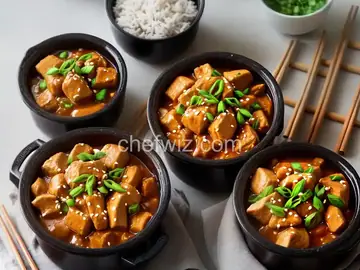
Juicy Chicken
Rate this recipeBe the first to rate
 By AprilPublished
 Who can resist the succulent, tender goodness of juicy chicken?
 By AprilPublished
 Who can resist the succulent, tender goodness of juicy chicken?
Combine soy sauce, sherry, chicken broth, ginger, garlic powder, and green onions in a small saucepan.
Bring the mixture to a boil, then remove from heat and set aside.
Preheat the broiler in your oven.
Thread pieces of chicken onto metal or bamboo skewers.
Coat a broiler pan with cooking spray and arrange the chicken skewers on it.
Spoon 1 or 2 tablespoons of the sauce over each chicken skewer.
Place the pan under the broiler and broil for approximately 3 minutes, or until the chicken is browned.
Remove the pan from the oven, turn over the chicken skewers, and spoon more sauce onto each one.
Return the pan to the oven and continue broiling until the chicken is cooked through and nicely browned.
Who can resist the succulent, tender goodness of juicy chicken? Whether it's grilled, roasted, or fried to perfection, this versatile protein is a staple in many cuisines around the world. But what makes chicken juicy? Is it simply a matter of cooking time or is there a secret technique to achieving that mouthwatering delight? In this article, we'll explore the science behind juicy chicken and share some tips on how to make your chicken dishes truly unforgettable.
Have you ever wondered why some chicken breasts turn out dry and flavorless, while others are juicy and bursting with taste? The secret lies in the chicken's moisture content and the cooking method used. Juicy chicken is the result of retaining as much moisture as possible during the cooking process.
When chicken is cooked, the proteins in the meat denature and coagulate, causing the muscle fibers to contract. This contraction squeezes out moisture, resulting in dry chicken. To prevent this, it's important to cook chicken at the right temperature and for the right amount of time.
To achieve juicy chicken, it's crucial to cook it at the right temperature. Cooking chicken at a high temperature for a short period of time can lead to dryness. On the other hand, cooking it at a low temperature for too long can result in undercooked chicken.
For most chicken dishes, a temperature of 165째F (74째C) is recommended. This ensures that the chicken is cooked through without drying it out. Invest in a reliable meat thermometer to accurately gauge the internal temperature of your chicken.
Marinating chicken is a great way to infuse flavor and retain moisture. A well-seasoned marinade not only adds taste but also helps tenderize the meat. The acidic components in the marinade, such as lemon juice or vinegar, break down the proteins in the chicken, making it more tender.
Allow your chicken to marinate for at least 30 minutes, or even overnight, before cooking. This gives the flavors time to penetrate the meat and helps lock in moisture. Remember to discard any leftover marinade that has come into contact with raw chicken to avoid cross-contamination.
1. Brining: Brining involves soaking chicken in a saltwater solution before cooking. This helps the chicken retain moisture, resulting in juicier meat.
2. Resting: Allow your cooked chicken to rest for a few minutes before cutting into it. This allows the juices to redistribute throughout the meat, resulting in a more tender and flavorful chicken.
3. Proper Slicing: When serving chicken, it's important to slice it against the grain. This breaks up the muscle fibers, resulting in a more tender bite.
4. Using a Meat Tenderizer: Pound your chicken breasts with a meat tenderizer or the back of a heavy skillet to break down the muscle fibers and make the meat more tender.
5. Basting: Basting your chicken with melted butter or flavorful juices while cooking helps keep it moist and adds an extra layer of flavor.
6. Using a Meat Thermometer: Invest in a meat thermometer to ensure your chicken is cooked to the right temperature without overcooking it.
7. Avoid Overcrowding: When cooking chicken, avoid overcrowding the pan or grill. This allows the chicken to cook evenly and prevents steaming, which can lead to dryness.
8. Quality Matters: Choose high-quality chicken for the juiciest results. Look for organic, free-range, or pasture-raised chicken, as they tend to have better texture and flavor.
Use a meat thermometer to check the internal temperature of the chicken. It should reach 165째F (74째C) for safe consumption.
While marinating chicken overnight can enhance the flavor, marinating it for too long can make the meat mushy. Aim for a marinating time of 30 minutes to overnight.
Yes, bottled marinades can be convenient, but they may contain additives and preservatives. For a healthier option, consider making your own marinades using fresh ingredients.
Yes, brining chicken for too long can result in overly salty meat. Follow the recommended brining times, usually 1-2 hours for chicken breasts.
It is not safe to use a marinade that has come into contact with raw chicken as a sauce. However, you can reserve some marinade before adding the chicken and use it as a sauce after proper cooking.
Yes, you can use the same marinade for different types of meat, but keep in mind that different meats may require different marinating times and cooking temperatures.
Yes, lime juice can be used as a substitute for lemon juice in marinades. It provides a similar acidic tang and helps tenderize the meat.
Allow your cooked chicken to rest for about 5-10 minutes before slicing into it. This allows the juices to redistribute, resulting in juicier meat.
In conclusion, achieving juicy chicken is a combination of proper cooking techniques, marinating, and resting. By following these tips and tricks, you can elevate your chicken dishes to a whole new level of flavor and tenderness. So go ahead, experiment with different marinades, and savor the delights of perfectly juicy chicken!
AprilCook, recipe developer and the heart of Chefwiz. More about April