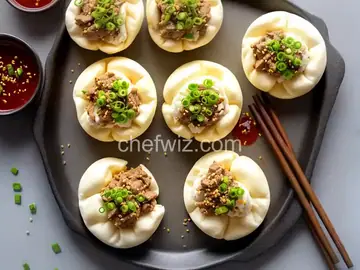
Jiaozi (Chinese Pork and Shrimp Dumplings)
Rate this recipeBe the first to rate
 By AprilPublished
 Are you a fan of Chinese cuisine? Do you love the delightful taste of dumplings?
 By AprilPublished
 Are you a fan of Chinese cuisine? Do you love the delightful taste of dumplings?
In a bowl, mix together 1/2 cup of cold water and cornstarch until well combined.
In a large bowl, combine the pork, shrimp, cabbage, chives, onions, ginger, garlic, cornstarch paste, wine, soy sauce, sesame oil, salt, and pepper. Mix well to combine.
In a separate bowl, mix the flour and remaining water. Knead the dough until it forms a smooth ball. Add extra water or flour if needed to achieve a slightly smooth and sticky consistency. Let the dough sit for 30 minutes.
Divide the dough into small balls and roll them out into circles with a 4-inch diameter. You should end up with approximately 30 dough circles.
Place 2 teaspoons of the filling onto the center of each dough circle.
Fold the dough circles in half, sealing the edges by pinching them together.
In a large pot, bring salted water to a boil. Gently add about 10 dumplings to the boiling water.
Bring the water back to a boil and add 1/2 cup of cold water. Repeat this process twice, ensuring that each time the water comes to a boil before adding more cold water. This helps reduce starch buildup in the water.
Cook the dumplings until the pork filling is no longer pink and the shrimp is firm.
Remove the cooked dumplings and repeat the boiling and adding
Are you a fan of Chinese cuisine? Do you love the delightful taste of dumplings? If so, you're in for a treat! In this article, we will explore the world of Jiaozi, also known as Chinese Pork and Shrimp Dumplings. Get ready to tantalize your taste buds with these mouthwatering treats!
Let's start by diving into the fascinating history of Jiaozi. These delectable dumplings have been a part of Chinese culinary culture for centuries. Legend has it that a doctor named Zhang Zhongjing invented Jiaozi during the Eastern Han Dynasty. He created these dumplings to help ward off frostbite and keep his patients warm during the cold winter months.
Over time, Jiaozi became a popular dish during Chinese New Year, symbolizing wealth and prosperity. Families would gather together to make and eat these dumplings, fostering a sense of togetherness and celebration.
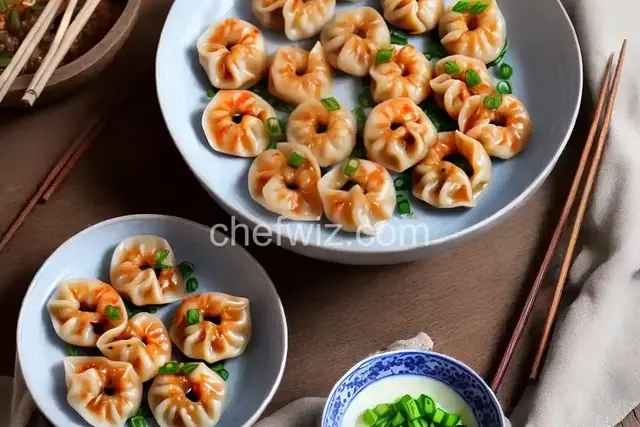
Making Jiaozi is not just about the taste; it's also an art form. The process involves preparing a delicate dough and filling it with a flavorful mixture of pork, shrimp, and various seasonings. The dough is then folded in a beautiful crescent shape, creating a pocket of goodness.
There are various techniques for folding Jiaozi, each resulting in a unique presentation. Some foldings resemble a rose, while others resemble a goldfish. Regardless of the folding style, the end result is a visually appealing dumpling that is as pleasing to the eye as it is to the palate.
What makes Jiaozi even more enticing is the variety of dipping sauces that accompany them. From tangy soy sauce to spicy chili oil, these sauces add an extra layer of flavor to the dumplings. It's like finding the perfect dance partner for a delightful culinary tango!
Just like Yin and Yang, Jiaozi and their dipping sauces complement each other perfectly. The savory filling of the dumplings harmonizes with the tangy and spicy notes of the sauces, creating a symphony of flavors in every bite.
While Jiaozi can be made at home, it's also a popular dish in Chinese restaurants worldwide. Whether you're in Beijing, New York, or Sydney, you can satisfy your craving for Jiaozi in these culinary hotspots. Some restaurants even offer Jiaozi-making classes, allowing you to experience the joy of creating these dumplings yourself.
So, the next time you're looking for a delicious and fulfilling meal, consider indulging in Jiaozi. You'll not only experience the rich flavors of Chinese cuisine but also connect with a tradition that has stood the test of time.
Jiaozi, the Chinese Pork and Shrimp Dumplings, are more than just a dish. They represent a cultural tradition and a culinary art form. With their rich history, intricate folding techniques, and delightful flavors, Jiaozi is a treat for both the palate and the soul. So, why not embark on a culinary adventure and try these mouthwatering dumplings for yourself?
Yes, absolutely! Jiaozi can be filled with various ingredients like chicken, beef, or vegetables, depending on your preference.
Yes, you can freeze Jiaozi and cook them whenever you want. Just make sure to arrange them in a single layer on a baking sheet before freezing, so they don't stick together.
Jiaozi can be boiled, steamed, or pan-fried. Boiling is the most common method, where you cook the dumplings in boiling water until they float to the surface.
Traditional Jiaozi wrappers are made with wheat flour, so they are not gluten-free. However, you can find gluten-free alternatives or make your own wrappers using gluten-free flour.
Absolutely! You can prepare the filling and wrap the dumplings in advance, storing them in the refrigerator until you're ready to cook.
Jiaozi itself is not spicy, but you can add spicy dipping sauces to give them a kick if you prefer.
The number of Jiaozi per person depends on whether you're serving them as an appetizer or a main course. As an appetizer, 6-8 dumplings per person is a good estimate.
If you don't have a steamer, you can use a makeshift steamer by placing a heatproof plate or a bamboo steaming basket on top of a pot of boiling water. Just make sure the water doesn't touch the dumplings.
AprilCook, recipe developer and the heart of Chefwiz. More about April