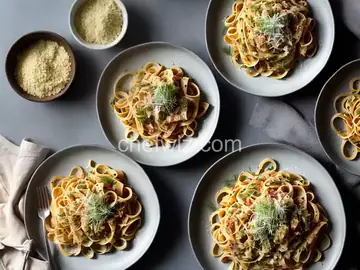
Japchae
Rate this recipeBe the first to rate
 By AprilPublished
 Have you ever tried Japchae? If not, you're missing out on a truly delightful Korean dish that is both flavorful and satisfying.
 By AprilPublished
 Have you ever tried Japchae? If not, you're missing out on a truly delightful Korean dish that is both flavorful and satisfying.
In a bowl, combine soy sauce, sugar, sesame oil, and garlic. Whisk until the sugar is dissolved into the sauce.
Bring a large pot of lightly salted water to a boil. Add the sweet potato noodles and cook for 6 to 7 minutes, stirring occasionally, until they are cooked through but still firm to the bite.
Rinse the cooked noodles under cold water and drain them. Transfer the noodles to a bowl and add 2 tablespoons of the sauce. Toss the noodles to coat them with the sauce.
Rinse the beef under running water until the juices run clear. In a separate bowl, mix the beef with 1 tablespoon of the sauce.
Bring another pot of water to a boil. Cook the spinach in the boiling water for about 1 minute, until it just wilts. Drain the spinach quickly and transfer it to a bowl of cold water to stop the cooking process. Squeeze out any excess water from the spinach and place it in a large bowl. Season the spinach with salt and pepper.
Heat 1 teaspoon of oil in a large skillet over medium-high heat. Cook the onion in the skillet for 1 to 2 minutes, until it becomes fragrant but remains crisp. Transfer the onion to the bowl with the spinach.
Heat another 1 teaspoon of oil in the same skillet. Cook the mushrooms in the hot oil for 1 to 2 minutes, until they
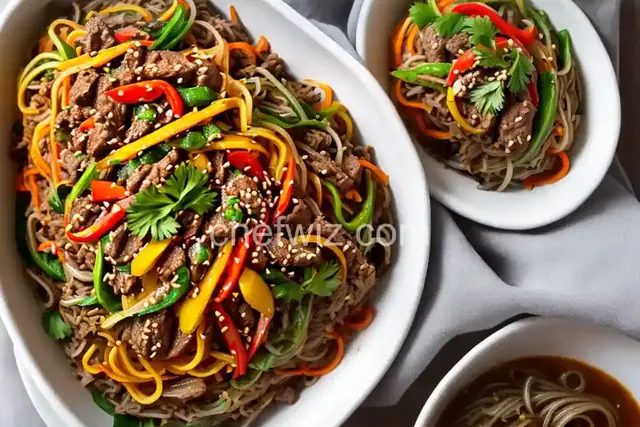
Have you ever tried Japchae? If not, you're missing out on a truly delightful Korean dish that is both flavorful and satisfying. Japchae, also known as Korean glass noodles, is a stir-fried dish made with sweet potato noodles, various vegetables, and often beef or tofu. It's a dish that offers a perfect balance of textures and tastes, making it a favorite among many.
Just like any other traditional dish, Japchae has an interesting history. It is believed to have originated during the Joseon Dynasty in Korea. The dish was initially served in the royal court and was considered a delicacy. Over time, it became a popular dish among the common people as well.
What sets Japchae apart is the way it combines different flavors and textures. The noodles have a unique chewy and slippery texture, while the vegetables bring a fresh and crunchy element to the dish. The combination of soy sauce, sesame oil, and sugar creates a deliciously savory and slightly sweet sauce that coats each ingredient, enhancing their flavors.
Japchae is a versatile dish that can be customized to suit different preferences and dietary requirements. The choice of vegetables can vary, but commonly used ones include carrots, spinach, bell peppers, and mushrooms. Meat lovers can add beef or chicken, while vegetarians and vegans can opt for tofu or simply enjoy the vegetable medley.
Preparing Japchae at home may seem intimidating, but it's actually quite simple. The key is to have all the ingredients prepped and ready to go before you start cooking. The noodles need to be boiled until they are soft but still slightly chewy, and the vegetables should be stir-fried separately to retain their individual flavors and textures. Finally, everything is combined and tossed in the delicious sauce.
Japchae not only delights your taste buds but also offers some health benefits. The dish is packed with fiber, vitamins, and minerals from the variety of vegetables used. The sweet potato noodles are a great source of complex carbohydrates, providing sustained energy. Additionally, the dish is often garnished with sesame seeds, which are rich in healthy fats and antioxidants.
Japchae is a dish that truly captures the essence of Korean cuisine with its harmonious blend of flavors and textures. Whether you're a meat lover or a vegetarian, Japchae can be easily customized to suit your taste. So why not give it a try and experience the delight of this Korean classic in your own kitchen?
Yes, Japchae can be made gluten-free by using gluten-free soy sauce or tamari sauce as a substitute.
Absolutely! Japchae can be made without meat by using tofu or simply focusing on the vegetable medley.
The cooking time for Japchae can vary, but on average, it takes about 30-40 minutes to prepare.
Yes, you can make Japchae in advance and store it in the refrigerator. It can be enjoyed cold or reheated.
Aside from beef and tofu, you can also use chicken, shrimp, or even seafood like squid or prawns.
While sweet potato noodles are traditional in Japchae, you can experiment with other types of noodles like rice noodles or even regular wheat noodles.
Japchae is not traditionally spicy, but you can add some heat by incorporating gochujang (Korean chili paste) or red pepper flakes if desired.
Yes, Japchae can be enjoyed as a main course, especially when paired with a side of kimchi and some steamed rice.
AprilCook, recipe developer and the heart of Chefwiz. More about April