Japchae Korean Glass Noodles
Rate this recipeBe the first to rate
 By AprilPublished
 Have you ever craved a dish that offers a perfect balance of flavors, textures, and colors?
 By AprilPublished
 Have you ever craved a dish that offers a perfect balance of flavors, textures, and colors?
In a large pot, fill it with water and add a pinch of salt. Bring the water to a boil.
Once the water is boiling, add the noodles and stir occasionally. Cook the noodles for about 4 to 5 minutes until they are tender but still firm.
Drain the noodles and rinse them with cold water.
In a separate bowl, mix together 1 teaspoon of sesame oil with the soy sauce and sugar. Set this mixture aside.
Heat some vegetable oil in a skillet on medium-high heat.
Add the carrots, asparagus, onions, and garlic to the skillet and cook them in the hot oil until they become soft, which should take about 5 minutes.
Stir in the green onions and mushrooms and continue to cook and stir for an additional 30 seconds.
Pour in the soy sauce mixture from step 4, and then add the cooked noodles to the skillet.
Cook and stir the noodles until they are warmed through, which should take about 2 to 3 minutes.
Remove the skillet from heat and toss the noodles with sesame seeds and the remaining 1 1/2 teaspoons of sesame oil.
Have you ever craved a dish that offers a perfect balance of flavors, textures, and colors? Look no further than Japchae, a traditional Korean dish that will transport your taste buds to a whole new level. With its delicate glass noodles, vibrant vegetables, and savory sauce, Japchae is a culinary masterpiece that is sure to impress. So, let's dive into the world of Japchae and discover why it's a must-try dish!
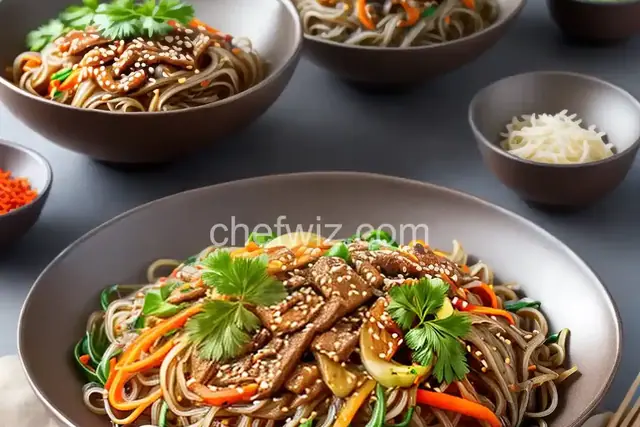
Imagine a plate filled with translucent noodles, glistening with a hint of sesame oil, and adorned with an array of vegetables, such as carrots, spinach, and mushrooms. Each ingredient is carefully cooked to perfection, creating a symphony of flavors that dance in your mouth. Japchae is not just a dish; it's a work of art that combines the best of Korean cuisine.
At the heart of Japchae lies the star ingredient - glass noodles. Made from sweet potato starch, these noodles have a unique texture that is both chewy and delicate. When cooked, they turn translucent, resembling glass, hence the name. The noodles are not only a delight to eat but also a treat for the eyes, adding an ethereal touch to the dish.
What sets Japchae apart is its ability to harmonize a wide range of flavors. The sweetness of the noodles is balanced by the savory soy sauce-based marinade, while the nuttiness of sesame oil adds depth to every bite. The vegetables provide a refreshing crunch, and the optional addition of meat or tofu adds a protein-packed punch. Each mouthful is a burst of contrasting flavors that come together in perfect harmony.
Preparing Japchae is like embarking on a culinary adventure. From soaking the noodles to stir-frying the vegetables, every step requires precision and care. But fear not! With a few tips and tricks, you'll be able to conquer this dish with ease.
Before you begin cooking, soak the glass noodles in warm water until they become soft and pliable. This step ensures that the noodles cook evenly and maintain their delicate texture. Once soaked, drain the noodles and set them aside.
Now it's time to stir-fry the vegetables to perfection. Start with a hot pan and a splash of oil. Add your choice of vegetables, such as carrots, spinach, and mushrooms, and sauté them until they become tender and vibrant in color. The key is to cook each vegetable separately, ensuring that they retain their individual flavors and textures.
Once the noodles and vegetables are cooked, it's time to bring them together. In a large pan, combine the noodles, vegetables, and the flavorful marinade. Toss everything gently, allowing the sauce to coat each strand of noodle and every piece of vegetable. The result is a stunning dish that is as visually appealing as it is delicious.
Japchae is more than just a dish; it's a celebration of flavors, textures, and colors. From the chewy glass noodles to the vibrant vegetables and savory marinade, every element comes together to create a truly unforgettable culinary experience. So why not embark on this culinary adventure and try your hand at making Japchae? Your taste buds will thank you!
Yes, glass noodles are gluten-free as they are made from sweet potato starch.
Absolutely! Japchae can be enjoyed as a vegetarian or vegan dish by omitting the meat and adding more vegetables or tofu.
While glass noodles are traditionally used in Japchae, you can experiment with other noodles like rice noodles or even regular pasta.
Yes, you can make Japchae in advance. Simply store it in an airtight container in the refrigerator and reheat it when ready to serve. However, note that the noodles may become softer upon reheating.
Absolutely! You can adjust the spiciness of Japchae by adding more or less red pepper flakes or omitting them altogether if you prefer a milder flavor.
It is not recommended to freeze Japchae as the texture of the noodles may change upon thawing. It is best enjoyed fresh.
Yes, Japchae can be served as a main dish or as a side dish alongside other Korean favorites like bulgogi or kimchi.
While the classic Japchae recipe is delightful on its own, you can get creative and add your own twist. Some popular variations include adding seafood, using different vegetables, or even incorporating cheese for a fusion twist.
AprilCook, recipe developer and the heart of Chefwiz. More about April