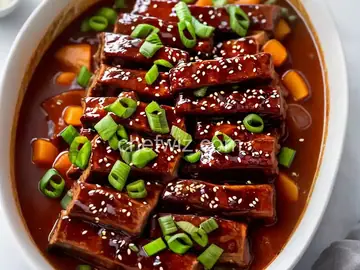
Japanese-Style Braised Pork Ribs
Rate this recipeBe the first to rate
 By AprilPublished
 When it comes to comfort food, few dishes can rival the succulent and melt-in-your-mouth goodness of Japanese-style braised pork ribs.
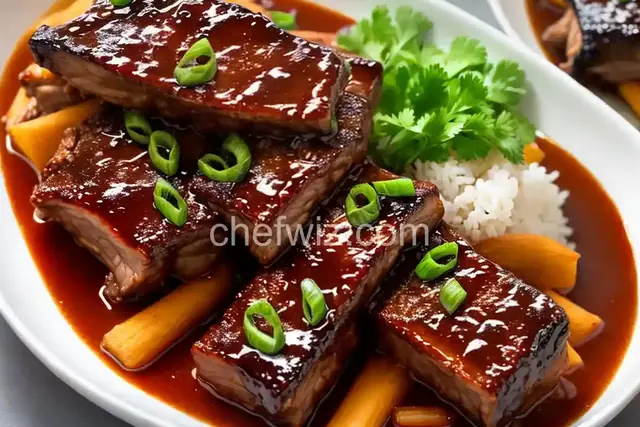 By AprilPublished
 When it comes to comfort food, few dishes can rival the succulent and melt-in-your-mouth goodness of Japanese-style braised pork ribs.
Remove the silverskin from the back of the ribs by inserting the pointed end of a meat thermometer under the skin and pulling it up.
Pat the ribs dry with paper towels and cut them into individual ribs.
In a small bowl, combine soy sauce, sake, and honey. Set aside.
Preheat the oven to 325 degrees F (165 degrees C).
Heat oil in a large Dutch oven over medium-high heat until hot.
Sear the ribs in batches until they are browned and have a nice crust, about 3 minutes per side.
Remove the ribs to a plate.
Drain any excess oil from the Dutch oven.
Carefully pour the soy sauce mixture into the pot and scrape the bottom of the pan with a wooden spoon or spatula to release any stuck-on bits.
Add the ribs to the pot with the liquid and increase the heat to medium-high.
Bring it to a boil, then cover tightly and remove from heat.
Bake in the preheated oven for about 2 1/2 hours, flipping the ribs over halfway through cooking time, until they are tender and no longer pink.
Meanwhile, in a saucepan, bring water and rice to a boil.
Reduce the heat to medium-low, cover, and simmer until the rice is tender and the water has
When it comes to comfort food, few dishes can rival the succulent and melt-in-your-mouth goodness of Japanese-style braised pork ribs. This delectable dish is a perfect marriage of tender meat, umami-rich flavors, and a touch of sweetness that will leave you craving for more. Whether you are a fan of Japanese cuisine or simply looking to expand your culinary repertoire, this dish is a must-try.
At the heart of Japanese-style braised pork ribs lies the art of braising. This cooking technique involves slowly simmering the meat in a flavorful liquid, allowing the flavors to meld together and infuse into every fiber. The result? A dish that is not only tender but also bursting with complex layers of taste.
Imagine sinking your teeth into a juicy piece of pork rib that effortlessly falls off the bone. The meat, infused with a savory soy-based sauce, carries a hint of sweetness that perfectly balances the dish. Each bite is a delight, as the flavors dance on your palate, leaving you craving for more.
What sets Japanese-style braised pork ribs apart is the umami-rich sauce that bathes the meat. Umami, often referred to as the fifth taste, is a savory flavor that adds depth and complexity to any dish. In this case, it is the umami-packed combination of soy sauce, mirin, and other traditional Japanese ingredients that elevates the flavor profile of the dish.
Just like a symphony, the sauce harmonizes with the natural sweetness of the pork, creating a melody of flavors that will leave you craving for seconds. It's a culinary experience that is both comforting and satisfying.
Creating Japanese-style braised pork ribs is a labor of love. The meat is first seared to lock in the juices and then slowly braised until it reaches tender perfection. The low and slow cooking process allows the meat to absorb the flavors of the sauce, resulting in a dish that is tender, succulent, and full of flavor.
Just like a lotus flower that blooms beautifully after a period of darkness, the pork ribs undergo a transformation during the braising process. The tough and chewy texture is replaced with a fork-tender meat that effortlessly pulls apart. It's a testament to the power of time, patience, and the art of slow cooking.
Japanese-style braised pork ribs are a culinary delight that combines tender meat, umami-rich flavors, and a touch of sweetness. The slow cooking process infuses the meat with a savory sauce, resulting in a dish that is both comforting and satisfying. Whether you are a fan of Japanese cuisine or simply looking to try something new, this dish is sure to impress. So, gather your ingredients, unleash your inner chef, and embark on a flavor-packed journey that will leave you craving for more.
While the recipe traditionally calls for pork ribs, you can certainly experiment with other cuts of meat. However, keep in mind that the cooking time and flavors may vary depending on the cut you choose.
Absolutely! In fact, the flavors of Japanese-style braised pork ribs deepen and intensify when left to marinate overnight. Simply reheat the dish before serving, and you'll have a meal that is bursting with even more flavor.
Mirin, a sweet rice wine, adds a distinct flavor to the dish. If you don't have mirin on hand, you can substitute it with a combination of rice vinegar and sugar to achieve a similar taste.
Yes, you can freeze the leftovers for future enjoyment. Ensure that the dish is properly stored in an airtight container to maintain its quality.
Steamed rice, pickled vegetables, and a simple cucumber salad are all excellent choices to accompany this dish. Their freshness and lightness provide a delightful contrast to the rich flavors of the braised pork ribs.
No, Japanese-style braised pork ribs are not typically spicy. The flavors are more focused on the umami notes and the delicate balance between sweetness and savory.
Absolutely! The slow cooker is a convenient alternative to traditional stovetop braising. Simply follow the recipe instructions and adjust the cooking time accordingly.
While this recipe is specifically tailored for pork ribs, you can certainly adapt it for other types of meat, such as beef or chicken. Just keep in mind that the cooking times and flavors may need to be adjusted accordingly.
AprilCook, recipe developer and the heart of Chefwiz. More about April