Jajangmyeon
Rate this recipeBe the first to rate
 By AprilPublished
 Have you ever craved a dish that combines the richness of a flavorful sauce with the comforting goodness of noodles?
 By AprilPublished
 Have you ever craved a dish that combines the richness of a flavorful sauce with the comforting goodness of noodles?
Heat oil in a small pot over medium heat until it starts shimmering.
Add black bean paste and cook, stirring constantly, until the paste thickens slightly and becomes fragrant (around 5 to 7 minutes).
Transfer the black bean paste to a bowl and set aside the remaining oil for later use.
In a large wok or heavy-bottomed pot, heat 2 tablespoons of oil over high heat until it shimmers.
Season the pork belly with salt and add it to the wok. Cook, stirring occasionally, until the pork is browned, slightly crispy, and some fat has rendered (around 6 to 8 minutes).
Add onions and zucchini to the wok and cook until they become semi-translucent (around 2 to 3 minutes).
Add garlic and ginger to the wok and cook until fragrant (about 1 minute).
Toss in the cabbage and cook until wilted (around 2 minutes).
Stir in the reserved black bean paste and cook until everything is coated (about 1 minute).
Pour in 1 ½ cups of water, ensuring to scrape up any brown bits from the bottom of the wok.
Bring the mixture to a boil and then reduce to a simmer. Cook for about 10 minutes or until the sauce slightly thickens and coats the back of a spoon. You should be able to draw a line through
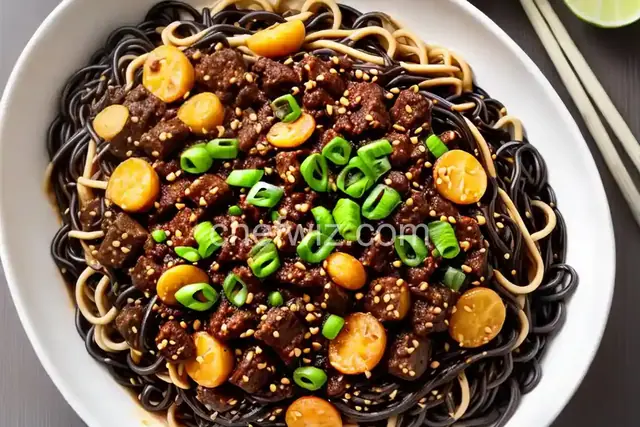
Have you ever craved a dish that combines the richness of a flavorful sauce with the comforting goodness of noodles? Look no further than Jajangmyeon, a popular Korean dish that will surely tantalize your taste buds. This delectable creation is not just a mere meal; it's an experience that brings together the perfect balance of flavors and textures. In this article, we will delve into the origins, ingredients, and the unique charm that makes Jajangmyeon a must-try dish for all food enthusiasts.
Before we dive into the details, let's take a moment to appreciate the history and cultural significance of Jajangmyeon. This beloved dish originated in China but gained immense popularity in Korea, becoming a staple in Korean-Chinese cuisine. Its roots can be traced back to the Qing Dynasty, where it was known as "zhajiangmian." Over time, Koreans adapted the recipe, adding their unique touch to create the Jajangmyeon we know and love today.
The heart and soul of Jajangmyeon lies in its savory black bean sauce. Made from fermented black soybeans, this sauce is the star of the show, bringing a bold and distinct flavor profile to the dish. It's a harmonious blend of umami, sweetness, and a hint of smokiness. The sauce is cooked to perfection, coating the chewy noodles and complementing the various toppings that accompany this delightful dish.
When it comes to Jajangmyeon, the choice of noodles is crucial. Typically, thick and chewy wheat noodles are used to provide a satisfying bite and to hold up against the robust flavors of the sauce. The noodles act as a canvas, absorbing the sauce and enhancing its complexity. The combination of the sauce and noodles creates a symphony of flavors that dance in your mouth with every bite.
Imagine this: You take your first bite of Jajangmyeon, and the flavors instantly transport you to a world of culinary bliss. The rich sauce envelops your taste buds, while the noodles provide a delightful texture. Each bite is a new adventure, as you discover the hidden treasures of the dish, such as the tender chunks of meat, crisp vegetables, and the occasional surprise of diced onions. It's a journey that satisfies both your hunger and your soul.
Wondering what to pair with your Jajangmyeon? Fear not! This versatile dish can be enjoyed on its own or paired with various side dishes to create a complete meal. Some popular choices include tangsuyuk (sweet and sour pork), jjamppong (spicy seafood noodle soup), or even a simple plate of kimchi. The possibilities are endless, allowing you to customize your dining experience according to your taste and cravings.
Are you ready to embark on a culinary adventure and try Jajangmyeon for yourself? You'll be pleased to know that this beloved dish can be found in Korean-Chinese restaurants worldwide. Whether you're in Seoul, New York City, or London, you can satisfy your Jajangmyeon cravings and experience its magic.
Jajangmyeon is more than just a dish; it's a sensory experience that combines the richness of a savory sauce with the comfort of noodles. From its humble origins to its cultural significance, Jajangmyeon has found its way into the hearts and stomachs of people around the world. So why not indulge in this culinary delight and discover the magic of Jajangmyeon for yourself?
Jajangmyeon typically consists of black bean sauce, noodles, meat (such as pork or beef), and various vegetables.
No, Jajangmyeon is not spicy. The sauce has a rich and savory flavor with a hint of sweetness, but it is not known for its spiciness.
Yes, Jajangmyeon can be made vegetarian or vegan by substituting the meat and using vegetable-based ingredients. It still retains its delicious flavor and satisfying texture.
Jajangmyeon stands out with its unique black bean sauce, which sets it apart from other noodle dishes. The sauce adds a depth of flavor and richness that is distinct to Jajangmyeon.
While it is best to enjoy Jajangmyeon freshly cooked, it can be frozen and reheated. However, note that the texture of the noodles may change slightly upon reheating.
Yes, there are variations of Jajangmyeon, such as seafood Jajangmyeon, where seafood is added to the dish for an extra burst of flavor.
Jajangmyeon's popularity stems from its unique and addictive flavor profile. The combination of the black bean sauce, chewy noodles, and various toppings creates a satisfying and comforting dish that keeps people coming back for more.
Absolutely! With the right ingredients and a little bit of patience, you can recreate the magic of Jajangmyeon in your own kitchen. There are plenty of recipes available online that will guide you through the process.
AprilCook, recipe developer and the heart of Chefwiz. More about April