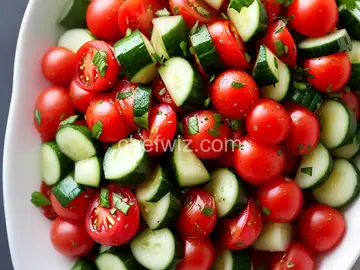
Israeli Salad
Rate this recipeBe the first to rate
 By AprilPublished
 Have you ever tried Israeli salad? If not, you're missing out on a refreshing and delicious dish that is packed with flavor.
 By AprilPublished
 Have you ever tried Israeli salad? If not, you're missing out on a refreshing and delicious dish that is packed with flavor.
Combine the cucumbers, tomatoes, onions, bell pepper, garlic, parsley, and mint in a bowl.
Drizzle the salad with olive oil and lemon juice.
Toss the salad to evenly coat all the ingredients.
Season with salt and pepper to taste.
Have you ever tried Israeli salad? If not, you're missing out on a refreshing and delicious dish that is packed with flavor. Just like a symphony orchestra needs all its instruments to create beautiful music, Israeli salad brings together a variety of fresh vegetables to create a harmonious and satisfying dish. In this article, we will explore the wonders of Israeli salad, its origins, and why it has become a popular choice for many.
Israeli salad, also known as Arab salad or chopped salad, is a staple in Middle Eastern cuisine. It originated in Israel and quickly became a beloved dish not only in the region but also around the world. The salad is traditionally made with finely chopped tomatoes, cucumbers, onions, and bell peppers. The vibrant colors of the vegetables are reminiscent of the rich landscapes of the Mediterranean.
What makes Israeli salad truly special is the combination of flavors that come together in every bite. The juicy tomatoes provide a burst of sweetness, while the crisp cucumbers add a refreshing crunch. The onions and bell peppers bring a hint of tanginess, balancing out the dish perfectly. A drizzle of olive oil and a squeeze of lemon juice elevate the flavors, creating a delightful symphony of tastes.
Israeli salad is not only delicious on its own, but it also makes a fantastic side dish. Its versatility allows it to complement a wide range of main courses, from grilled meats to vegetarian dishes. The freshness of the salad adds a light and vibrant element to any meal, making it a popular choice for picnics, barbecues, and gatherings.
Aside from its wonderful taste, Israeli salad is also incredibly healthy. The vegetables used in the salad are packed with vitamins, minerals, and fiber, making it a nutritious addition to your diet. It is low in calories and fat, making it an ideal choice for those looking to maintain a healthy lifestyle or lose weight. The abundance of fresh ingredients also means that Israeli salad is naturally gluten-free and vegan-friendly.
One of the great things about Israeli salad is its simplicity. With just a few fresh ingredients and a knife, you can whip up a delicious bowl of salad in no time. The key is to finely chop the vegetables to ensure that each bite is bursting with flavor. You can also customize the salad to your liking by adding herbs such as parsley or mint, or even a sprinkle of feta cheese for added creaminess.
Israeli salad is a delightful dish that brings together the freshness and flavors of the Mediterranean. Its simplicity and versatility make it a crowd-pleaser, whether enjoyed on its own or as a side dish. With its health benefits and easy preparation, Israeli salad is a fantastic addition to any meal. So why not give it a try and experience the vibrant symphony of flavors in every bite?
Yes, you can prepare Israeli salad in advance, but it is best enjoyed fresh. The vegetables may release some water if left for too long, affecting the texture of the salad.
Absolutely! Israeli salad is incredibly versatile, and you can substitute or add vegetables based on your preference. Some variations include adding radishes, carrots, or even avocado.
No, Israeli salad is not typically spicy. However, if you enjoy a bit of heat, you can add a sprinkle of chili flakes or diced jalapenos for an extra kick.
Israeli salad is best consumed within a day or two for optimal freshness. After that, the vegetables may start to lose their crunch and flavor.
While you can use bottled dressings, the traditional dressing for Israeli salad is a simple combination of olive oil, lemon juice, salt, and pepper. It's worth trying the homemade dressing for its freshness and simplicity.
Israeli salad is traditionally served cold or at room temperature. However, if you prefer a warm salad, you can lightly sauté the vegetables in olive oil before tossing them together.
While fresh vegetables are preferred for their crispness and flavor, you can use canned vegetables in a pinch. Just make sure to drain them well before adding them to the salad.
Israeli salad pairs well with a variety of dishes, including falafel, hummus, shawarma, grilled chicken, and roasted vegetables. Its versatility makes it a great accompaniment to many Mediterranean and Middle Eastern cuisines.
AprilCook, recipe developer and the heart of Chefwiz. More about April