Irish doughnuts
Rate this recipeBe the first to rate
 By AprilPublished
 Who can resist the mouthwatering aroma of freshly baked doughnuts?
 By AprilPublished
 Who can resist the mouthwatering aroma of freshly baked doughnuts?
Activate the yeast by combining it with warm water.
Sift the flour to remove any lumps.
Mash the boiled potatoes and mix them into the flour.
Incorporate the sugar, egg, yeast mixture, warm milk, and lemon zest into the flour-potato mixture. Stir until a dough forms.
Grease the dough with butter.
Mix the dough until the butter is fully dissolved.
Divide the dough into 18 equal pieces.
Take each piece and roll it into a desired shape.
Arrange the dough pieces on a tray and allow them to rise until they double in size.
Heat oil in a pan.
Fry the dough pieces in the hot oil until they turn golden brown.
Coat the fried dough pieces with sugar.
Serve the coated dough pieces with tea or a drink of your choice.
Who can resist the mouthwatering aroma of freshly baked doughnuts? These delightful treats have been enjoyed by people all around the world for centuries. While the origins of doughnuts are often associated with America, did you know that Ireland has its own unique version? Irish doughnuts, also known as báirín breac, offer a scrumptious twist to the traditional doughnut recipe. Let's dive into the world of Irish doughnuts and explore what makes them so special.
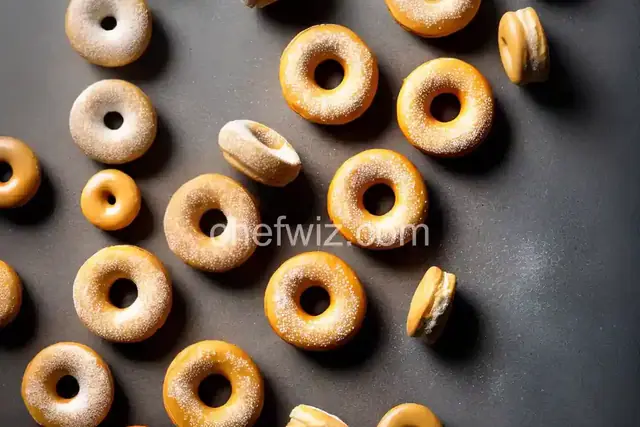
Irish doughnuts are a delightful blend of flavors and textures. Unlike the classic round doughnuts, Irish doughnuts are shaped like a ring, symbolizing the unending circle of life. They are made with a rich, buttery dough that is wonderfully soft on the inside and slightly crisp on the outside. The dough is then deep-fried to perfection, giving it a golden brown hue that is simply irresistible.
Irish doughnuts are deeply rooted in Irish culture and traditions. They are traditionally made on St. Patrick's Day, a holiday celebrated with great enthusiasm in Ireland. These doughnuts are often enjoyed with a cup of tea or coffee, providing a comforting and indulgent treat for both young and old. The warm and inviting aroma of freshly made Irish doughnuts fills the air, creating a sense of joy and togetherness.
While Irish doughnuts are delicious on their own, they can be taken to a whole new level with various fillings and toppings. Some popular fillings include rich chocolate ganache, creamy vanilla custard, and tangy raspberry jam. These fillings are then generously piped into the center of the doughnut, creating a burst of flavor with every bite.
Irish doughnuts are often dusted with powdered sugar or dipped in a sweet glaze, adding an extra layer of sweetness and decadence. For those looking for a more adventurous experience, a sprinkle of cinnamon or a drizzle of caramel can elevate the flavor profile even further. The possibilities are endless when it comes to creating the perfect pairing for your Irish doughnut.
Indulging in a freshly made Irish doughnut is an experience that tantalizes the senses and brings a smile to your face. The combination of rich flavors, soft textures, and warm memories makes Irish doughnuts a true delight. Whether you're celebrating St. Patrick's Day or simply craving a sweet treat, give yourself the pleasure of savoring an Irish doughnut. Your taste buds will thank you!
No, Irish doughnuts have their own unique characteristics. They are ring-shaped and made with a rich, buttery dough.
Absolutely! With the right ingredients and a little patience, you can recreate the magic of Irish doughnuts in your own kitchen.
The ring shape symbolizes the unending circle of life, adding a touch of symbolism to these delicious treats.
Definitely! Get creative and try different fillings such as Nutella, salted caramel, or even Irish whiskey-infused cream.
While they are traditionally made on St. Patrick's Day, Irish doughnuts can be enjoyed all year round.
Yes, you can freeze Irish doughnuts. Just make sure to store them in an airtight container to maintain their freshness.
Traditional Irish doughnuts are not gluten-free, as they are made with wheat flour. However, there are gluten-free alternatives available.
While Irish doughnuts are most commonly found in Ireland, you may be able to find them in specialty bakeries or Irish-themed cafes in other countries.
AprilCook, recipe developer and the heart of Chefwiz. More about April