Hunan Peppered Pork
Rate this recipeBe the first to rate
 By AprilPublished
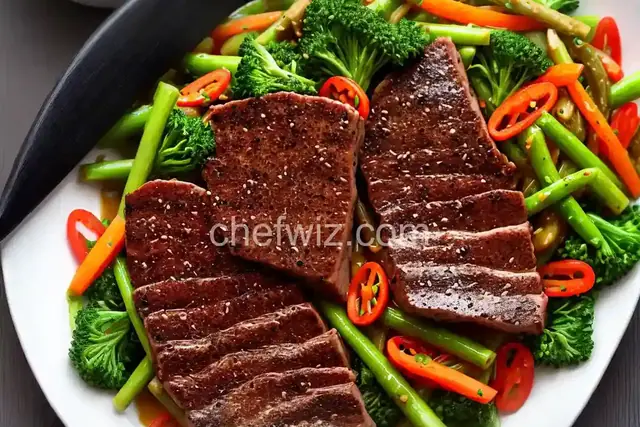
 Are you in the mood for a spicy and flavorful dish that will transport your taste buds to the vibrant streets of Hunan?
 By AprilPublished
 Are you in the mood for a spicy and flavorful dish that will transport your taste buds to the vibrant streets of Hunan?
Heat 1 tablespoon of oil in a wok or large skillet on medium-high heat until it starts to smoke.
Saute the garlic and ginger until they become fragrant, which should take around 30 seconds to 1 minute.
Add the pork to the wok and cook and stir until it is fully cooked, which should take around 5 to 7 minutes.
Transfer the cooked pork to a plate.
Pour the remaining 2 tablespoons of oil into the same wok on medium-high heat.
Saute the chili peppers in the oil until they are well-coated and fragrant, which should take about 2 minutes.
Add the cooked pork to the chili peppers and generously season with salt.
Cook and stir the mixture until the peppers become tender, which should take around 5 to 7 minutes.
Mix in enough soy sauce into the pork mixture to achieve the desired color and taste for saltiness.
Are you in the mood for a spicy and flavorful dish that will transport your taste buds to the vibrant streets of Hunan? Look no further than Hunan Peppered Pork! This delicious Chinese dish combines tender pork with aromatic spices and fiery peppers to create a dish that is sure to satisfy your cravings. In this article, we will explore the origin of Hunan Peppered Pork, the key ingredients used, and some tips on how to make it at home.
Hunan Peppered Pork, also known as "La Rou" in Chinese, hails from the Hunan province in China. This region is famous for its bold and spicy cuisine, and Hunan Peppered Pork is no exception. The dish is believed to have been created during the Qing Dynasty and has since become a staple in Hunanese cuisine.
Hunan Peppered Pork is made with a handful of ingredients that come together to create a symphony of flavors. The star of the dish is, of course, the pork. Tender cuts of pork, such as pork belly or pork shoulder, are commonly used. These cuts are marinated in a mixture of soy sauce, rice wine, ginger, and garlic to infuse them with savory goodness.
But what truly sets Hunan Peppered Pork apart is the addition of dried chili peppers. These fiery peppers bring a unique heat to the dish, giving it that signature Hunanese kick. Other spices and seasonings, such as Sichuan peppercorns, star anise, and black cardamom, are also used to enhance the flavor profile.
If you're feeling adventurous and want to try your hand at making Hunan Peppered Pork at home, here are a few tips to get you started:
The key to tender and succulent Hunan Peppered Pork lies in the cut of meat you choose. Opt for cuts with a good amount of marbling, such as pork belly or pork shoulder. These cuts will become melt-in-your-mouth delicious after braising.
Don't skimp on the marinating time! Letting the pork marinate for at least a few hours, or even overnight, will allow the flavors to penetrate the meat fully. This step is crucial for a truly flavorful dish.
Hunan Peppered Pork is known for its spicy kick, but you can adjust the heat level to suit your preferences. If you prefer milder flavors, remove the seeds from the dried chili peppers before adding them to the dish. For an extra spicy kick, leave the seeds intact.
To achieve fork-tender pork, it's important to braise the meat slowly over low heat. This process allows the flavors to meld together and ensures that the pork becomes incredibly tender.
Hunan Peppered Pork is a dish that brings together the bold flavors of Hunanese cuisine. It's a perfect balance of spicy, savory, and aromatic elements that will tantalize your taste buds. Whether you try it at a local Chinese restaurant or make it at home, Hunan Peppered Pork is sure to be a delightful culinary adventure.
While pork is the traditional choice for Hunan Peppered Pork, you can experiment with other meats such as chicken or beef if you prefer.
To reduce the spiciness, you can remove the seeds from the dried chili peppers or use fewer peppers in the recipe.
Yes, you can adapt the recipe for a slow cooker. Simply follow the same steps of marinating the meat and then transfer it to the slow cooker with the rest of the ingredients. Cook on low heat for several hours until the pork is tender.
Some popular side dishes that complement the flavors of Hunan Peppered Pork include steamed rice, stir-fried vegetables, or a refreshing cucumber salad.
The dish itself is gluten-free, but you should check the labels of the soy sauce and other condiments to ensure they are gluten-free if you have dietary restrictions.
Yes, you can freeze the leftover Hunan Peppered Pork in an airtight container for up to 3 months. Thaw it in the refrigerator before reheating.
Dried chili peppers are typically used in Hunan Peppered Pork for their intense flavor, but you can substitute fresh chili peppers if you prefer. Just adjust the quantity according to your desired level of spiciness.
Yes, you can make the dish ahead of time and reheat it when ready to serve. In fact, the flavors often deepen and intensify after sitting for a day or two.
AprilCook, recipe developer and the heart of Chefwiz. More about April