How to Make Perfect Hard-Boiled Eggs
Rate this recipeBe the first to rate
 By AprilPublished
 Hard-boiled eggs are a versatile and nutritious food that can be enjoyed in a variety of ways.
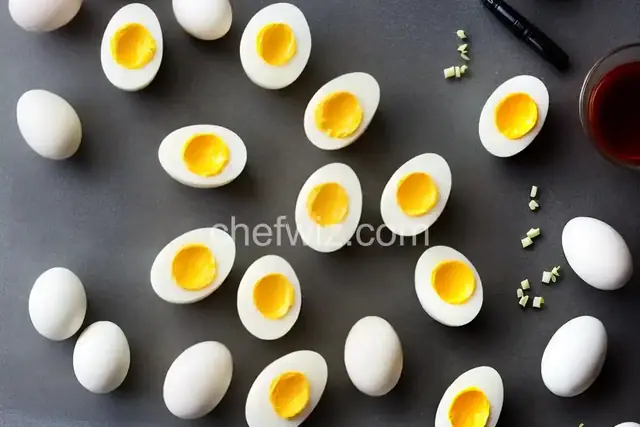 By AprilPublished
 Hard-boiled eggs are a versatile and nutritious food that can be enjoyed in a variety of ways.
Place the eggs in a saucepan and add enough cold water to cover them.
Set the saucepan over high heat and wait for the water to start simmering.
Once the water reaches a simmer, turn off the heat and cover the pan with a lid. Allow the eggs to sit undisturbed for 17 minutes without lifting the lid.
Carefully pour out the hot water and replace it with cold water.
Drain the water and refill the saucepan with cold water again. Let the eggs sit in the cold water until they are completely cooled, which should take approximately 20 minutes.
Peel the eggs under running water to make the process easier.
Hard-boiled eggs are a versatile and nutritious food that can be enjoyed in a variety of ways. Whether you like them as a quick and easy snack, in a salad, or as part of a tasty egg salad sandwich, learning how to make the perfect hard-boiled eggs is a skill that everyone should have. In this article, we will explore the ins and outs of making the perfect hard-boiled eggs, from the cooking process to peeling techniques. So, let's get cracking!
When it comes to making hard-boiled eggs, the cooking process is crucial. It's all about finding the right balance of time and temperature to achieve that perfectly cooked yolk and firm, yet tender, egg white. So, how do you do it?
First, start by placing your eggs in a single layer in a saucepan. Add enough water to the pan to cover the eggs by about an inch. Then, bring the water to a boil over medium-high heat. Once the water reaches a rolling boil, reduce the heat to low and let the eggs simmer for about 9-12 minutes.
Now, the cooking time can vary depending on the size of your eggs and how well-done you like your yolks. For a slightly soft yolk, aim for around 9 minutes, while a fully set yolk will require closer to 12 minutes. You can experiment with different times to find your perfect level of doneness.
Once the eggs have finished cooking, it's crucial to stop the cooking process immediately to prevent overcooking. The best way to do this is by transferring the eggs to an ice bath. Simply fill a large bowl with ice and cold water and carefully place the eggs into the bath. Let them sit for about 5 minutes to cool down completely.
Not only does the ice bath halt the cooking process, but it also helps to shrink the egg whites slightly, making them easier to peel. So, if you want to avoid any frustrating peeling mishaps later on, be sure not to skip this step!
Peeling hard-boiled eggs can be a bit of a challenge, especially if you're left with a stubborn shell that resists all your efforts. But fear not! With a few simple techniques, you'll be peeling your eggs like a pro in no time.
One tried and true method is the "tap and roll" technique. Start by tapping the egg gently on a hard surface to create a few cracks in the shell. Then, roll the egg back and forth, applying gentle pressure as you go. This rolling motion helps to loosen the shell from the egg, making it easier to peel. Finally, peel the shell off starting from the wider end of the egg, where the air pocket is located.
Another handy technique is the "spoon peel" method. Begin by gently tapping the top and bottom of the egg to create a crack. Then, slide a spoon under the shell and carefully slide it around the egg, separating the shell from the egg white. With a little finesse, the entire shell should come off in one smooth motion.
So, you've mastered the cooking process and perfected your peeling technique. Now, it's time to enjoy your perfectly peeled hard-boiled eggs! Whether you choose to enjoy them as a quick and easy snack or incorporate them into your favorite recipes, you can't go wrong with these protein-packed powerhouses. So, get cracking and start enjoying the deliciousness of perfectly hard-boiled eggs!
Hard-boiled eggs can be stored in the fridge for up to one week.
While it is possible to freeze hard-boiled eggs, it is not recommended as the texture can change when thawed.
The green ring around the yolk is caused by overcooking. To prevent it, make sure to follow the recommended cooking times and immediately transfer the eggs to an ice bath.
Absolutely! Hard-boiled eggs are a great source of protein, vitamins, and minerals, making them a healthy addition to your diet.
Yes, adding salt to the water can help prevent the eggs from cracking during the cooking process.
One way to determine if an egg is hard-boiled or raw is by giving it a gentle spin. If it spins easily, it is likely hard-boiled.
Yes, older eggs are actually easier to peel than fresh eggs, so they can be a good choice for making hard-boiled eggs.
Absolutely! Simply reduce the cooking time to achieve the desired level of softness for your eggs.
In conclusion, making perfect hard-boiled eggs is a skill that anyone can master. With the right cooking time, proper cooling techniques, and a few handy peeling tricks, you'll be enjoying delicious and nutritious hard-boiled eggs in no time. So, why wait? Get cracking and start boiling!
AprilCook, recipe developer and the heart of Chefwiz. More about April