How to Hard Boil Eggs
Rate this recipeBe the first to rate
 By AprilPublished
 Have you ever wondered how to achieve that perfect hard-boiled egg?
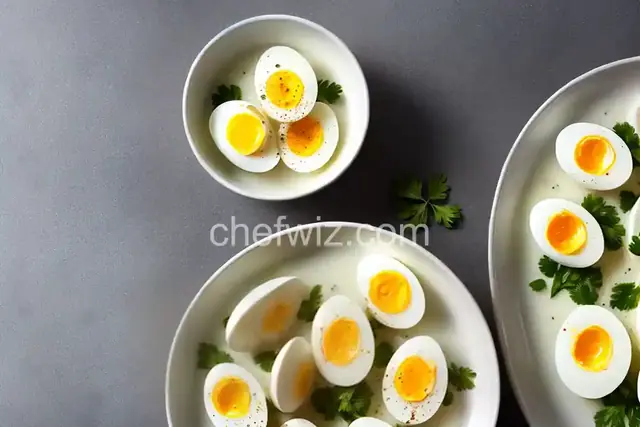 By AprilPublished
 Have you ever wondered how to achieve that perfect hard-boiled egg?
Fill a large pot with water and bring it to a boil.
Use a slotted spoon or tongs to gently place the eggs, one by one, into the boiling water.
Once all the eggs are in the pot, cover it and reduce the heat to medium-low.
Let the eggs cook for 12 minutes.
While the eggs are cooking, prepare a large bowl with ice and water. Fill it with about 2 cups of ice and 3 cups of water.
After the 12 minutes of cooking, carefully transfer the eggs from the pot to the bowl of ice water.
Allow the eggs to sit in the ice water for approximately 30 seconds.
Next, use the back of a spoon to gently tap each egg all over the shell. Alternatively, you can tap and roll the eggs on a counter, making sure not to tap too hard.
Place the cracked eggs back into the ice water and let them sit for at least 5 minutes.
Peel the eggs under a thin stream of cool running water.
Have you ever wondered how to achieve that perfect hard-boiled egg? Well, look no further! In this article, we will explore the step-by-step process of boiling eggs to perfection. Whether you're a novice in the kitchen or a seasoned chef, these tips and tricks will ensure that you achieve the desired result every time.
Hard boiling eggs is a popular cooking technique for several reasons. Firstly, it allows you to create a versatile ingredient that can be used in a variety of dishes. From salads to sandwiches, hard-boiled eggs add a unique texture and flavor to your favorite recipes. Additionally, hard-boiled eggs are easy to make and require minimal ingredients, making them a convenient option for a quick and nutritious meal or snack.
So, how do you achieve that perfect hard-boiled egg with a tender, fully cooked yolk and no green ring? Let's break it down into a few simple steps:
The freshness of the eggs plays a crucial role in achieving the perfect hard-boiled egg. Fresh eggs will have a firmer white and a more vibrant yolk. So, always opt for the freshest eggs available.
Before boiling the eggs, it's essential to prepare them properly. Start by gently placing the eggs in a single layer in a saucepan. Then, add enough cold water to cover the eggs. Adding a pinch of salt to the water can help prevent the eggs from cracking during the cooking process.
Once the eggs are prepared, it's time to bring the water to a boil. Place the saucepan on the stove and set it to high heat. Allow the water to come to a rolling boil.
Once the water is boiling, reduce the heat to low and let the eggs simmer. This gentle heat will ensure that the eggs cook evenly and prevent them from cracking. Let the eggs simmer for about 9-12 minutes, depending on the desired level of doneness. For a slightly soft center, aim for around 9 minutes, while a fully cooked yolk will take around 12 minutes.
After the eggs have finished cooking, it's time to cool them down and peel them. Remove the eggs from the saucepan and place them in a bowl of ice water. Let them sit for a few minutes until they are cool to the touch. Then, gently tap each egg on a hard surface and peel away the shell, starting at the wider end.
While it's best to use fresh eggs for hard boiling, slightly older eggs can still be used. Just keep in mind that they may be slightly more difficult to peel.
Adding a pinch of salt to the water can help prevent the eggs from cracking while they are boiling.
The cooking time will depend on your desired level of doneness. For a slightly soft center, aim for around 9 minutes, while a fully cooked yolk will take around 12 minutes.
It is not recommended to reuse the water used for boiling eggs, as it may contain bacteria from the eggshells.
Yes, hard-boiled eggs can be stored in the refrigerator for up to one week. It's best to keep them in their shells until you are ready to eat or use them.
While it is possible to freeze hard-boiled eggs, it is not recommended as the texture may become rubbery after thawing.
You can spin the egg on a flat surface. If it spins smoothly, it is hard-boiled. If it wobbles or spins unevenly, it is not fully cooked.
Absolutely! You can add a variety of seasonings, such as salt, pepper, or herbs, to the water for added flavor.
In conclusion, mastering the art of hard-boiling eggs is a skill that can elevate your culinary repertoire. With the right techniques and a little bit of practice, you can achieve perfectly cooked eggs with a tender, fully cooked yolk every time. So, go ahead and impress your family and friends with your newfound egg-boiling prowess!
AprilCook, recipe developer and the heart of Chefwiz. More about April