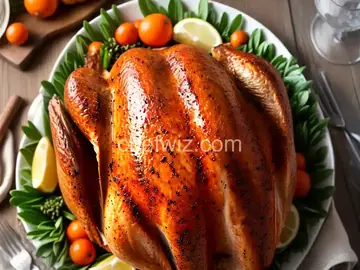
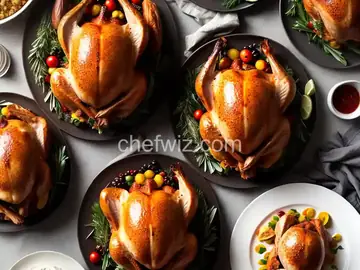
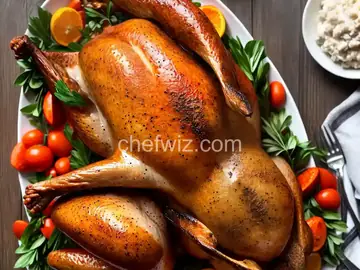
How to Cook a Turkey
Rate this recipeBe the first to rate
 By AprilPublished
 Thanksgiving is just around the corner, and what better way to celebrate than by cooking a delicious turkey?
 By AprilPublished
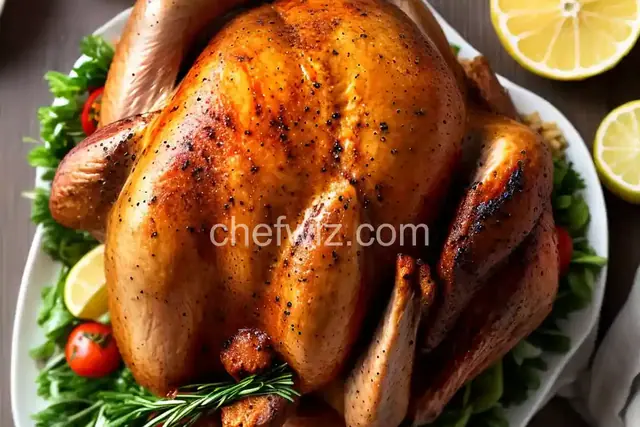
 Thanksgiving is just around the corner, and what better way to celebrate than by cooking a delicious turkey?
Here's a paraphrased version of the recipe instructions:
Preheat the oven to 325 degrees F (165 degrees C).
In a large, shallow roasting pan, place chopped onion, celery, and carrot.
Place the turkey, breast-side up, on top of the vegetables in the roasting pan. Use paper towels to pat the turkey dry.
In a small bowl, mix together salt, black pepper, and cayenne pepper. Season the inside of the turkey with about one-third of this mixture. Fold the wing tips under the bird.
In a small saucepan, melt the butter over medium heat until the edges turn golden. Add rosemary and sage, and cook and stir for about one minute until fragrant.
Place the rosemary and sage inside the turkey's cavity, reserving the melted butter. Tie the turkey legs together with twine.
Brush the melted butter over the turkey and sprinkle it with the remaining salt mixture.
Bake the turkey, uncovered, in the preheated oven for about 3 hours, or until it is no longer pink at the bone and the juices run clear. Use an instant-read thermometer to check that the thickest part of the thigh, near the bone, reads 180 degrees F (82 degrees C).
Remove the turkey from the oven and let it rest in a warm area for 10 to 15 minutes before slicing.
Thanksgiving is just around the corner, and what better way to celebrate than by cooking a delicious turkey? Whether you're a seasoned chef or a novice in the kitchen, this article will guide you through the process of cooking a turkey to perfection. So, grab your apron and let's get started!
Before you begin cooking, it's important to properly prepare your turkey. This involves thawing the turkey if it's frozen, removing the giblets, and rinsing the bird under cold water. Thawing the turkey in the refrigerator is the safest method, as it allows for even thawing and prevents the growth of harmful bacteria.
Once your turkey is thawed and cleaned, it's time to season it. You can use a variety of seasonings, such as salt, pepper, garlic powder, and herbs, to add flavor to your turkey. Don't be afraid to get creative with your seasonings - a well-seasoned turkey is a tasty turkey!
Now that your turkey is prepped and seasoned, it's time to cook it. The most common method of cooking a turkey is roasting it in the oven. Preheat your oven to the recommended temperature, usually around 325°F (165°C). Place the turkey on a rack in a roasting pan, breast-side up, and cover it with foil.
Cooking times will vary depending on the size of your turkey, so it's important to use a meat thermometer to ensure it reaches the proper internal temperature. The turkey should reach an internal temperature of 165°F (75°C) in the thickest part of the thigh. This will ensure that your turkey is fully cooked and safe to eat.
Once your turkey is cooked, it's time to carve and serve it. Allow the turkey to rest for about 20 minutes before carving to allow the juices to redistribute. Use a sharp carving knife to slice the turkey into thin, even slices. Serve the turkey alongside your favorite Thanksgiving sides, such as mashed potatoes, stuffing, and cranberry sauce.
Now that you know the basics of cooking a turkey, you can impress your friends and family with a delicious Thanksgiving meal. Remember to always follow proper food safety guidelines and enjoy the process of creating a memorable feast. Happy cooking!
Cooking a turkey may seem like a daunting task, but with the right preparation and techniques, it can be a rewarding experience. Remember to thaw, season, and cook your turkey properly, and don't forget to let it rest before carving. By following these steps, you'll be able to serve a delicious turkey that will impress your loved ones. Happy cooking and happy Thanksgiving!
Cooking times will vary depending on the size of the turkey. As a general rule, you can estimate about 15 minutes of cooking time per pound of turkey.
Yes, you can stuff your turkey with your favorite stuffing recipe. However, be sure to account for the extra cooking time required when cooking a stuffed turkey.
Use a meat thermometer to check the internal temperature of the turkey. It should reach 165°F (75°C) in the thickest part of the thigh.
If you don't have a roasting pan, you can use a large baking dish or even a disposable aluminum pan. Just make sure it's sturdy enough to hold the weight of the turkey.
Basting can help keep the turkey moist, but it's not necessary. If you choose to baste, do so every 30 minutes during the cooking process.
Yes, you can cook a turkey on a grill using indirect heat. Just be sure to monitor the temperature closely to prevent overcooking or undercooking.
Allow the turkey to rest for about 20 minutes before carving. This allows the juices to redistribute, resulting in a juicier turkey.
Yes, you can freeze leftover turkey for future use. Just be sure to wrap it tightly in plastic wrap or place it in an airtight container before freezing.
AprilCook, recipe developer and the heart of Chefwiz. More about April