Hong Kong–Style French Toast
Rate this recipeBe the first to rate
 By AprilPublished
 Have you ever tasted a slice of bread so deliciously crispy and sweet that it melts in your mouth?
 By AprilPublished
 Have you ever tasted a slice of bread so deliciously crispy and sweet that it melts in your mouth?
Remove the crusts from the bread and cut the thick slices in half, keeping one side intact.
Spread 1½ tablespoons of peanut butter onto the inside of each piece of milk bread.
In a shallow bowl, whisk together the milk, eggs, cinnamon, and salt until well combined.
Place the peanut butter-stuffed bread into the milk mixture, allowing it to soak for 2 minutes on each side.
Meanwhile, melt the butter in a large skillet over medium heat.
Add the soaked bread to the skillet and cover with a tight-fitting lid. Cook for 2 to 3 minutes, until the underside is golden brown.
Flip the bread and cook the other side uncovered, until it becomes golden brown as well (approximately 2 to 3 minutes).
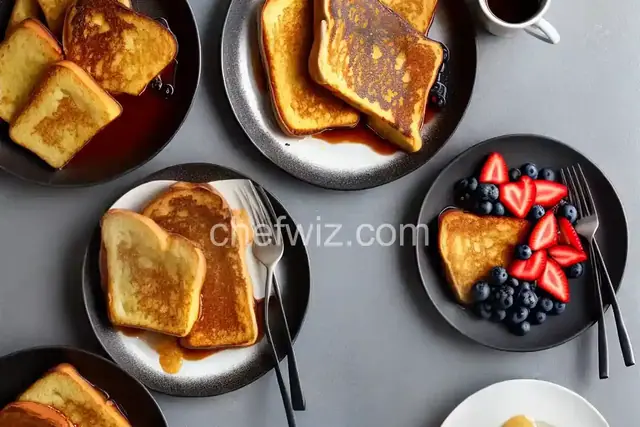
Serve the French toast with a drizzle of condensed milk and a pat of butter.
Have you ever tasted a slice of bread so deliciously crispy and sweet that it melts in your mouth? If not, then you must try Hong Kong–Style French Toast. This unique twist on the classic French toast takes breakfast to a whole new level, combining the best of both worlds. In this article, we will uncover the secrets behind this mouthwatering dish and explain why it has become a beloved staple in Hong Kong's culinary scene.
Just like the fusion of cultures found in Hong Kong, this delightful treat is a fusion of Western and Asian influences. While French toast itself has been enjoyed around the world for centuries, Hong Kong–Style French Toast brings a distinct twist to the table. It is said to have originated in Hong Kong's cha chaan tengs, which are bustling local coffee shops serving a mix of Western and Chinese cuisine.
What sets Hong Kong–Style French Toast apart from its traditional counterpart is the unique filling sandwiched between the bread slices. Instead of simply dipping the bread in an egg mixture, the slices are stuffed with peanut butter, kaya (coconut jam), or even condensed milk. This creates a delightful contrast of flavors, with the sweetness of the filling complementing the savory notes of the crispy bread.
Another crucial element in achieving the perfect Hong Kong–Style French Toast is the cooking method. Unlike regular French toast, which is typically pan-fried, this variation is deep-fried to perfection. This technique ensures that the bread becomes incredibly crispy on the outside while remaining soft and fluffy on the inside. It's like biting into a cloud wrapped in a golden, crunchy coating.
Making Hong Kong–Style French Toast is a relatively simple process, but the results are undeniably delicious. First, you'll need to prepare the filling of your choice, whether it's peanut butter, kaya, or condensed milk. Next, take two slices of thick bread and spread the filling generously between them, creating a flavorful sandwich.
Now comes the exciting part—dipping the sandwich in an egg mixture. The egg mixture is often flavored with a hint of vanilla or even cinnamon to add an extra layer of deliciousness. Once the sandwich is fully coated, it's time to deep-fry it until it turns a beautiful golden brown.
Once the Hong Kong–Style French Toast is cooked to perfection, it's typically served with a pat of butter and a drizzle of golden syrup. The combination of sweet, savory, and buttery flavors is simply irresistible.
Hong Kong–Style French Toast is a culinary gem that combines the best elements of both Western and Asian cuisines. Its crispy exterior, fluffy interior, and delectable fillings make it a breakfast favorite in Hong Kong and beyond. By infusing your French toast with a touch of Hong Kong, you can transform a classic dish into a sensational experience for your taste buds.
Hong Kong–Style French Toast is unique because it is deep-fried and typically filled with peanut butter, kaya, or condensed milk. The filling adds a delicious twist to the classic dish.
While any bread can be used, it's best to use thick slices of white bread to achieve the perfect texture.
While it is commonly enjoyed as a breakfast dish, Hong Kong–Style French Toast can also be eaten as a snack or dessert.
Deep-frying is essential to achieving the characteristic crispy texture of Hong Kong–Style French Toast. Baking may alter the final result.
Absolutely! Hong Kong–Style French Toast is a beloved dish in Hong Kong and can be found in many local cha chaan tengs.
Definitely! You can get creative and experiment with different fillings, such as Nutella, cream cheese, or even fruit preserves.
It is not recommended to freeze Hong Kong–Style French Toast as the texture may be compromised when thawed.
Yes, there are variations of Hong Kong–Style French Toast that include additional toppings such as whipped cream, fresh fruit, or even ice cream.
AprilCook, recipe developer and the heart of Chefwiz. More about April