Homemade Salsa
Rate this recipeBe the first to rate
 By AprilPublished
 Who doesn't love a delicious salsa to spice up their meals? Whether you're a fan of Mexican cuisine or simply enjoy a tangy and refreshing dip, homemade salsa is the way to go.
 By AprilPublished
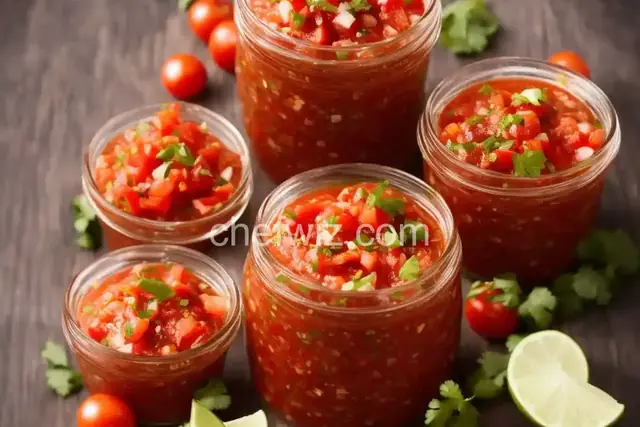
 Who doesn't love a delicious salsa to spice up their meals? Whether you're a fan of Mexican cuisine or simply enjoy a tangy and refreshing dip, homemade salsa is the way to go.
Place the onion and garlic in a food processor and pulse until finely chopped.
Add the tomatoes, jalapeno, cilantro, lime juice, lime zest, salt, cumin, and sugar to the food processor.
Pulse the mixture until everything is combined but still has some chunkiness.
Depending on the water content of the tomatoes, the consistency of the salsa may vary. If it is too watery, strain out half of the liquid.
Combine the chunky strained mixture with the remaining salsa.
If you prefer a chunkier texture, strain out more of the liquid until you reach your desired consistency.
Who doesn't love a delicious salsa to spice up their meals? Whether you're a fan of Mexican cuisine or simply enjoy a tangy and refreshing dip, homemade salsa is the way to go. It's easy to make, bursting with flavors, and can be customized to suit your taste. Let's dive into the world of homemade salsa and discover how you can create your own mouthwatering concoction.
Creating homemade salsa is like painting a masterpiece. You have a blank canvas to work with, and it's up to you how many colors and brushstrokes you want to add. The possibilities are endless when it comes to the ingredients you can use - tomatoes, onions, peppers, cilantro, lime juice, and so much more. Just like an artist, you have the power to blend these flavors together to create a salsa that is uniquely yours.
What sets homemade salsa apart from store-bought options is the freshness of the ingredients. When you make your own salsa, you have full control over the quality and ripeness of the produce. This ensures that every bite is bursting with flavor and packed with nutrients. The vibrant colors of the tomatoes, the crispness of the onions, and the heat of the peppers all come together to create a symphony of taste that will leave you wanting more.
Are you a fan of spicy food or do you prefer a milder kick? With homemade salsa, you can tailor the heat level to your liking. Add a few jalapenos or habaneros for a fiery salsa, or opt for milder options like bell peppers or serranos for a gentler flavor. You can also experiment with different herbs and spices to add an extra dimension to your salsa. The beauty of making your own salsa is that you have the power to create the perfect balance of flavors.
Now that we've established the wonderful world of homemade salsa, let's dive into the process of making it. The good news is that it's incredibly simple and requires just a few basic steps. Here's a step-by-step guide:
To create a delicious salsa, you'll need fresh tomatoes, onions, peppers, cilantro, lime juice, garlic, and salt. Make sure to choose ripe tomatoes for the best flavor.
Chop the tomatoes, onions, and peppers into small, uniform pieces. Finely chop the cilantro and mince the garlic. The size of the pieces can be adjusted based on your preference.
In a bowl, combine all the chopped ingredients. Squeeze in some fresh lime juice and add a pinch of salt. Give it a good mix to ensure all the flavors are evenly distributed.
Allow the salsa to sit for at least 30 minutes to an hour before serving. This will allow the flavors to meld together and intensify.
Once the salsa has had time to marinate, it's ready to be enjoyed. Serve it with your favorite tortilla chips, use it as a topping for tacos, or add it to your grilled chicken for an extra zing. The possibilities are endless!
While fresh tomatoes are ideal, you can use canned tomatoes if fresh ones are not available. Just make sure to drain them before using.
Homemade salsa can be refrigerated and enjoyed for up to a week. Just make sure to store it in an airtight container.
Yes, you can freeze homemade salsa. Transfer it to a freezer-safe container and it can be stored for up to three months.
If your salsa is too spicy, you can balance it out by adding a bit of sugar or honey. The sweetness will help neutralize the heat.
Absolutely! Adding fruits like mangoes, pineapples, or peaches can give your salsa a delightful twist.
Yes, you can omit onions from your salsa if you're not a fan. Just make sure to adjust the other ingredients accordingly to maintain the balance of flavors.
Of course! If you prefer a chunkier salsa, simply chop the ingredients into larger pieces and mix them together.
While fresh cilantro is recommended for its vibrant flavor, you can use dried cilantro if that's what you have on hand. Just remember to adjust the quantity accordingly, as dried herbs are more potent.
In conclusion, making homemade salsa is an art that allows you to customize the flavors to suit your preferences. With just a few simple steps, you can create a tangy and refreshing salsa that will elevate any meal. So why settle for store-bought options when you can create a burst of flavor right in your own kitchen? Unleash your creativity and get ready to impress your taste buds!
AprilCook, recipe developer and the heart of Chefwiz. More about April