Homemade Ricotta
Rate this recipeBe the first to rate
 By AprilPublished
Are you tired of buying store-bought ricotta that lacks flavor and freshness?
 By AprilPublished
Are you tired of buying store-bought ricotta that lacks flavor and freshness?
Place a deep bowl on your workspace and position a large sieve over it.
Moisten two layers of cheesecloth with water and use them to line the sieve.
In a stainless-steel or enameled pot (such as Le Creuset), combine the milk, cream, and salt.
Stir the mixture occasionally and heat it over medium heat until it reaches a full boil.
Once boiling, remove the pot from the heat and add the vinegar. Stir well.
Allow the mixture to sit for about 1 minute until it curdles, resulting in thick curds and milky whey.
Carefully pour the curdled mixture into the cheesecloth-lined sieve.
Let the mixture drain at room temperature for approximately 20 to 25 minutes, occasionally discarding any liquid that collects in the bowl.
The longer you let it drain, the thicker the ricotta will be. Adjust the draining time according to your desired consistency.
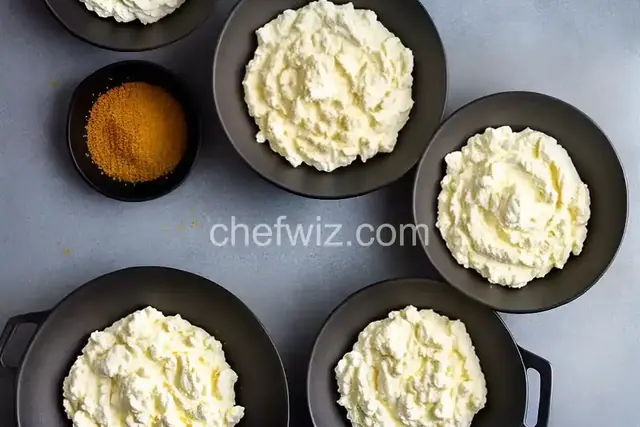
Transfer the drained ricotta to a separate bowl, discarding the cheesecloth and any remaining whey.
You can use the ricotta immediately or cover it with plastic wrap and refrigerate.
The ricotta can be stored in the refrigerator for 4 to 5 days.
Are you tired of buying store-bought ricotta that lacks flavor and freshness? Why not try making your own homemade ricotta? It's easier than you think and the results are incredibly rewarding. In this article, we will guide you through the process of making delicious, creamy ricotta cheese right in your own kitchen.
Ricotta is a soft, creamy cheese that originated in Italy. It is made from the whey leftover from the production of other cheeses, such as mozzarella or pecorino. The whey is heated, causing the proteins to coagulate and form curds, which are then separated and drained to create ricotta cheese.
Making your own ricotta at home allows you to control the quality of ingredients and customize the flavor to suit your taste buds. Store-bought ricotta often lacks the richness and depth of homemade ricotta. Plus, the process of making ricotta is a fun and fulfilling culinary experience that will impress your family and friends.
Making homemade ricotta is a simple process that requires just a few ingredients and minimal effort. Start by heating milk and buttermilk in a pot until it reaches a specific temperature. Then, add lemon juice or vinegar to acidify the mixture and cause the curds to form. Let the mixture sit for a few minutes, and then strain it through a cheesecloth to separate the curds from the whey. Finally, let the ricotta drain for a few hours to achieve the desired consistency.
Now that you have all the necessary information, let's dive into the step-by-step process of making homemade ricotta.
Start by pouring the milk and buttermilk into a pot and heating it over medium heat. Use a thermometer to monitor the temperature and heat the mixture until it reaches a specific temperature.
Add lemon juice or vinegar to the heated milk mixture. The acid will cause the proteins in the milk to coagulate and form curds. Stir gently to ensure the acid is evenly distributed.
Allow the mixture to sit undisturbed for a few minutes. During this time, the curds will separate from the whey and form a distinct layer on top.
Line a colander with a cheesecloth and place it over a bowl or sink. Carefully pour the curdled mixture into the cheesecloth, allowing the whey to drain away. The longer you let it drain, the firmer the ricotta will become.
Transfer the ricotta to a container and refrigerate until you're ready to use it. Homemade ricotta can be stored for up to a week in the refrigerator. Use it in a variety of dishes, such as lasagna, stuffed pasta, or simply spread it on toast with a drizzle of honey.
Making homemade ricotta is a rewarding experience that allows you to elevate your culinary skills and enjoy the freshness and flavor of this delightful cheese. With just a few simple steps, you can create a creamy, homemade ricotta that will impress your taste buds and those around you.
While cow's milk is commonly used, you can experiment with different types of milk, such as goat's milk or sheep's milk, to create unique flavors in your ricotta.
The process of making ricotta usually takes around 30 minutes, plus additional time for the ricotta to drain and set. However, the hands-on time is minimal, making it a convenient and rewarding cheese to make at home.
Yes, you can use store-bought buttermilk as a starter culture for making homemade ricotta. However, if you prefer a more traditional approach, you can also make your own buttermilk by adding lemon juice or vinegar to regular milk.
Yes, you can freeze homemade ricotta for up to three months. However, keep in mind that the texture may change slightly after thawing, so it's best to use it in cooked dishes rather than consuming it fresh.
Absolutely! The leftover whey can be used in various recipes, such as bread-making, soups, or smoothies. It's a versatile ingredient that adds nutritional value and flavor to your dishes.
Homemade ricotta allows you to control the quality and freshness of the ingredients, making it a healthier option compared to some store-bought varieties that may contain additives or preservatives.
Absolutely! Adding herbs, spices, or even a drizzle of honey to your homemade ricotta can elevate the flavor and create a unique taste experience. Feel free to experiment and get creative with your homemade ricotta.
Yes, homemade ricotta can be used as a substitute for other cheeses in various recipes. Its creamy texture and mild flavor make it
AprilCook, recipe developer and the heart of Chefwiz. More about April