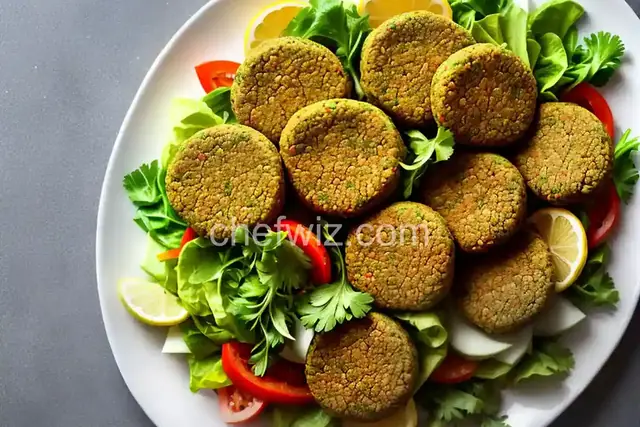
Homemade Falafel
Rate this recipeBe the first to rate
 By AprilPublished
 Are you tired of the same old takeout options? Looking for a delicious and healthy homemade meal?
 By AprilPublished
 Are you tired of the same old takeout options? Looking for a delicious and healthy homemade meal?
In a food processor, blend the beans, onion, 3 tablespoons of flour, and the next 4 ingredients until a coarse puree forms.
Add parsley to the processor and pulse until well blended.
Sprinkle a plate generously with flour.
Measure level tablespoonfuls of the garbanzo mixture and roll into balls, then transfer them to the floured plate.
Roll each falafel ball in the flour on the plate to coat generously, then flatten them slightly.
Pour enough oil into a large skillet to reach a depth of 1/2 inch.
Heat the oil to 375°F.
Working in 2 batches, fry the falafel patties until they are deep brown, turning them once, for about 3 minutes.
Use a slotted spoon to transfer the falafel to paper towels to drain.
Are you tired of the same old takeout options? Looking for a delicious and healthy homemade meal? Look no further than homemade falafel! This Middle Eastern delicacy is not only packed with flavor but also easy to make in the comfort of your own kitchen. Let's dive into the world of homemade falafel and discover how you can create this mouthwatering dish at home.
Falafel is a popular Middle Eastern dish made from ground chickpeas or fava beans, blended with herbs and spices, and then deep-fried to perfection. These crispy and flavorful balls are typically served in pita bread with fresh vegetables and a creamy tahini sauce. Whether you're a vegetarian, vegan, or simply looking to add more plant-based meals to your diet, falafel is a versatile and satisfying option.
While it's tempting to rely on takeout or pre-packaged options, making falafel from scratch has its own set of advantages. Firstly, you have complete control over the ingredients, allowing you to customize the flavor to suit your taste buds. You can experiment with different herbs and spices, adjusting the heat and tanginess to your liking. Secondly, homemade falafel is much healthier compared to the deep-fried versions you find at restaurants. By using quality ingredients and shallow frying or baking them, you can enjoy a guilt-free meal without compromising on taste.
Creating the perfect falafel requires a combination of technique and intuition. It's all about achieving the right texture, ensuring the patties are crispy on the outside and soft on the inside. The key is to properly soak and cook the chickpeas or fava beans, as well as finely chop the herbs and spices. Once the mixture is prepared, it's time to shape the falafel into small patties and cook them until golden brown. Serve them with a side of fresh salad, pita bread, and a drizzle of tahini sauce.
Here are a few tips to help you master the art of making homemade falafel:
Avoid using canned beans as they can make the mixture too soft and difficult to shape.
This helps soften them and ensures a smoother texture in the final falafel.
Adding a tablespoon of flour or breadcrumbs helps hold the mixture together.
Try adding fresh parsley, cilantro, cumin, or coriander for an extra burst of flavor.
A food processor makes it easier to blend the ingredients into a smooth mixture.
While traditionally falafel is deep-fried, you can achieve a similar crispy texture by shallow frying or baking them.
Homemade falafel is a delicious, versatile, and healthy dish that you can easily make in your own kitchen. By following a few simple steps and experimenting with different flavors, you can create a falafel masterpiece that will impress your taste buds and your friends. So why not give it a try? Say goodbye to takeout and hello to homemade falafel!
A1: While it's possible to use canned beans, dried ones are recommended for a better texture.
A2: Yes, you can freeze homemade falafel. Just make sure to thaw them before reheating.
A3: Falafel is naturally gluten-free, but it's important to check the ingredients for any potential gluten-containing additives.
A4: While a food processor makes the process easier, you can also use a blender or finely chop the ingredients by hand.
A5: Instead of deep-frying, you can bake falafel in the oven using a non-stick baking sheet.
A6: Yes, you can experiment with other legumes like lentils or black beans to create unique falafel variations.
A7: Some popular toppings for falafel include tahini sauce, yogurt sauce, pickled vegetables, and fresh herbs.
A8: Yes, you can prepare the falafel mixture ahead of time and refrigerate it until you're ready to cook and serve.
AprilCook, recipe developer and the heart of Chefwiz. More about April