Homemade Cornflour/Cornstarch
Rate this recipeBe the first to rate
 By AprilPublished
 Have you ever found yourself in the middle of a recipe, only to realize that you're missing a key ingredient?
 By AprilPublished
 Have you ever found yourself in the middle of a recipe, only to realize that you're missing a key ingredient?
Remove the husks from the corn and rinse the grains.
Soak the grains in water for 2-3 hours. If the grains are tough, you can soak them for a longer time.
Take half of the soaked grains and add about 1.5 cups of water to a grinding jar. Grind until you achieve a smooth consistency.
Repeat the grinding process with the remaining soaked grains.
Strain the ground mixture through a strainer to remove any solid residue.
Leave the filtered liquid to settle for 2 hours.
After 2 hours, carefully remove the upper yellow layer, revealing the white cornstarch layer at the bottom.
Spread the white cornstarch on a flat plate or thali and place it in direct sunlight for 4 hours.
After 4 hours, gently scrape off the dried cornstarch from the plate. Note that the inner layer may still be slightly moist.
Dry the cornstarch again in sunlight for an additional 2 hours until fully dried.
Grind the dried cornstarch in a grinder to obtain a smooth flour.
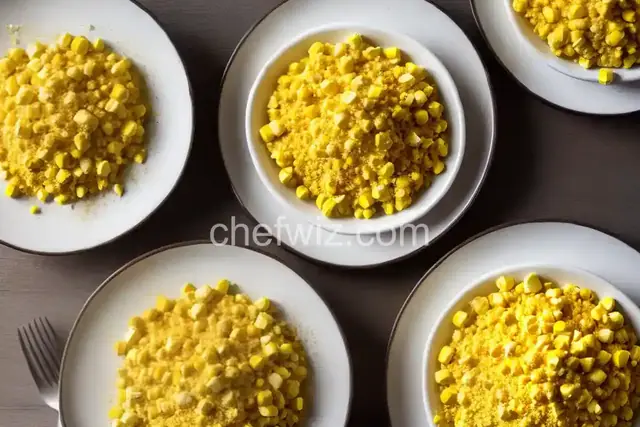
Your homemade corn flour or corn starch is now ready to be stored in an airtight container. It can be used for up to six months.
Have you ever found yourself in the middle of a recipe, only to realize that you're missing a key ingredient? It can be frustrating, especially when you're in the mood to whip up something delicious. But fear not! In this article, we'll explore how to make your own cornflour or cornstarch at home. Yes, you read that right - a homemade solution that can save the day!
You might be wondering, why bother making your own cornflour or cornstarch when it's readily available at the store? Well, there are a few reasons. Firstly, making your own allows you to have complete control over the ingredients. No additives or preservatives - just pure corn goodness. Secondly, it can be a cost-effective option, especially if you already have cornmeal in your pantry. Plus, there's something satisfying about creating your own staple ingredients from scratch.
So, how do you turn cornmeal into cornflour or cornstarch? It's surprisingly simple. All you need is a blender or food processor and some cornmeal. Just place the cornmeal into the blender or food processor and pulse until it reaches a fine, powdery consistency. That's it! You now have your very own homemade cornflour or cornstarch.
Now that you have your homemade cornflour or cornstarch, how can you use it in your cooking? Well, it can be a great thickening agent for sauces, soups, and stews. It can also be used as a coating for frying or as a binding agent in baking. The possibilities are endless! Just keep in mind that cornflour or cornstarch has a slightly different texture compared to store-bought versions, so you may need to experiment a bit to achieve the desired results.
Once you've made your homemade cornflour or cornstarch, it's important to store it properly to maintain its freshness. Transfer it to an airtight container and store it in a cool, dry place. It should stay fresh for several months, but it's always a good idea to check for any signs of spoilage before using.
Homemade cornflour or cornstarch is a versatile ingredient that can save the day when you're in a pinch. With just a blender or food processor and some cornmeal, you can create your own thickening agent that's free from additives and preservatives. Experiment with it in your favorite recipes and enjoy the satisfaction of creating something from scratch. So, the next time you find yourself missing cornflour or cornstarch, remember that you can easily make your own at home!
While cornmeal, cornflour, and cornstarch are all derived from corn, they have different textures and purposes in cooking. Cornmeal is coarser and is typically used for making cornbread or as a coating for frying. Cornflour and cornstarch, on the other hand, are finer and are used as thickening agents.
The ratio of cornmeal to cornflour or cornstarch is approximately 1:1. So, if you need a cup of cornflour or cornstarch, start with a cup of cornmeal.
Yes, you can use white cornmeal instead of yellow cornmeal to make cornflour or cornstarch. The end result will be slightly different in color, but it will still work effectively as a thickening agent.
Yes, there are alternatives to cornflour or cornstarch. Some common alternatives include arrowroot powder, tapioca starch, and potato starch. These can be used as substitutes in recipes that call for cornflour or cornstarch.
Yes, homemade cornflour or cornstarch is naturally gluten-free as long as you use gluten-free cornmeal. It's a great option for individuals with gluten sensitivities or dietary restrictions.
Yes, you can use your homemade cornflour or cornstarch in baking. It can be used as a thickener in custards, puddings, and pie fillings. Just keep in mind that the texture may be slightly different compared to store-bought versions.
It's generally recommended to use commercially produced cornflour or cornstarch for baby food, as it undergoes rigorous safety testing. However, if you're making baby food at home and want to use your homemade version, it's best to consult with your pediatrician to ensure it's safe for your little one.
Absolutely! Homemade cornflour or cornstarch is a great option for gluten-free recipes. Just make sure to use gluten-free cornmeal to ensure it's truly gluten-free.
Yes, you can use your homemade cornflour or cornstarch in savory dishes. It can be used as a thickening agent for gravies, sauces, and soups. Just adjust the amount according to your desired consistency.
AprilCook, recipe developer and the heart of Chefwiz. More about April