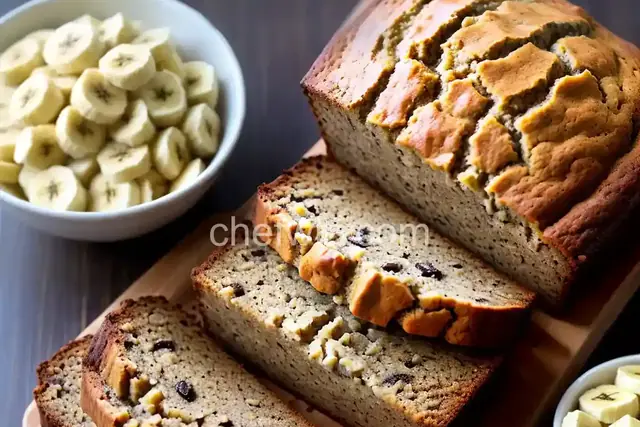
High altitude banana bread
Rate this recipeBe the first to rate
 By AprilPublished
 Have you ever wondered why your banana bread turns out differently when you bake it at high altitudes?
 By AprilPublished
 Have you ever wondered why your banana bread turns out differently when you bake it at high altitudes?
Preheat the oven to 350�F.
In a bowl, combine the butter, eggs, sugar, and mashed bananas.
In another bowl, combine the flour, salt, baking soda, baking powder, and cinnamon.
Mix the wet and dry ingredients together until they are well blended.
Optional: If desired, add chopped nuts, dried fruit, and/or chocolate chips and stir in about 1/2 cup.
Grease a 9x5 inch loaf pan and pour the dough into it.
Bake at 350�F for 50 minutes, or until a toothpick inserted in the center comes out clean.
Let the bread cool in the pan for 5-10 minutes before removing.
Enjoy the bread hot or cold.
Have you ever wondered why your banana bread turns out differently when you bake it at high altitudes? The answer lies in the science behind baking. In this article, we will explore the challenges of baking banana bread at high altitudes and provide helpful tips to ensure your bread turns out moist and delicious every time.
When you bake at high altitudes, the lower air pressure affects the baking process. The reduced air pressure causes liquids to evaporate faster, leading to a dryer and denser texture in your baked goods. The leavening agents, such as baking soda and baking powder, also work differently at high altitudes. They tend to create more air bubbles, which can result in a collapsed or sunken center in your banana bread.
To counteract the challenges of high altitude baking, it is important to make adjustments to your ingredients. One key adjustment is to reduce the leavening agents. By reducing the amount of baking soda or baking powder, you can prevent your banana bread from rising too much and collapsing in the center.
Another crucial aspect of high altitude baking is maintaining the right amount of moisture in your batter. The dry air at higher altitudes can cause your banana bread to become dry and crumbly. To combat this, you can increase the amount of liquid ingredients, such as milk or yogurt, in your recipe. This will help retain moisture and produce a softer texture.
The baking temperature and time also play a significant role in high altitude baking. Due to the lower air pressure, baked goods take longer to cook at higher altitudes. It is recommended to lower the baking temperature slightly and increase the baking time to ensure even baking throughout. This will prevent the edges from becoming too dry while the center is still undercooked.
Even with adjustments, high altitude baking can still be tricky. Here are some troubleshooting tips to help you overcome common challenges:
If your banana bread has a sunken center, it may be due to too much leavening agent. Reduce the amount next time or use a recipe specifically designed for high altitude baking.
To combat dryness, try adding an extra egg or increasing the amount of oil or butter in your recipe. These ingredients will add moisture and improve the texture of your banana bread.
If the edges of your banana bread are becoming too dry while the center is still undercooked, cover the bread with aluminum foil during the last few minutes of baking. This will prevent further browning and allow the center to cook thoroughly.
Baking banana bread at high altitudes can be challenging, but with a few adjustments, you can achieve delicious results. Remember to reduce the leavening agents, increase moisture, and adjust the baking temperature and time. By understanding the science behind high altitude baking and troubleshooting common issues, you can enjoy moist and flavorful banana bread no matter where you are.
Yes, you can use the same recipe for high altitude baking, but it may require adjustments to the leavening agents, moisture content, and baking time.
High altitude baking generally refers to baking at altitudes above 3,000 feet (915 meters).
As a general rule, reduce the baking soda or baking powder by 1/8 to 1/4 teaspoon for every 1,000 feet (305 meters) above sea level.
Absolutely! Increasing the amount of liquid ingredients, such as milk or yogurt, can help combat dryness and produce a moist texture.
Insert a toothpick into the center of the bread. If it comes out clean or with a few crumbs, your banana bread is done.
While you can certainly bake banana bread at high altitudes without adjustments, be prepared for a different texture and potential issues, such as a sunken center.
Yes, preheating the oven is essential to ensure even baking and proper rise.
Yes, you can use a bread machine for high altitude baking. However, you may need to make additional adjustments to the recipe and settings to achieve the desired results.
AprilCook, recipe developer and the heart of Chefwiz. More about April