Hard Boiled Eggs On Gas Stove
Rate this recipeBe the first to rate
 By AprilPublished
 Are you tired of ending up with undercooked or overcooked hard-boiled eggs?
 By AprilPublished
 Are you tired of ending up with undercooked or overcooked hard-boiled eggs?
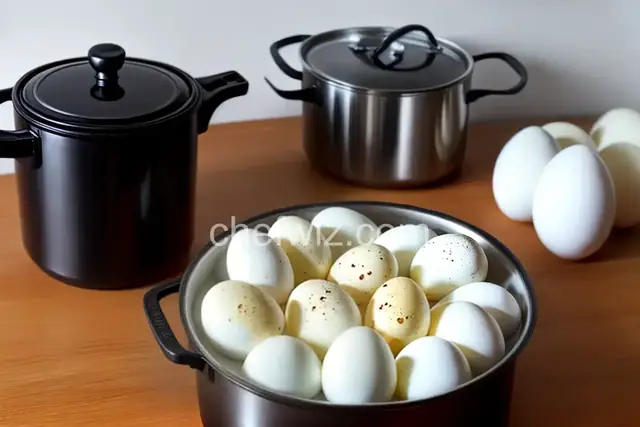
Put the eggs in a large saucepan.
Fill the saucepan with cold water.
Add salt to the water.
Put the saucepan on the stove and set the heat to high, allowing it to come to a boil.
Once the water starts boiling, take the saucepan off the heat.
Reduce the heat to low and return the saucepan to a simmer for 1 minute.
Remove the saucepan from the heat and cover it with a lid for 12 minutes.
Rinse the eggs under cold water and peel them once they have cooled.
Are you tired of ending up with undercooked or overcooked hard-boiled eggs? Well, fear not! In this article, I will guide you through the process of boiling eggs perfectly on a gas stove. Whether you're a beginner in the kitchen or a seasoned pro, these tips and tricks will help you achieve that ideal hard-boiled egg consistency.
Before we dive into the step-by-step process, let's understand the science behind boiling eggs. Eggs contain proteins that coagulate, or solidify, when exposed to heat. The yolk and the white of an egg solidify at different temperatures, which is why it is essential to follow the correct cooking time to achieve the desired outcome.
First things first, choose a pot that comfortably fits the number of eggs you want to boil. This ensures that the eggs have enough space to cook evenly. Additionally, a pot with a tight-fitting lid will help retain heat and cook the eggs more efficiently.
Before placing the eggs in the pot, it's crucial to handle them with care. Gently tap each egg on a hard surface to create small cracks in the shell. This will prevent the eggs from cracking during the boiling process. It also makes peeling the eggs easier once they are cooked.
Now it's time to start cooking! Place the cracked eggs in the pot and fill it with enough water to cover the eggs entirely. Add a pinch of salt to the water to improve the flavor of the eggs. Place the pot on your gas stove over medium-high heat and bring the water to a rolling boil.
Once the water reaches a rolling boil, reduce the heat to medium-low or low, depending on your gas stove's heat intensity. Let the eggs simmer in the gently boiling water for the desired amount of time. For soft-boiled eggs, cook them for about 4-5 minutes. For medium-boiled eggs, aim for 6-7 minutes. And for perfectly hard-boiled eggs, cook them for 8-10 minutes.
After the cooking time is up, carefully remove the pot from the heat and drain the hot water. Transfer the eggs to a bowl filled with ice water to cool them down quickly. Let the eggs sit in the ice water for at least five minutes. This cooling process prevents further cooking and makes the eggs easier to peel.
Once the eggs are cool, gently tap them on a hard surface to crack the shell. Then, peel off the shell and rinse the eggs under running water to remove any remaining shell fragments. Now your perfectly boiled eggs are ready to be enjoyed! You can eat them as is, season them with salt and pepper, or use them to make delicious egg salads or deviled eggs.
Boiling eggs on a gas stove doesn't have to be a daunting task. By following these simple steps, you can achieve perfectly boiled eggs every time. Remember to choose the right pot, handle the eggs with care, boil them for the correct amount of time, and cool them down properly. With practice, you'll become an expert at boiling eggs to perfection on your gas stove.
There's a simple trick to check an egg's freshness. Place the egg in a bowl of water. If it sinks to the bottom and lies flat on its side, it's fresh. If it stands upright or floats, it's not as fresh.
Absolutely! These instructions can be applied to any type of stove, whether it's gas, electric, or induction.
Cracking the eggs before boiling allows any air inside the shell to escape. It prevents the eggs from cracking while they cook and makes them easier to peel.
Hard-boiled eggs can be stored in the refrigerator for up to one week. It's best to keep them in their shells until you're ready to eat them.
Yes, you can reuse the boiling water for other purposes, such as cooking pasta or vegetables. Just make sure to strain it to remove any eggshell fragments.
Hard-boiled eggs are an excellent source of protein and various essential nutrients. They make for a nutritious and satisfying snack.
If you prefer a slightly runny yolk, reduce the cooking time by a minute or two. Keep in mind that the yolk will continue to cook slightly as it cools down.
Adding vinegar to the boiling water can help prevent the eggs from cracking. However, it may also affect the taste of the eggs. It's a personal preference, so feel free to experiment!
AprilCook, recipe developer and the heart of Chefwiz. More about April