Haemul Pajeon (Korean Seafood Pancake)
Rate this recipeBe the first to rate
 By AprilPublished
 Have you ever tried Haemul Pajeon, the savory Korean seafood pancake that will make your taste buds dance with joy?
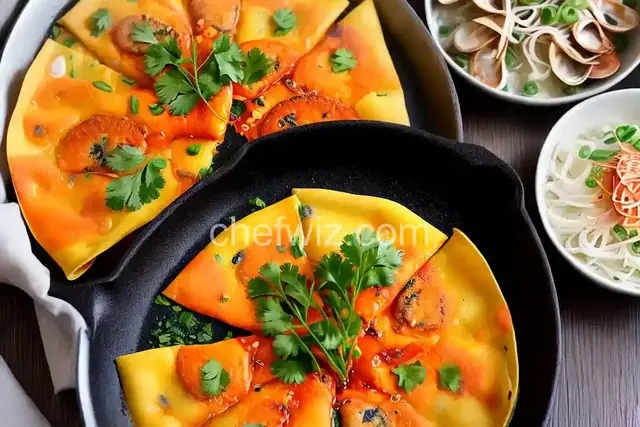 By AprilPublished
 Have you ever tried Haemul Pajeon, the savory Korean seafood pancake that will make your taste buds dance with joy?
In a bowl, mix together the seafood mix, water, flour, 1 bunch of scallions, eggs, garlic, salt, and pepper until the batter becomes thick.
Heat olive oil in a nonstick skillet over medium-high heat.
Pour half of the batter into the skillet and spread it evenly. Cook until the bottom and edges of the pancake are browned, approximately 7 to 8 minutes.
Flip the pancake and continue cooking until the other side is browned as well, about 7 to 8 minutes more. Transfer the cooked pancake to a plate.
Repeat the process with the remaining batter.
In a separate bowl, combine soy sauce, 1 stalk of scallion, rice vinegar, sesame oil, brown sugar, gochugaru, and sesame seeds to make the dipping sauce.
Serve the pancakes with the prepared dipping sauce.
If desired, you can substitute light soy sauce for the regular soy sauce.
Alternatively, you can use garlic powder instead of fresh garlic in the batter.
Have you ever tried Haemul Pajeon, the savory Korean seafood pancake that will make your taste buds dance with joy? Whether you're a fan of Korean cuisine or simply looking to explore new flavors, this dish is a must-try. In this article, we will delve into the world of Haemul Pajeon, its origins, and what makes it such a tantalizing treat. So, grab your apron and let's dive in!
Haemul Pajeon traces its roots back to the coastal regions of Korea, where seafood is abundant. As a country surrounded by water, it's no surprise that Koreans have mastered the art of incorporating fresh seafood into their cuisine. Pajeon, meaning "green onion pancake," is a beloved staple in Korean food culture. However, the addition of haemul, or seafood, takes this dish to a whole new level.
Imagine biting into a crispy pancake, savoring the delicate flavors of succulent shrimp, tender squid, and a medley of fresh vegetables. That's the magic of Haemul Pajeon. It's a dish that combines the umami-rich taste of seafood with the earthy sweetness of green onions, creating a harmonious balance of flavors. The batter, made from a blend of flour and water, results in a light and airy texture that perfectly complements the star ingredients.
Cooking Haemul Pajeon requires a bit of finesse, but with the right guidance, you'll be able to whip up a masterpiece in no time. The key is to achieve the perfect balance between a crispy exterior and a soft interior. The batter should be poured onto a hot pan generously coated with oil, allowing it to spread evenly. Then, the seafood and vegetables are added, creating a vibrant mosaic of colors. It's important to be patient and let the pancake cook until golden brown before flipping it over. This ensures a beautiful presentation and a delightful crunch.
Haemul Pajeon is not just a dish; it's an experience. In Korean culture, it is often enjoyed in the company of friends and family. Picture a lively gathering, where everyone sits around a sizzling hotplate, eagerly waiting for the Haemul Pajeon to be served. The aroma fills the air, and laughter fills the room as everyone takes part in the communal joy of sharing a delicious meal. It's a bonding experience that brings people together, celebrating the simple pleasures of good food and great company.
In conclusion, Haemul Pajeon is a dish that tantalizes the taste buds and warms the heart. Its origins in Korean coastal regions, the combination of fresh seafood and green onions, and the art of cooking it to perfection make it a true culinary delight. So, why not embark on a culinary adventure and try making Haemul Pajeon in your own kitchen? Get ready to indulge in a crispy, savory pancake that will transport you to the vibrant streets of Korea.
Yes, you can customize your Haemul Pajeon by omitting the seafood and adding more vegetables. It will still be delicious!
There are several dipping sauces that pair perfectly with Haemul Pajeon, such as soy sauce with vinegar, soy sauce with sesame oil, or a spicy chili sauce.
While fresh seafood is preferred for the best flavor, you can use frozen seafood if that's what you have available. Just make sure to thaw it properly before cooking.
Yes, you can substitute regular flour with gluten-free flour to make a gluten-free version of Haemul Pajeon.
Absolutely! Feel free to experiment with different ingredients such as mushrooms, kimchi, or even cheese to create your own unique twist on this traditional dish.
Haemul Pajeon can be served as both a main course or an appetizer, depending on the portion size and the accompanying dishes.
Absolutely! You can reheat leftover Haemul Pajeon in a skillet or oven to bring back its crispy texture.
Haemul Pajeon pairs well with other Korean classics such as Kimchi, Bibimbap, Japchae, or Bulgogi. It's a great way to create a Korean feast!
AprilCook, recipe developer and the heart of Chefwiz. More about April