Grenade Launcher
Rate this recipeBe the first to rate
 By AprilPublished
 Have you ever watched an action movie and wondered how those explosive scenes are created?
 By AprilPublished
 Have you ever watched an action movie and wondered how those explosive scenes are created?
Combine peach schnapps and rum in a shot glass.
Pour the mixture into your mouth.
Swallow the entire contents.
Have you ever watched an action movie and wondered how those explosive scenes are created? Well, the answer lies in the powerful weapon known as the grenade launcher. Just like a superhero's secret weapon, the grenade launcher is an essential tool for soldiers and law enforcement agencies. In this article, we will explore the fascinating world of grenade launchers, their history, functionality, and their role in modern warfare.
Before we delve into the details, let's take a trip back in time to understand the origins of grenade launchers. Imagine a world without these powerful weapons - it would be like a concert without music! The concept of launching grenades dates back to the 17th century, when soldiers used simple devices like muskets to propel explosive projectiles. However, it was during World War I that grenade launchers truly evolved. They became more sophisticated, allowing soldiers to launch grenades over longer distances with greater accuracy.
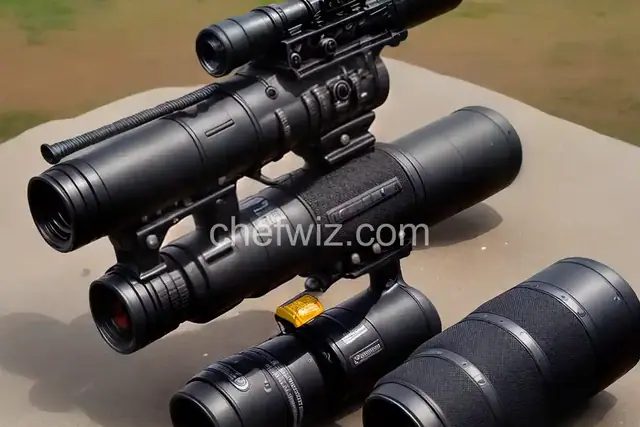
Now that we have an idea of their historical significance, let's dive into the mechanics of a grenade launcher. Picture this - a long-barreled weapon that resembles a rifle, but with a twist. Instead of firing bullets, it launches grenades with a blast of explosive force. These grenades are loaded into the launcher's chamber and propelled by either compressed gas or a spring mechanism. When the trigger is pulled, the launcher releases the grenade, sending it soaring through the air towards its target.
Just like the variety of flavors at an ice cream parlor, grenade launchers come in different types, each with its own unique features. The most common types include standalone launchers, under-barrel launchers, and rifle-mounted launchers. Standalone launchers, as the name suggests, are independent weapons that can be operated separately. Under-barrel launchers, on the other hand, are attached to the underside of rifles, giving soldiers the advantage of dual weaponry. Rifle-mounted launchers, as the name implies, are integrated into the rifle itself, allowing for seamless transitions between firing modes. It's like having a Swiss Army knife of weapons!
Now that we have a good understanding of the mechanics and types of grenade launchers, let's explore their applications in modern warfare. These powerful weapons are primarily used for two purposes: suppression and destruction. In the hands of a skilled soldier, a grenade launcher can rain down a barrage of explosives, creating chaos and disorienting the enemy. Additionally, they are effective at destroying enemy vehicles, fortifications, and even structures. Imagine a superhero demolishing a skyscraper with a single punch - that's the kind of power a grenade launcher possesses!
As technology continues to advance, so do the capabilities of grenade launchers. Imagine a grenade launcher that can be controlled remotely, or one that is equipped with advanced targeting systems for pinpoint accuracy. The possibilities are endless! With ongoing research and development, grenade launchers will continue to evolve, becoming even more effective on the battlefield. It's like witnessing the birth of a superhero - each new iteration brings more power and precision.
In conclusion, the grenade launcher is a formidable weapon that plays a crucial role in modern warfare. Its history, mechanics, and various types make it a force to be reckoned with on the battlefield. As technology progresses, we can expect to see even more advanced and powerful grenade launchers in the future. Just like a superhero's secret weapon, the grenade launcher will always be an essential tool in the arsenal of soldiers and law enforcement agencies.
The range of a grenade launcher depends on various factors, including the type of launcher and the specific ammunition used. However, most grenade launchers have an effective range of around 400 to 500 meters.
In most countries, grenade launchers are heavily regulated and restricted to military and law enforcement use only. It is highly unlikely for civilians to legally own a grenade launcher.
While grenade launchers are primarily designed for long-range engagements, they can be used in close-quarters combat, albeit with caution. Specialized ammunition, such as less-lethal rounds, can be used to minimize collateral damage.
The accuracy of a grenade launcher depends on various factors, including the skill of the operator and the type of launcher. With proper training and the right equipment, grenade launchers can be highly accurate, especially at shorter ranges.
Yes, grenade launchers are designed to accommodate various types of ammunition, including high-explosive, smoke, and illumination rounds. This versatility allows for different tactical applications in different situations.
Yes, there are non-lethal alternatives available for grenade launchers. These include less-lethal rounds, such as rubber bullets or bean bag rounds, which are designed to incapacitate rather than kill.
The weight of a grenade launcher can vary depending on the type and model. However, most standalone grenade launchers weigh around 10 to 15 pounds.
No, grenade launchers are not designed to be used underwater. Water significantly affects the trajectory and performance of the grenade, rendering it ineffective.
Thank you for reading this article on grenade launchers. We hope you found it informative and engaging. If you have any further questions, please feel free to reach out to us. Stay safe and stay curious!
AprilCook, recipe developer and the heart of Chefwiz. More about April