Greek Baklava
Rate this recipeBe the first to rate
 By AprilPublished
 Have you ever tasted a dessert that is both rich and light, crispy and gooey, sweet and nutty, all at the same time?
 By AprilPublished
 Have you ever tasted a dessert that is both rich and light, crispy and gooey, sweet and nutty, all at the same time?
To make Greek restaurant-worthy baklava in your own kitchen, follow these steps:
Gather all the necessary ingredients.
Preheat the oven to 350 degrees F (175 degrees C) and butter the bottom and sides of a 9x13-inch pan.
Chop the nuts and toss them with cinnamon. Set aside.
Unroll the phyllo dough and cut the stack in half to fit the pan. Cover the phyllo with a damp cloth to prevent it from drying out.
Place two sheets of dough in the pan and thoroughly butter them. Repeat this process until you have 8 layers of phyllo.
Sprinkle 2 to 3 tablespoons of the nut mixture on top of the phyllo. Continue layering with two sheets of dough, butter, and nuts.
The top layer should be about 6 to 8 sheets deep.
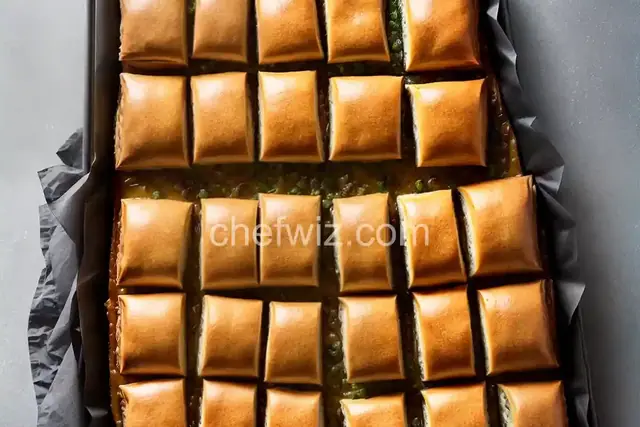
Use a sharp knife to cut the baklava into diamond or square shapes, making sure to cut all the way to the bottom of the pan. You can cut into 4 long rows and then make diagonal cuts.
Bake the baklava for about 50 minutes, or until it is golden and crisp.
While the baklava is baking, make the sauce by boiling sugar and water until the sugar is melted. Add vanilla and honey, then simmer for about 20 minutes.
Remove the baklava from the
Have you ever tasted a dessert that is both rich and light, crispy and gooey, sweet and nutty, all at the same time? If not, then you must try Greek Baklava! This traditional Mediterranean treat is a heavenly combination of flaky pastry, honey, and ground nuts, making it a truly indulgent delicacy.
Like many beloved culinary creations, the origins of Greek Baklava are shrouded in mystery and legend. Some believe it was first made in ancient Persia, while others claim it was created in the Ottoman Empire. Regardless of its true origin, one thing is for certain – Greek Baklava has become an iconic dessert that is enjoyed by people all over the world.
What sets Greek Baklava apart from other pastries is its unique layering technique. Thin sheets of phyllo dough are brushed with melted butter and stacked on top of each other, creating a multi-layered pastry. Each layer is sprinkled with a mixture of finely ground nuts, such as walnuts, almonds, or pistachios, and a hint of warming spices like cinnamon or cloves.
This layering process creates a beautiful mosaic of flavors and textures. The crispiness of the phyllo dough contrasts perfectly with the soft, honey-soaked layers in between. As you take a bite, you'll experience a delightful crunch followed by a burst of sweetness and nuttiness.
Imagine the taste of golden honey mingling with the buttery richness of the phyllo dough. Add to that the earthy, nutty flavors of the ground nuts, and you have a symphony of flavors dancing on your taste buds. The sweetness is perfectly balanced with a subtle hint of spice, making each bite a delightful moment of pure indulgence.
Preparing Greek Baklava is not for the faint of heart. It requires patience, precision, and a lot of love. The delicate phyllo dough needs to be handled with care, as it can easily tear or dry out. Each layer must be brushed with just the right amount of butter, ensuring a perfect balance of crispiness and moisture.
But fear not! With a little practice and a whole lot of perseverance, you too can master the art of making Greek Baklava. And trust me, the effort is well worth it. There's something truly satisfying about creating a dessert that brings joy to those who taste it.
Greek Baklava is not just a dessert; it's a symbol of celebration and togetherness. In Greece, it is often served on special occasions, such as weddings, birthdays, and religious holidays. It brings people together, creating a sense of unity and joy.
So why not gather your loved ones and celebrate life with a plate of homemade Greek Baklava? Share stories, laughter, and create memories that will last a lifetime.
Greek Baklava is more than just a dessert; it's a culinary masterpiece that has captivated taste buds for centuries. Its delicate layers of phyllo dough, honey, and ground nuts create a symphony of flavors that will leave you craving more. So why not embark on a sweet adventure and indulge in the delightful world of Greek Baklava?
Absolutely! While traditional Greek Baklava is made with walnuts, almonds, or pistachios, you can experiment with other nuts like pecans or cashews for a unique twist.
Yes, you can prepare Greek Baklava in advance. In fact, it's even better when it's allowed to sit for a day or two, as the flavors deepen and meld together.
Greek Baklava can stay fresh for up to a week if stored in an airtight container at room temperature. However, it's unlikely it will last that long, as it's simply too delicious!
Yes, you can freeze Greek Baklava for up to three months. Just make sure to wrap it tightly in plastic wrap and place it in an airtight container before freezing.
No, Greek Baklava is not gluten-free. Phyllo dough, which is a key ingredient in Baklava, is made from wheat flour. However, there are gluten-free alternatives available in some specialty stores.
While it's not traditional, you can certainly add a drizzle of melted chocolate over your Greek Baklava for an extra touch of decadence.
Honey is an essential component of Greek Baklava, as it adds both sweetness and moisture. While you can experiment with other sweeteners, keep in mind that it may alter the flavor and texture of the dessert.
Absolutely! Greek Baklava can be enjoyed both warm and at room temperature. Some prefer it warm, as it enhances the gooey texture and intensifies the flavors.
AprilCook, recipe developer and the heart of Chefwiz. More about April