Grandma's Polish Perogies
Rate this recipeBe the first to rate
 By AprilPublished
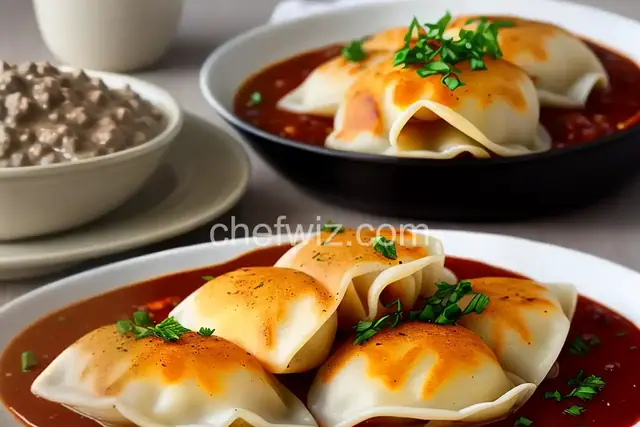
 When it comes to comfort food, few dishes can compare to the delicious and hearty goodness of Grandma's Polish perogies.
 By AprilPublished
 When it comes to comfort food, few dishes can compare to the delicious and hearty goodness of Grandma's Polish perogies.
Begin by preparing the dough: In a large bowl, combine flour and salt. In a separate bowl, whisk together sour cream, eggs, egg yolk, butter, and oil. Stir the wet ingredients into the flour mixture until well blended and the dough comes together. Cover the bowl with a towel and let it rest for 15 to 20 minutes.
While the dough is resting, prepare the filling: Place potatoes in a pot and add enough water to cover them. Bring to a boil and cook until tender, approximately 15 minutes.
Drain the cooked potatoes and mash them with shredded cheese and cheese sauce while they are still hot. Season with onion salt, salt, and pepper. Allow the filling to cool.
Divide the pierogi dough into two equal balls. Roll out one ball at a time on a lightly floured surface until it is thin enough to work with, but not too thin that it tears (around 1/8 to 1/4 inch thick). Cut the dough into circles using a cookie cutter, pierogi cutter, or a glass with a diameter of 3 to 4 inches.
To assemble the perogies, brush a small amount of water around the edges of the dough circles. Spoon some filling into the center of each circle. Fold the circles over to create half-circles and press the edges together to seal them. You can use your fingers or a fork to create crimped edges.
6
When it comes to comfort food, few dishes can compare to the delicious and hearty goodness of Grandma's Polish perogies. These little pockets of joy are a staple in Polish cuisine and have been passed down through generations. But what exactly are perogies, and what makes Grandma's recipe so special? Let's dive in and explore the world of Polish perogies.
Perogies, also known as pierogi, are traditional Polish dumplings made from unleavened dough. These dumplings are typically filled with various ingredients, such as potatoes, cheese, sauerkraut, mushrooms, or meat. Once filled, the perogies are boiled and then either pan-fried or baked to give them a crispy exterior.
These delightful little dumplings are incredibly versatile and can be enjoyed as a main course, a side dish, or even as a snack. They are often served with a dollop of sour cream or a drizzle of melted butter, which enhances their rich and savory flavors.
There's something truly magical about Grandma's cooking. Her perogies, in particular, have a special place in our hearts and taste buds. So what makes Grandma's perogies the best? It's all about the love and care she puts into each and every one.
Grandma's secret lies in the way she kneads the dough. She has a unique touch that creates the perfect balance of tenderness and chewiness. The dough is rolled out just right, ensuring that each perogy has a thin and delicate casing that holds the filling together.
But it's not just the dough that sets Grandma's perogies apart. It's the filling. Grandma's filling is always generous and bursting with flavor. Whether it's her creamy mashed potato and cheese filling or her savory mushroom and sauerkraut filling, each bite is a taste sensation that transports you to a cozy kitchen filled with love.
Making perogies is an art form, and Grandma is the master artist. The process may seem intimidating at first, but with a little practice and patience, anyone can learn to make these delectable dumplings.
It all starts with the dough. Grandma's recipe calls for simple ingredients like flour, water, eggs, and a pinch of salt. Once the dough is made, it needs to rest for a while to allow the gluten to develop. This step is crucial for achieving the perfect texture.
While the dough is resting, Grandma prepares the filling. She carefully selects the best ingredients, ensuring that they are fresh and flavorful. The filling is then mixed together with love, creating a harmonious blend of tastes and textures.
Next comes the fun part - assembling the perogies. Grandma takes a small portion of dough, rolls it out into a thin circle, and then adds a spoonful of filling in the center. She folds the dough over, pinches the edges to seal in the filling, and then repeats the process until all the perogies are formed.
Finally, the perogies are cooked to perfection. Grandma boils them until they float to the surface, indicating that they are cooked through. She then gives them a quick sauté in a pan with butter to achieve that irresistible crispy exterior.
Absolutely! Grandma's perogies freeze beautifully. After boiling them, let them cool completely, then place them in a single layer on a baking sheet and freeze. Once frozen, transfer them to a resealable bag or container. When you're ready to enjoy them, simply boil or pan-fry them straight from the freezer.
Yes, you can make the dough ahead of time. Once the dough is kneaded and rested, wrap it tightly in plastic wrap and refrigerate for up to 24 hours. When you're ready to make the perogies, let the dough come to room temperature before rolling it out.
Absolutely! While Grandma's traditional fillings are delicious, feel free to get creative and experiment with different fillings. From sweet fillings like fruit or chocolate to savory fillings like spinach and feta, the possibilities are endless.
Traditional perogies are not gluten-free as they are made with wheat flour. However, there are gluten-free alternatives available that use ingredients like rice flour or potato starch. These can be just as tasty and satisfying.
Yes, you can make perogies without eggs. Simply omit the eggs from the dough recipe and replace them with a suitable egg substitute, such as applesauce or mashed bananas. The texture may be slightly different, but the taste will still be delightful.
Cooked perogies can be stored in the refrigerator for up to 3-4 days. Make sure to store them in an airtight container to maintain their freshness. To reheat, simply boil or pan-fry them until heated through.
Yes, you can make perogies without dairy. Simply substitute dairy-free alternatives for ingredients like butter and cheese. There are many delicious dairy-free options available that will still give you that creamy and flavorful filling.
Yes, perogies are indeed Polish. They have been a beloved part of Polish cuisine for centuries and are often enjoyed during holidays and special occasions. However, variations of dumplings similar to perogies can also be found in other Eastern European countries.
While it is possible to reheat perogies in the microwave, it is not the recommended method. Microwaving can make the dumplings soggy and less enjoyable. It's best to reheat them in a pan with a little butter or oil to restore their crispy exterior.
AprilCook, recipe developer and the heart of Chefwiz. More about April