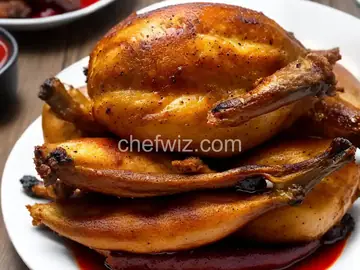
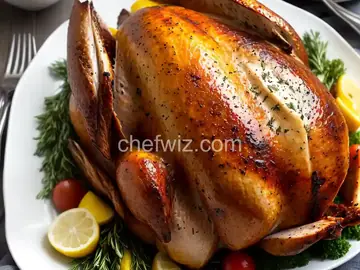
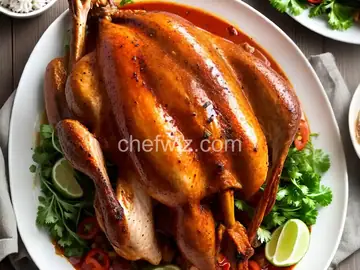
Good Eats Roast Turkey
Rate this recipeBe the first to rate
 By AprilPublished
 Are you ready to take your Thanksgiving feast to the next level?
 By AprilPublished
 Are you ready to take your Thanksgiving feast to the next level?
Start thawing the turkey in the refrigerator or in a cooler set at 38 degrees F, two to three days before roasting.
In a large stockpot over medium-high heat, combine vegetable stock, salt, brown sugar, peppercorns, allspice berries, and candied ginger. Stir occasionally until the solids dissolve and the mixture comes to a boil.
Remove the brine from heat, let it cool to room temperature, and refrigerate.
The night before or early on the day of cooking, combine the brine, water, and ice in a 5-gallon bucket.
Place the thawed turkey (without innards) in the brine, breast side down. If needed, weigh down the bird to ensure it is fully submerged. Cover and refrigerate or keep in a cool area for 8 to 16 hours, turning the bird halfway through.
Preheat the oven to 500 degrees F.
Remove the turkey from the brine and rinse it inside and out with cold water. Discard the brine.
Place the turkey on a roasting rack inside a half sheet pan and pat it dry with paper towels.
In a microwave-safe dish, combine apple, onion, cinnamon stick, and 1 cup of water. Microwave on high for 5 minutes.
Add the steeped aromatics, rosemary, and sage to the turkey
Are you ready to take your Thanksgiving feast to the next level? Look no further than a succulent Good Eats Roast Turkey. This mouthwatering centerpiece will have your guests begging for seconds and singing your praises. In this article, we'll explore the secrets to achieving a perfectly roasted turkey that is juicy on the inside and crispy on the outside. So, let's dive in and uncover the tips and tricks behind this delectable dish!
When it comes to roasting a turkey, preparation is key. Just like a painter priming their canvas, you need to ensure your turkey is properly prepped for the oven. Start by giving it a good rinse and patting it dry with paper towels. This step helps to remove any excess moisture, allowing the skin to crisp up beautifully. Next, season the turkey generously with salt, pepper, and any other herbs and spices that tickle your taste buds. Don't be afraid to get creative and experiment with different flavor profiles!
Trussing your turkey is like giving it a warm, cozy hug. Not only does it help the turkey cook more evenly, but it also keeps the stuffing in place. To truss your turkey, simply tuck the wings under the body and tie the legs together with kitchen twine. This simple step ensures that every bite of your roast turkey is tender and moist, from the breast to the drumsticks.
Roasting a turkey is a delicate dance between time and temperature. To achieve that perfect balance, preheat your oven to 325°F (163°C) and place your turkey on a roasting rack in a shallow pan. Cover the turkey loosely with foil and let it roast according to its weight. As a general rule, you'll need to cook your turkey for about 15 minutes per pound. However, always refer to a reliable meat thermometer to ensure it reaches an internal temperature of 165°F (74°C) for safe consumption.
Once your turkey has reached its golden glory, it's time to bring it to the table and carve it with finesse. Start by removing the twine and transferring the turkey to a cutting board. Begin by slicing the breast meat against the grain, creating thin, juicy slices. Then, move on to the drumsticks and thighs, separating them from the body. Don't forget to save the drippings for a rich and flavorful gravy!
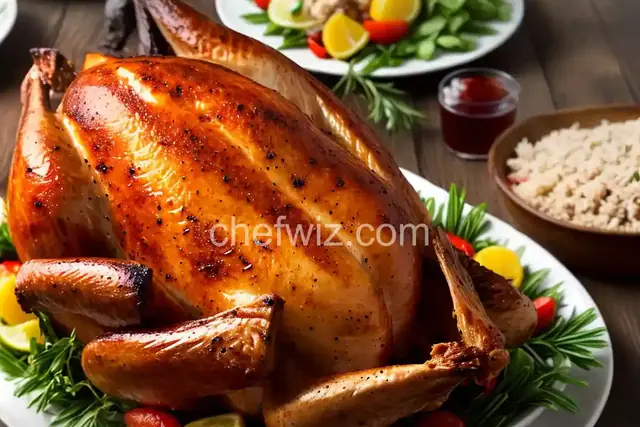
A Good Eats Roast Turkey is the star of any holiday meal, bringing joy and satisfaction to everyone around the table. With the right preparation and cooking techniques, you can achieve a turkey that is tender, flavorful, and picture-perfect. So, gather your loved ones, unleash your culinary creativity, and let the Good Eats Roast Turkey take center stage this holiday season!
The cooking time for a turkey depends on its weight. As a general guideline, allow 15 minutes of cooking time per pound of turkey.
While stuffing a turkey adds flavor, it can also increase the cooking time and pose a food safety risk. It's best to cook the stuffing separately.
Use a meat thermometer to check the internal temperature of the turkey. It should reach 165°F (74°C) for safe consumption.
Absolutely! The drippings from the roasted turkey are perfect for making a delicious and savory gravy.
Leftover turkey can be used in sandwiches, salads, soups, or casseroles. Get creative and enjoy the versatility of this tasty protein!
Basting the turkey every 30 minutes with its own juices or melted butter helps to keep it moist and prevents it from drying out.
If you don't have a roasting rack, you can create one using a bed of vegetables like carrots, celery, and onions. This will elevate the turkey and allow air to circulate for even cooking.
Absolutely! Brining your turkey before roasting can add flavor and moisture to the meat, resulting in a juicier turkey.
AprilCook, recipe developer and the heart of Chefwiz. More about April