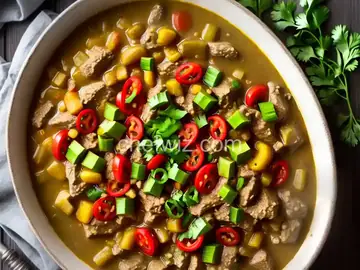
Ghormeh Sabzi (Persian Herb Stew)
Rate this recipeBe the first to rate
 By AprilPublished
 Imagine being enveloped by the aroma of fragrant herbs, the warmth of slow-cooked meat, and the rich flavors of a traditional Persian dish.
 By AprilPublished
 Imagine being enveloped by the aroma of fragrant herbs, the warmth of slow-cooked meat, and the rich flavors of a traditional Persian dish.
In a large pot, heat 2 tablespoons of oil over medium-high heat.
Add the onion and cook for 10 to 15 minutes, stirring until it turns deep golden brown.
Stir in the turmeric and cook for 1 to 2 minutes.
Add the chuck cubes and cook for 8 to 10 minutes, until they are coated in turmeric and browned on all sides.
In a separate pot, heat the remaining 2 tablespoons of oil over medium heat.
Add the spinach, green onions, parsley, cilantro, chives, and fenugreek leaves, and cook for 5 to 10 minutes, stirring until they turn deep dark green in color.
Stir the spinach mixture into the onion and chuck mixture.
Pour in enough water to create a slurry consistency.
Season with salt and pepper, and stir in lemon juice.
Reduce the heat, cover the pot, and simmer the stew for about 1 hour, until the greens soften.
Pierce the dried limes with a fork and add them to the stew.
Continue simmering until the chuck is tender, which should take 30 minutes to 1 hour.
Stir in the red kidney beans and cook for another 30 minutes, allowing the flavors to combine.
Discard the dried limes before serving.
If preferred, you can substitute lamb stew meat for the
Imagine being enveloped by the aroma of fragrant herbs, the warmth of slow-cooked meat, and the rich flavors of a traditional Persian dish. That's what Ghormeh Sabzi, a delightful herb stew, brings to the table. In this article, we will explore the origins of Ghormeh Sabzi, its key ingredients, and the unique cooking techniques that make it a beloved dish in Persian cuisine.
Ghormeh Sabzi has a long history that dates back centuries in Persian culture. It is considered one of Iran's national dishes, cherished for its deep-rooted traditions and regional variations. Passed down from generation to generation, this stew symbolizes the connection between Iranians and their culinary heritage.
At the heart of Ghormeh Sabzi are the vibrant green herbs that give this dish its distinctive flavor. Parsley, cilantro, fenugreek, and scallions come together in perfect harmony, creating a symphony of tastes and aromas. These herbs are carefully chopped and sautéed to release their essence, infusing the stew with their earthy and refreshing notes.
While the herbs take center stage, Ghormeh Sabzi also features tender chunks of meat, traditionally lamb or beef. The meat is browned to perfection, creating a beautiful caramelized crust that adds depth to the stew. Additionally, kidney beans add a creamy texture and a hint of nuttiness, elevating the dish to new heights.
Ghormeh Sabzi is not a dish that can be rushed. It requires patience and time to achieve its full flavors. The stew is simmered on low heat for hours, allowing the herbs, meat, and beans to meld together in perfect harmony. This slow cooking process ensures that every bite is packed with layers of complexity and richness.
Traditionally, Ghormeh Sabzi is served with fluffy saffron-infused basmati rice. The aromatic rice complements the herbal flavors of the stew, creating a perfect balance on the palate. Additionally, a dollop of tangy yogurt on the side adds a refreshing contrast and cools down the spiciness of the dish.
Ghormeh Sabzi is more than just a stew. It is a cultural experience that brings people together around the dinner table. The rich history, the depth of flavors, and the love poured into its preparation make it a dish that transcends boundaries. So, why not embark on a culinary adventure and savor the flavors of Ghormeh Sabzi?
Ghormeh Sabzi is not just a stew; it is a celebration of Persian culture and culinary tradition. From the aromatic herbs to the slow-cooked meat, every element of this dish tells a story. So, why not embark on a culinary adventure and experience the flavors and aromas of Ghormeh Sabzi for yourself?
The primary herbs used in Ghormeh Sabzi are parsley, cilantro, fenugreek, and scallions. These herbs come together to create a symphony of flavors that make this stew so unique.
While traditionally made with lamb or beef, you can certainly experiment with other types of meat, such as chicken or turkey, to suit your taste preferences.
Ghormeh Sabzi requires several hours of simmering on low heat to allow the flavors to develop fully. The longer it simmers, the more delicious it becomes!
Absolutely! In fact, Ghormeh Sabzi often tastes even better the next day as the flavors continue to meld together. Simply reheat it gently on the stovetop or in the microwave.
Yes, Ghormeh Sabzi does have a kick of spiciness. However, you can adjust the level of heat by adding more or less chili peppers, depending on your preference.
Yes, Ghormeh Sabzi freezes well. Allow it to cool completely, then transfer it to an airtight container or freezer bags. It can be kept frozen for up to three months.
Absolutely! You can make a delicious vegetarian version of Ghormeh Sabzi by omitting the meat and increasing the quantity of beans. The herbs and spices will still create a flavorful and satisfying stew.
Ghormeh Sabzi does require time and attention, but it is not overly complicated. The key is to chop the herbs finely and allow the stew to simmer slowly. With a little patience, you can create a dish that will impress your family and friends.
AprilCook, recipe developer and the heart of Chefwiz. More about April