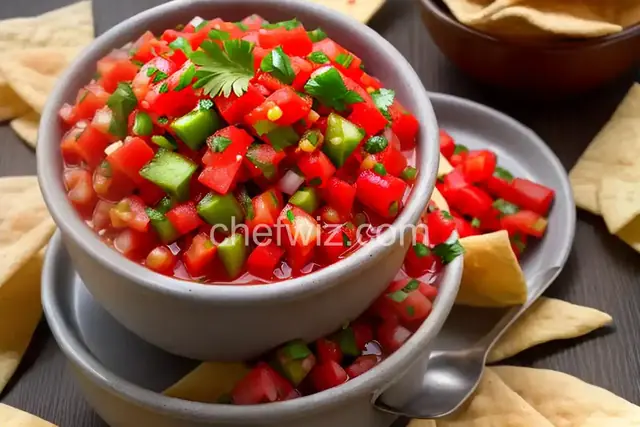
Fresh Restaurant-Style Salsa
Rate this recipeBe the first to rate
 By AprilPublished
 Are you tired of store-bought salsa that lacks flavor and freshness?
 By AprilPublished
 Are you tired of store-bought salsa that lacks flavor and freshness?
In a food processor, mix together canned and fresh tomatoes, onion, and garlic. Pulse the mixture 5 times to chop the ingredients.
Add cilantro, serrano and jalapeno peppers, lime juice, salt, and cumin to the food processor. Process the mixture for 10 seconds.
Continue pulsing the mixture until you achieve the desired consistency.
Taste the salsa and adjust the seasoning as desired.
If you prefer a spicier salsa, keep the seeds in the jalapeno pepper.
Are you tired of store-bought salsa that lacks flavor and freshness? Do you crave the vibrant taste of salsa from your favorite Mexican restaurant? Look no further! In this article, we will guide you on how to make delicious restaurant-style salsa right in the comfort of your own kitchen.
What sets restaurant-style salsa apart from the rest? It's all about the freshness of the ingredients. Just like in a fine dining establishment, the key to a memorable salsa lies in the quality of the produce used. By using the freshest tomatoes, onions, cilantro, and other ingredients, you can elevate your salsa game to new heights.
When it comes to making salsa, not all tomatoes are created equal. Look for ripe, juicy tomatoes with a deep red color. Plum tomatoes, like Roma or San Marzano, are ideal for salsa as they have a lower water content and a rich, sweet flavor. Avoid using tomatoes that are overly firm or pale in color, as they may lack the desired taste and texture.
Now that you have the perfect tomatoes, it's time to dice them. The size of the tomato dice can vary depending on personal preference. Some prefer a chunkier salsa, while others like it finely diced. Whichever way you choose, make sure to remove the seeds and excess pulp to avoid a watery consistency.
Tomatoes alone do not make a salsa. The trio of onions, cilantro, and lime juice is what brings the salsa to life. The onions add a sharp, tangy flavor, while the cilantro provides a fresh and vibrant kick. Squeeze in the juice of a lime to balance the flavors and enhance the overall taste.
When selecting onions for your salsa, you have a few options. Red onions are a popular choice as they offer a mild flavor and a beautiful pop of color. If you prefer a stronger onion taste, go for white or yellow onions. Whichever you choose, make sure to finely chop the onions to distribute the flavor evenly throughout the salsa.
Cilantro, also known as coriander leaves, is a staple in Mexican cuisine. Its distinct flavor adds depth and complexity to the salsa. Chop the cilantro finely and mix it into the salsa just before serving to preserve its vibrant green color and fresh taste.
No salsa is complete without a kick of heat. The level of spiciness can be adjusted according to your taste preferences. Whether you prefer a mild, medium, or fiery salsa, the choice is yours. Add jalapenos, serrano peppers, or even a dash of hot sauce to turn up the heat and give your salsa that extra zing.
While the heat is essential, it's crucial to balance it with other flavors. The sweetness of a ripe mango or the tanginess of pineapple can complement the spiciness and create a well-rounded salsa. Experiment with different flavor combinations to find your perfect balance.
Now that you have all the ingredients, it's time to put them together. In a large bowl, combine the diced tomatoes, onions, cilantro, lime juice, and any additional ingredients you desire. Gently mix everything together, making sure not to overmix and lose the chunky texture. Refrigerate the salsa for at least an hour to allow the flavors to meld together.
Once chilled, grab a bag of crispy tortilla chips and dive into your homemade restaurant-style salsa. The vibrant colors, fresh flavors, and perfect balance of heat will transport you to your favorite Mexican eatery.
While fresh tomatoes are recommended for the best flavor, you can use canned tomatoes if fresh ones are not available. Just make sure to drain them well before using.
Homemade salsa can be stored in an airtight container in the refrigerator for up to 5 days. However, for the best taste and freshness, it is recommended to consume it within 2-3 days.
While onions add a distinct flavor to salsa, you can omit them if you have an aversion or allergy. Alternatively, you can substitute with shallots or green onions for a milder taste.
To achieve a chunkier salsa, dice the tomatoes and other ingredients into larger pieces. Be careful not to overmix when combining the ingredients, as this can break down the texture.
Yes, homemade salsa can be frozen for up to 3 months. However, keep in mind that the texture may change slightly after thawing, so it is best to consume it fresh if possible.
Salsa is incredibly versatile and can be served with a variety of dishes. It pairs well with tortilla chips, tacos, quesadillas, grilled meats, and even eggs. Get creative and use it as a condiment or dip for your favorite foods.
Absolutely! The spiciness of the salsa can be adjusted by adding more or fewer spicy ingredients. Start with a small amount and gradually increase until you reach your desired level of heat.
While cilantro is the traditional herb used in salsa, you can experiment with other herbs like parsley or basil for a unique twist. Keep in mind that the flavor profile may change, so adjust the other ingredients accordingly.
In conclusion, making fresh restaurant-style salsa is easier than you think. By using the freshest ingredients, balancing flavors, and adding a kick of heat, you can create a salsa that rivals your favorite Mexican eatery. So why settle
AprilCook, recipe developer and the heart of Chefwiz. More about April