Fresh Mozzarella From Scratch Recipe
Rate this recipeBe the first to rate
 By AprilPublished
 Have you ever wanted to make your own fresh mozzarella cheese from scratch?
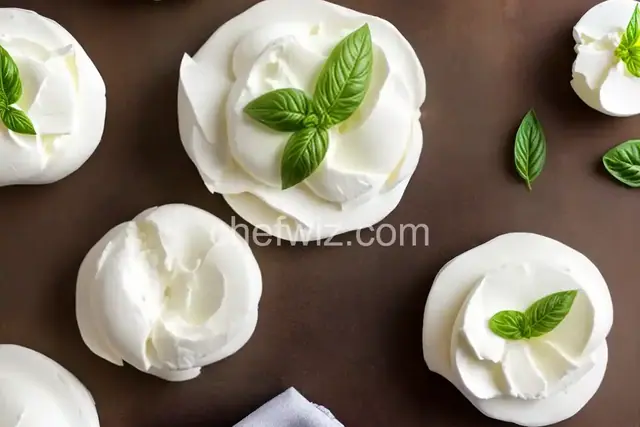 By AprilPublished
 Have you ever wanted to make your own fresh mozzarella cheese from scratch?
In a large stainless steel pot, pour milk and whisk to distribute butterfat.
Sprinkle citric acid into the milk and stir well until fully dissolved.
Stir the milk every few minutes over medium-low heat until it reaches 88째F (31째C). This should take about 5 minutes.
Add rennet to the milk and stir for about 30 seconds until combined. The milk will start to curdle into small clumps and separate from the liquid whey.
Reduce the heat to low and continue heating until the whey reaches a temperature of 105째F (41째C), which should take about 3 to 5 minutes.
Remove the pot from heat and let it stand for 5 to 10 minutes.
Use a slotted spoon to transfer the curds to a strainer set over a bowl, gently pressing to drain. Let the curds drain until the whey stops dripping, about 10 to 15 minutes.
Transfer the drained curds to a cutting board and slice them into 1-inch cubes. Divide the curds into 3 equal portions.
In the meantime, season the whey with 1 tablespoon (12g) of kosher salt (or more to taste), stirring well to dissolve. Set aside 1/3 of the whey in a heatproof bowl.
Heat the remaining 2/3 of
Have you ever wanted to make your own fresh mozzarella cheese from scratch? It may seem like a daunting task, but with a little patience and the right ingredients, you can create a delicious batch of homemade mozzarella. In this article, we will guide you through the process step by step, ensuring that you have all the knowledge you need to succeed.
Before we dive into the process, let's take a look at the key ingredients you will need to make fresh mozzarella. First and foremost, you will need high-quality milk. Opt for whole milk, as it will yield a creamier and richer cheese. In addition to milk, you will need citric acid, liquid rennet, and cheese salt. These ingredients can be easily found at your local grocery store or specialty cheese shop.
Start by pouring the milk into a large pot and heating it to 88 degrees Fahrenheit. This temperature is crucial for the curds to form properly. Once the milk reaches the desired temperature, add the citric acid and stir gently. Let the mixture sit for a few minutes to allow the curds to develop.
Next, it's time to introduce the liquid rennet. Dilute the rennet in water, following the instructions on the package. Slowly pour the diluted rennet into the milk and stir gently for about 30 seconds. Cover the pot and let it sit undisturbed for 5 minutes. After this time, the curds should have formed into a solid mass.
Once the curds have formed, it's time to cut them into small pieces. Use a long knife to make vertical and horizontal cuts, creating a grid-like pattern. This will help release more whey and create a firmer cheese. After cutting the curds, gently stir them for a few minutes. Then, heat the curds to 105 degrees Fahrenheit, stirring occasionally to prevent them from sticking together.
When the curds reach the desired temperature, carefully scoop them out with a slotted spoon and place them into a microwave-safe bowl. Microwave the curds for about a minute to soften them further. Take them out and knead them gently, working them into a smooth and elastic texture. If the curds are not pliable enough, you can microwave them for an additional 30 seconds.
Once you have shaped your mozzarella, it's time to enjoy the fruits of your labor. Fresh mozzarella is best served when it's still warm and slightly stretchy. You can use it in various dishes, such as caprese salads, homemade pizzas, or simply enjoy it on its own with a drizzle of olive oil and a sprinkle of salt.
Making fresh mozzarella from scratch is a rewarding experience that allows you to savor the taste of homemade goodness. With a few simple ingredients and a little patience, you can create a cheese that is far superior to store-bought options. So why not give it a try? Your taste buds will thank you!
A1: While it is possible to use skim milk, the resulting mozzarella may not be as creamy and flavorful. Whole milk is recommended for the best results.
A2: Yes, you can use lemon juice as a substitute for citric acid. However, keep in mind that lemon juice may impart a slightly different flavor to the cheese.
A3: Yes, if you prefer a vegetarian option, you can use vegetarian rennet. It works just as well as traditional rennet.
A4: The process of making fresh mozzarella can take anywhere from 1 to 2 hours, depending on your experience and familiarity with the steps involved.
A5: Yes, you can store homemade mozzarella in the refrigerator for up to a week. Just make sure to wrap it tightly in plastic wrap or place it in an airtight container.
A6: Absolutely! The whey can be used in various recipes, such as bread-making or as a substitute for water in soups and stews.
A7: Yes, you can add herbs or spices to your mozzarella for added flavor. Just make sure to mix them in during the kneading process.
A8: While it's possible to freeze mozzarella, it may alter the texture and consistency. Fresh mozzarella is best enjoyed immediately after making it.
AprilCook, recipe developer and the heart of Chefwiz. More about April