Fresh Basil Pesto
Rate this recipeBe the first to rate
 By AprilPublished
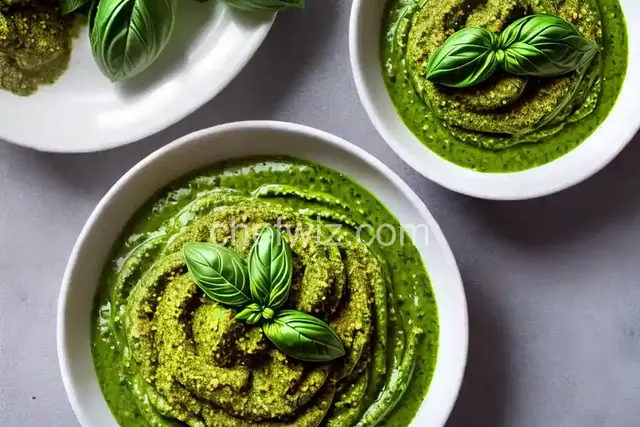
 Have you ever tasted the vibrant freshness of basil pesto? It's like a burst of summer in your mouth.
 By AprilPublished
 Have you ever tasted the vibrant freshness of basil pesto? It's like a burst of summer in your mouth.
In a food processor or blender, mix together basil, oil, pine nuts, garlic, and lemon juice until they form a smooth purée.
Add Pecorino Romano cheese, salt, and pepper to the mixture and stir well.
Have you ever tasted the vibrant freshness of basil pesto? It's like a burst of summer in your mouth. Whether you're a seasoned cook or a beginner in the kitchen, creating your own batch of fresh basil pesto is an experience worth savoring.
Basil, with its distinct aroma and flavor, is the star ingredient in this classic Italian sauce. Just like a melody needs the perfect harmony, basil needs a few supporting players to bring out its full potential. The combination of fresh basil leaves, pine nuts, garlic, parmesan cheese, and olive oil creates a symphony of flavors that will elevate any dish.
Creating the perfect blend of ingredients is crucial in making a delectable basil pesto. It's like finding the right balance between all the elements of a great story. Too much garlic can overpower the delicate basil, just like too much salt can ruin a dish. But when you achieve the perfect harmony, each bite will transport you to a rustic Italian trattoria.
Basil pesto is a versatile sauce that can be used in various culinary creations. It's like the little black dress of the kitchen – it can be dressed up or down depending on the occasion. Toss it with pasta for a quick and delicious meal, spread it on sandwiches for a burst of flavor, or use it as a marinade for grilled vegetables or meats. The possibilities are endless!
Now that you understand the essence of basil pesto, let's dive into the step-by-step process of creating your own batch:
Before you embark on your pesto adventure, gather all the necessary ingredients. Just like a painter needs their palette, a chef needs their ingredients. Fresh basil leaves, pine nuts, garlic cloves, parmesan cheese, olive oil, salt, and pepper are the key players in this culinary masterpiece.
Place the basil leaves, pine nuts, garlic cloves, and parmesan cheese in a food processor. It's like adding all the characters of a story into one scene. Blend them together until they form a coarse paste. Slowly drizzle in the olive oil while the food processor is running until the mixture becomes smooth and creamy. Season with salt and pepper to taste.
Now comes the fun part – tasting your creation! Just like a writer revises their draft, a chef must taste and adjust their flavors. Is it too garlicky? Add more basil. Is it too bland? Add more parmesan. Trust your taste buds and keep adjusting until you achieve the perfect balance.
Transfer your freshly made basil pesto into a jar and cover it with a thin layer of olive oil to preserve its vibrant color. Like a treasure waiting to be discovered, your pesto will be ready to enhance any dish you desire. Whether it's a pasta dinner or a simple bruschetta, a dollop of basil pesto will elevate your culinary creations to new heights.
Fresh basil pesto is a culinary delight that brings a burst of freshness to any dish. With the right blend of basil, pine nuts, garlic, parmesan cheese, and olive oil, you can create a sauce that will transport your taste buds to the sunny hills of Italy. So, why not embark on your own pesto adventure and savor the flavors of summer?
Absolutely! While pine nuts are traditional, you can experiment with different nuts like walnuts, almonds, or even cashews to create a unique flavor profile.
Yes, you can freeze basil pesto for future use. Just transfer it to an airtight container or ice cube trays, and it will stay fresh for up to three months.
Of course! If you're lactose intolerant or prefer a vegan version, you can omit the cheese or use a vegan alternative like nutritional yeast.
When stored properly in the refrigerator, fresh basil pesto can stay fresh for about a week. Just make sure to cover it with a thin layer of olive oil to prevent oxidation.
While fresh basil is preferred for its vibrant flavor, you can use dried basil if fresh is not available. Just keep in mind that the taste may not be as intense.
Basil pesto is not inherently spicy, but you can add a kick of heat by incorporating a small amount of red pepper flakes or a dash of cayenne pepper if desired.
Absolutely! Basil pesto can be used as a flavorful dressing for salads, giving them a burst of freshness and an Italian twist.
Yes, you can definitely make basil pesto using a mortar and pestle. It requires a bit more effort, but the result is a rustic pesto with a slightly different texture.
AprilCook, recipe developer and the heart of Chefwiz. More about April