French Macarons
Rate this recipeBe the first to rate
 By AprilPublished
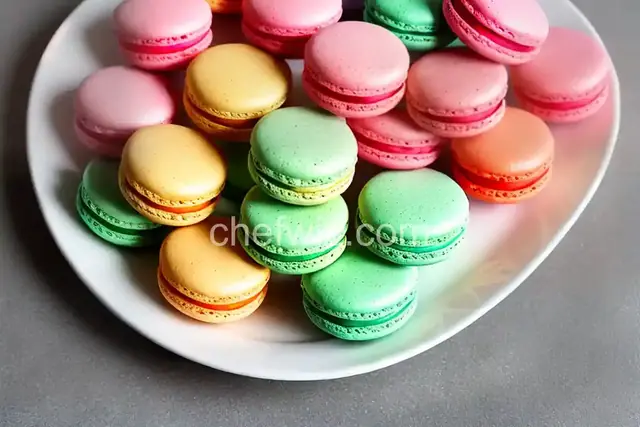
 Have you ever tasted a French macaron? These delicate, colorful confections are not only a feast for the eyes but also a delight for the taste buds.
 By AprilPublished
 Have you ever tasted a French macaron? These delicate, colorful confections are not only a feast for the eyes but also a delight for the taste buds.
Preheat the oven to 300 degrees F (150 degrees C) and line a baking sheet with parchment paper.
In a glass, metal, or ceramic bowl, beat the egg whites with an electric mixer on medium speed until foamy (about 30 seconds).
Add the white sugar to the egg whites and continue to beat until stiff peaks form and the peaks stay in place when the bowl is turned upside down (about 5 minutes).
Sift the confectioners' sugar, almond flour, and salt together twice. Then, fold this mixture into the egg whites until the batter is creamy and falls slowly off the lifted spatula (about 50 turns with a spatula).
Transfer the batter to a piping bag fitted with a round tip.
Pipe the batter onto the parchment paper in circular motions, creating 1-inch diameter macarons. Tap the baking sheet against the counter about 10 times to release any air bubbles.
Bake in the preheated oven for 9 minutes. Then, rotate the baking sheet and continue baking until the macarons are shiny and rise slightly to form feet (ruffles around the edge) for about 9 minutes more.
Peel off the parchment paper and allow the macarons to cool completely (about 30 minutes).
In a separate bowl, beat the butter, confectioners' sugar, and vanilla extract with an electric mixer until creamy and thick (
Have you ever tasted a French macaron? These delicate, colorful confections are not only a feast for the eyes but also a delight for the taste buds. With their crisp yet chewy texture and an array of flavors, French macarons have become a popular treat all over the world. In this article, we will dive into the art of making French macarons and explore what makes them so special.
French macarons may seem simple, but they are actually quite complex to make. The process involves a delicate balance of ingredients and techniques that require precision and patience. The main components of a macaron are almond flour, sugar, and egg whites. These ingredients are carefully mixed and then piped onto a baking sheet in small, uniform circles. The macarons are then baked at a low temperature to achieve their characteristic smooth, domed shells and delicate feet.
One of the things that sets French macarons apart is their incredible variety of flavors. From classic options like vanilla and chocolate to more exotic choices like lavender and matcha, there is a macaron flavor for every taste. The fillings can range from buttercream and ganache to fruit preserves and nutella. The possibilities are truly endless, allowing for endless creativity and experimentation.
Assembling a macaron is like putting together a tiny, sweet sandwich. Once the shells have cooled, they are carefully matched in pairs based on their size and shape. A small amount of filling is then sandwiched between the two shells, creating a harmonious blend of flavors and textures. The result is a bite-sized treat that is as beautiful as it is delicious.
Making French macarons can be a challenge, but with practice and patience, anyone can become a macaron master. It's all about understanding the techniques and paying attention to the details. From properly sifting the almond flour to achieving the perfect meringue consistency, each step plays a crucial role in the final result.
While making macarons, it's common to encounter a few challenges along the way. Cracked shells, hollow centers, and uneven feet are just a few of the issues that can arise. But fear not! With a little troubleshooting, these problems can be overcome. Adjusting oven temperature, mixing techniques, and resting times can make all the difference in achieving macaron perfection.
French macarons are not just a treat for the taste buds, but also a work of art. Each macaron is carefully crafted with love and attention to detail. From the vibrant colors to the delicate piping, every aspect of the macaron reflects the skill and passion of the baker. It's a labor of love that is truly worth the effort.
French macarons are not just a dessert; they are a work of art. The delicate shells, flavorful fillings, and vibrant colors make them a treat for both the eyes and the taste buds. While making macarons can be challenging, the end result is well worth the effort. So why not embark on a macaron-making adventure and indulge in a little taste of French elegance?
French macarons have a long and rich history that dates back to the 16th century. They were first introduced in Italy before making their way to France, where they gained popularity and became a staple in French patisseries.
Almond flour is a key ingredient in traditional macarons, as it gives them their distinct flavor and texture. However, there are alternative recipes that use other types of nut flours or even coconut flour for those with allergies or dietary restrictions.
To keep your macarons fresh, store them in an airtight container in the refrigerator. They can be enjoyed for up to a week, but they are best consumed within a few days of making them.
Yes, macarons can be frozen to extend their shelf life. Place them in a freezer-safe container or bag and freeze for up to a month. Thaw them in the refrigerator before serving.
Uneven feet on macarons can be caused by a variety of factors, such as undermixing the batter, improper resting time, or uneven oven temperature. It's important to follow the recipe and instructions carefully to achieve consistent results.
Traditional macarons are gluten-free, as they are made with almond flour instead of wheat flour. However, it's always important to check the ingredients used in the filling to ensure they are also gluten-free.
A piping bag is essential for creating the round, uniform shells of macarons. However, if you don't have a piping bag, you can use a ziplock bag with the corner snipped off as a makeshift piping bag.
Making macarons is a time-consuming process that requires attention to detail. From prep to finish, it can take anywhere from 2 to 4 hours, depending on your skill level and experience.
AprilCook, recipe developer and the heart of Chefwiz. More about April