French Crêpes
Rate this recipeBe the first to rate
 By AprilPublished
 Have you ever wondered why French cuisine is renowned worldwide?
 By AprilPublished
 Have you ever wondered why French cuisine is renowned worldwide?
In a bowl, combine flour, sugar, and salt. Use a sieve to sift the mixture. Set aside.
In a large bowl, use an electric mixer to beat eggs and milk together until well blended.
Gradually add the sifted flour mixture to the egg and milk mixture, beating until the batter becomes smooth.
Stir in the melted butter into the batter.
Lightly grease a griddle or frying pan and heat it over medium-high heat.
Pour or scoop approximately 2 tablespoons of batter onto the griddle for each crêpe.
Immediately rotate the skillet to spread the batter out into a thin layer.
Cook until the top of the crêpe is no longer wet and the bottom has turned light brown, which usually takes about 1 to 2 minutes.
Shake the pan or use a spatula to loosen the crêpe, then flip it over and cook until the other side has turned light brown, approximately 1 minute more.
Repeat the process with the remaining batter.
Have you ever wondered why French cuisine is renowned worldwide? It's not just about the Eiffel Tower or the romantic atmosphere of Paris, but also about the incredible dishes that make your taste buds dance with delight. And among these culinary wonders, French Crêpes hold a special place.
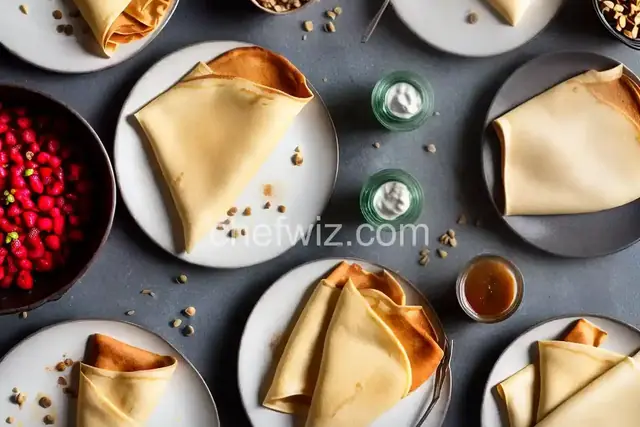
Imagine a thin, delicate pancake that is both versatile and delicious. That's exactly what French Crêpes are – a delightful blend of simplicity and elegance. These thin pancakes are made from a batter of flour, eggs, milk, and butter. They can be filled with a variety of sweet or savory ingredients, making them a perfect choice for any meal of the day.
Creating the perfect French Crêpe is an art that requires precision and practice. It's all about achieving the right balance between a thin, lacy texture and a golden, slightly crispy edge. The batter needs to be smooth and free of lumps, and the cooking process requires careful attention to heat and timing.
Once the batter is ready, a small amount is poured into a hot, buttered pan. The pan is then swirled to spread the batter evenly, creating a thin layer. After a minute or so, when the edges start to lift, it's time to flip the crêpe with a gentle flick of the wrist. The other side is cooked for a short time before the crêpe is ready to be filled and enjoyed.
One of the best things about French Crêpes is the endless possibilities for fillings. If you have a sweet tooth, you can indulge in a crêpe filled with Nutella, fresh berries, or a drizzle of maple syrup. If you prefer something savory, you can enjoy a crêpe filled with ham, cheese, spinach, or even a combination of ingredients like the classic ham and cheese.
French Crêpes are not just a treat for your taste buds, but also a feast for the eyes. The delicate, lacy texture of the crêpe, combined with the colorful fillings, creates a visual masterpiece that is almost too beautiful to eat.
French Crêpes are more than just a delicious dish – they are a symbol of French culture and culinary excellence. Trying a French Crêpe is like taking a journey to the heart of France, where food is not just sustenance but a work of art.
By indulging in a French Crêpe, you can experience the rich flavors and textures that have made French cuisine famous worldwide. Each bite is a moment of bliss, a taste of the passion and expertise that goes into every French dish.
French Crêpes are a culinary delight that brings the flavors and elegance of French cuisine to your plate. Whether you prefer them sweet or savory, these thin, delicate pancakes are sure to satisfy your cravings and transport you to the heart of France. So why not embark on a delightful journey and treat yourself to the magic of French Crêpes?
While both French Crêpes and American pancakes are made from a batter, they have distinct differences. French Crêpes are thin, delicate, and often filled with a variety of ingredients, whereas American pancakes are thicker and typically served with syrup or butter.
Yes, you can make eggless French Crêpes by using substitutes like mashed bananas, applesauce, or yogurt. However, the texture and flavor may differ slightly from traditional French Crêpes.
Traditional French Crêpes are not gluten-free as they are made with wheat flour. However, you can make gluten-free versions using alternative flours like rice flour or buckwheat flour.
Yes, you can freeze French Crêpes for later use. Stack them with parchment paper in between each crêpe and store them in an airtight container or freezer bag. They can be reheated in a pan or microwave when needed.
No, French Crêpes can be enjoyed at any time of the day. They are a popular choice for breakfast, brunch, dessert, or even a light lunch or dinner. The versatility of fillings makes them suitable for any meal.
Yes, you can prepare the crêpe batter in advance and refrigerate it for up to 24 hours. This allows the flavors to develop and makes the cooking process faster. Just give the batter a gentle stir before using.
French Crêpes have a long history dating back to ancient times. They originated in Brittany, a region in northwest France. Initially, crêpes were made with buckwheat flour, which was abundant in the region. Today, both sweet and savory crêpes are enjoyed throughout France and beyond.
Yes, you can make vegan French Crêpes by substituting dairy milk with plant-based milk, such as almond milk or oat milk. You can also replace eggs with flaxseed meal or applesauce to bind the batter.
While making French Crêpes requires practice and attention to detail, they are not overly complicated. With a little patience and experimentation, you can master the art of creating delicious French Crêpes in no time.
AprilCook, recipe developer and the heart of Chefwiz. More about April