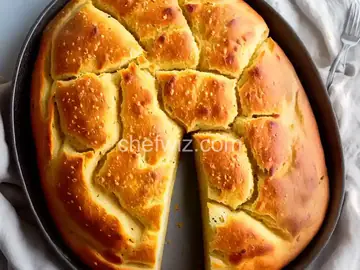
Focaccia Barese al Pomodoro e Olive (Homemade Italian Focaccia with Tomatoes and Olives)
Rate this recipeBe the first to rate
 By AprilPublished
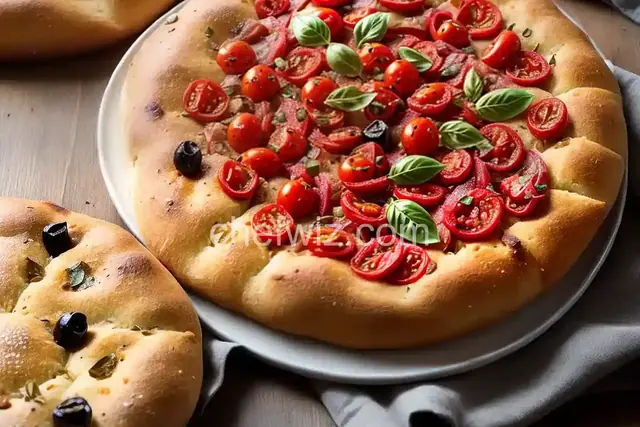
 Are you craving a taste of Italy? Look no further than Focaccia Barese al Pomodoro e Olive.
 By AprilPublished
 Are you craving a taste of Italy? Look no further than Focaccia Barese al Pomodoro e Olive.
Place the potato in a large pot and cover it with salted water. Bring the water to a boil.
Reduce the heat to medium-low and let the potato simmer until it becomes tender, which should take about 20 minutes.
Drain the potato and rinse it under cold running water.
Peel the potato and mash it in a large bowl using a fork.
Pour flour into the mashed potato and mix it well with your fingertips. Rub the mixture together until it becomes even and free of lumps.
In a separate bowl, combine 1 cup of water, yeast, and sugar. Mix them well and let the mixture stand for about 5 minutes or until it becomes frothy.
Stir in 5 tablespoons of olive oil into the yeast mixture.
Pour the yeast mixture over the flour mixture. Mix it together, adding the remaining 1 cup of water a little at a time until a soft dough forms. Also, mix in 1 tablespoon of salt.
Knead the dough on a clean work surface for about 8 to 10 minutes until it becomes smooth and soft.
Transfer the dough to a greased bowl. Cover it with a damp cloth and let it rise in a warm place until it doubles in size, which should take about 2 hours.
Grease a large rimmed baking sheet with 2 tablespoons of olive oil.
Place the dough on the baking sheet
Are you craving a taste of Italy? Look no further than Focaccia Barese al Pomodoro e Olive. This traditional Italian bread, loaded with fresh tomatoes and olives, will transport you straight to the sunny streets of Bari. In this article, we'll explore the history of focaccia, how to make it from scratch, and some tips for achieving the perfect texture and flavor.
Imagine a humble home in a small Italian village. The scent of freshly baked bread wafts through the air, drawing neighbors and passersby to the doorstep. This is where focaccia was born. Dating back to ancient Rome, this simple flatbread has been a staple in Italian cuisine for centuries.
Traditionally, focaccia was baked in communal ovens, shared among families and friends. It was a way to bring people together, to break bread and share stories. Today, it remains a symbol of togetherness and comfort.
Creating the perfect focaccia is a labor of love. It requires time, patience, and attention to detail. The dough is made with simple ingredients like flour, water, yeast, and olive oil. But it's the technique that sets it apart.
First, the dough is mixed and kneaded until it becomes smooth and elastic. Then, it's left to rise, allowing the yeast to work its magic. Once the dough has doubled in size, it's time to shape and top the focaccia.
When it comes to toppings, the possibilities are endless. But for a classic Focaccia Barese al Pomodoro e Olive, you can't go wrong with ripe tomatoes and briny olives. The tomatoes add a burst of sweetness, while the olives provide a salty, savory kick.
Before baking, the dough is dimpled with your fingertips, creating little pockets to hold the toppings. Then, it's drizzled with olive oil and sprinkled with coarse salt. The focaccia is baked until golden brown and fragrant, ready to be devoured.
Making focaccia can be a rewarding experience, but it can also be a little tricky. Here are some tips to help you achieve that perfect, pillowy texture:
Focaccia Barese al Pomodoro e Olive is the epitome of Italian comfort food. With its soft, pillowy texture and delicious toppings, it's a bread that brings people together. Whether you're enjoying it on a sunny patio or in the comfort of your own home, this homemade focaccia will transport you to the heart of Italy.
While fresh tomatoes are recommended for the best flavor, you can use rehydrated dried tomatoes as a substitute.
The rising time can vary depending on factors like room temperature and yeast activity. It typically takes around 1 to 2 hours for the dough to double in size.
Yes, you can freeze the focaccia. Wrap it tightly in plastic wrap and place it in a freezer-safe bag or container. Thaw it at room temperature before enjoying.
Absolutely! Divide the dough into smaller portions and shape them into individual rounds. Adjust the baking time accordingly.
Yes, cheese can be a delicious addition to the toppings. Try sprinkling some grated Parmesan or crumbled feta on top before baking.
Yes, you can substitute some or all of the all-purpose flour with whole wheat flour. Keep in mind that whole wheat flour will yield a denser texture.
Store leftover focaccia in an airtight container at room temperature for up to 2 days. To refresh it, warm it in the oven for a few minutes before serving.
Absolutely! Finely chopped fresh herbs like rosemary or thyme can be added to the dough for extra flavor.
AprilCook, recipe developer and the heart of Chefwiz. More about April