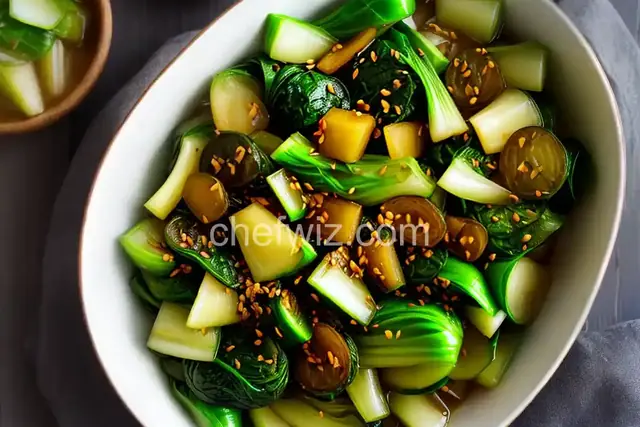
Fermented Bok Choy Pickles
Rate this recipeBe the first to rate
 By AprilPublished
 Are you a fan of pickles? Do you love the tangy and crunchy goodness they bring to your meals?
 By AprilPublished
 Are you a fan of pickles? Do you love the tangy and crunchy goodness they bring to your meals?
Start by washing the bok choy and green onions.
Chop the bok choy and green onions into chunks and place them in a large storage container.
In a separate container, mix 4 cups of warm water with salt and sugar until dissolved.
Pour the salt and sugar mixture over the bok choy and green onions in the storage container.
Place a heavy plate on top of the vegetables to press them down below the brine.
Cover the container and let it sit for 3 days. If you prefer a more sour taste, you can leave it out for an additional 1 to 2 days.
After the desired fermentation time, transfer the mixture to a lidded jar.
Place the jar in the refrigerator to stop the fermentation process.
Are you a fan of pickles? Do you love the tangy and crunchy goodness they bring to your meals? If so, then you're in for a treat! Today, we're going to talk about a unique twist on traditional pickles - fermented bok choy pickles. These little gems are not only delicious but also packed with probiotics that can benefit your gut health. So, let's dive in and explore the world of fermented bok choy pickles!
Before we get into the specifics of bok choy pickles, let's talk about the magic of fermentation. Fermentation is an ancient preservation technique that has been used for centuries to extend the shelf life of food. It involves the action of beneficial bacteria, yeasts, and other microorganisms that convert sugars into acids or alcohol. This process not only preserves the food but also enhances its flavor and texture.
Bok choy, also known as Chinese cabbage, is a leafy green vegetable that is commonly used in Asian cuisine. It is loaded with essential nutrients like vitamins A, C, and K, as well as calcium, potassium, and iron. Bok choy is also low in calories and high in fiber, making it a great addition to a healthy diet.
Now that we know the basics of fermentation and the nutritional value of bok choy, let's explore the benefits of fermented bok choy pickles:
Fermented bok choy pickles are a delicious and nutritious addition to any meal. They not only provide a tangy twist to your taste buds but also offer numerous health benefits. With their probiotic content and vitamin-rich profile, these pickles can support your gut health and boost your overall well-being. So why not give them a try and embark on a culinary adventure that will tantalize your senses?
It usually takes around 5-7 days for bok choy pickles to ferment, depending on the temperature and desired level of tanginess. Remember to taste them along the way to find your preferred flavor.
While bok choy is the traditional choice for this recipe, you can experiment with other leafy greens like Napa cabbage or even kale. The key is to choose a vegetable with a similar texture and flavor profile.
No, you don't need any fancy equipment. A clean glass jar, some salt, and water are all you need to get started. However, using an airlock lid can help create an anaerobic environment, which may result in better fermentation.
Yes, fermented bok choy pickles are safe to eat. The fermentation process creates an acidic environment that inhibits the growth of harmful bacteria. However, it's important to follow proper hygiene practices and use clean utensils and jars to minimize the risk of contamination.
Absolutely! You can experiment with different spices and seasonings to customize the flavor of your bok choy pickles. Add some garlic, chili flakes, or even ginger to give them a unique twist.
Fermented pickles can last for several months when stored in the refrigerator. The flavors will continue to develop as they age, so you can enjoy them at different stages of fermentation.
Yes, you can reuse the brine as a flavoring agent or starter for your next batch of fermented vegetables. Just make sure to strain out any solids and store it in the refrigerator.
For most people, fermented foods are safe to consume and offer numerous health benefits. However, if you have a compromised immune system or certain medical conditions, it's best to consult with your healthcare provider before incorporating fermented foods into your diet.
AprilCook, recipe developer and the heart of Chefwiz. More about April